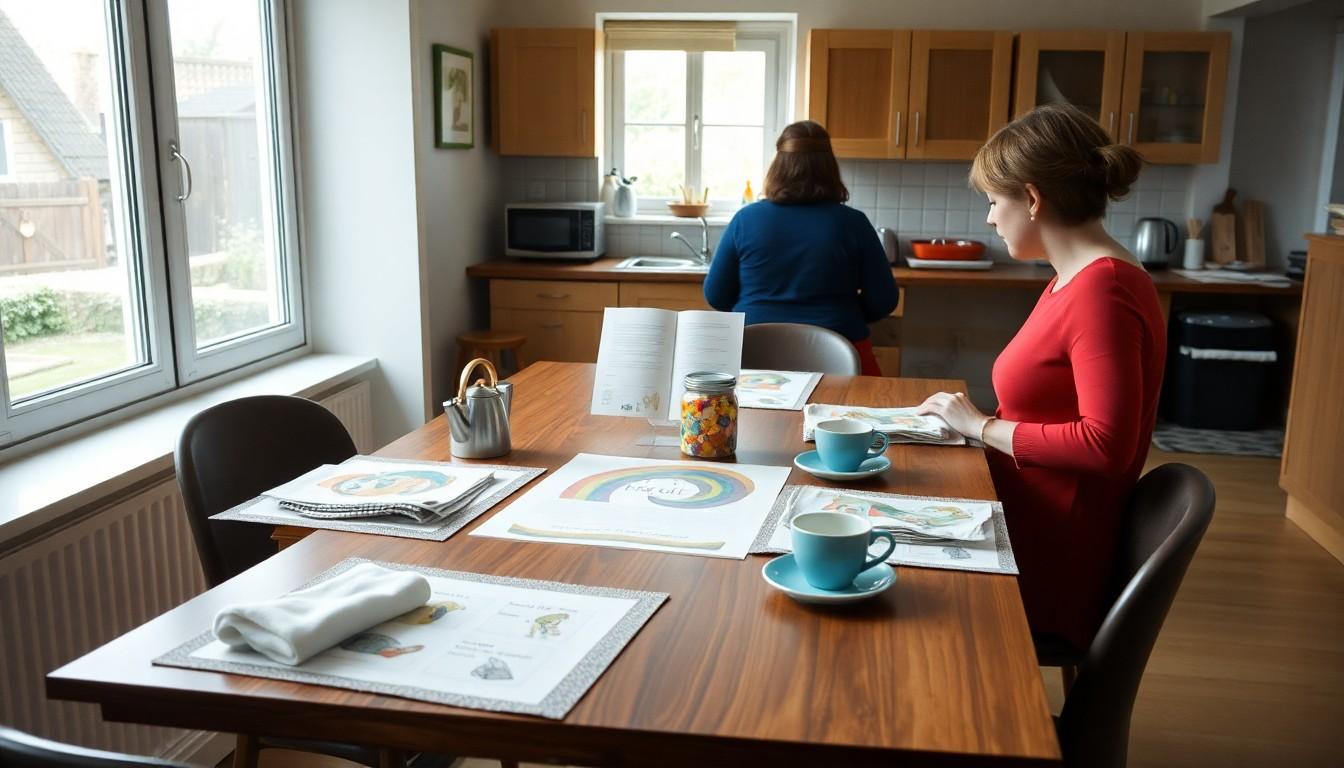
A queer disabled storyteller’s Lunchroom entry uses an Easy Read document and everyday objects to explore privacy, belonging and who gets heard. Featured in People with Disability Australia’s Community Attitudes Storytelling Competition, the work imagines tea towels, doodle placemats and a colourful serving tray helping transform the workplace kitchen from a place of anxiety into one of shared stories.
Essential Takeaways
- A kitchen with two sides: The entry describes how a trusted coming-out story can become workplace gossip, making an ordinary lunch break feel unsafe.
- Accessibility comes first: The artist says their submission is an Easy Read document, with original text and illustrations designed to support understanding.
- Everyday objects carry the invitation: Tea towels, anonymous doodle placemats and an upcycled tray bring the idea of sharing stories into a familiar setting.
- The competition centres lived experience: People with Disability Australia says its storytelling project invites LGBTQIA+ people with disability to share their perspectives in forms that suit them.
- Public voting is part of the award: The People’s Choice winner is selected by public vote and receives AUD $1,500. Voting closes at 11:59 pm on Thursday 26 November 2026, with the winner expected to be notified by 1 December.
A workplace kitchen can feel anything but welcoming
A cup of tea, a shared snack, a quick chat by the fridge: the workplace kitchen can seem like neutral territory. But in the Lunchroom entry, that everyday scene turns unsettling when a personal coming-out story is repeated as gossip.
The storyteller, a queer person working in the disability sector, says the work grew from noticing painful experiences in their own life and in the lives of others at the intersection of disability and LGBTQIA+ identity. People with Disability Australia’s competition describes that overlap as central to its focus on identity, inclusion and belonging. (Sources: [2], [3])
The entry’s point isn’t simply that a kitchen can be unkind. It’s that being able to speak, choose what stays private and feel part of a group matters. The Australian Institute of Family Studies says LGBTQ+ young people with disability may face marginalisation related to both disability and sexual orientation or gender identity, and encourages services to listen to individual experiences rather than assume one identity tells the whole story. (Source: [5])
Why the artist chose Easy Read
The submission puts accessibility ahead of artistic polish, according to the storyteller. They say the Easy Read document and illustrations are their own work, that the images were drawn to support the meaning of each piece of text, and that a great deal of study and research went into making the material accessible.
That approach has a practical logic. The Australian Government Style Manual describes Easy Read as a format that uses a particular layout, larger text and images alongside words, with both helping communicate meaning. It also stresses that pictures should support understanding, not merely decorate a page. (Source: [4])
The artist says they also completed the competition’s Community Attitudes - Storytelling and Self-Expression module. They note that illness and other reasons prevented them from completing some planned elements, and that their legal name was deliberately left out to protect their privacy. Those choices sit neatly alongside the work’s wider concern with control over one’s own story. (Sources: [1], [2])
Tea towels, doodles and an invitation to join in
The objects in Lunchroom are deliberately ordinary, but each has a role. Tea towels let the artist take control of their story; doodle placemats invite people to share anonymously and informally; and an upcycled serving tray combines colours from the LGBTQIA+ Rainbow and Disability Pride flags.
The tray, in particular, makes the idea feel tangible: serving a chance to share stories becomes an invitation to community and allies. The entry suggests that a cup of tea, and a clue that a space is ally-friendly, can offer a simple starting point. It also makes room for other people’s stories, rather than treating one person’s experience as the whole conversation. (Source: [2])
There’s historical resonance, too, though it’s worth keeping the claim precise. A doctoral thesis by Elise Robinson discusses tea towels and other household goods associated with the British suffragette movement, where everyday objects could make political commitments visible beyond formal meetings and demonstrations. That offers context for the entry’s interest in domestic objects as vehicles for social expression, without implying that every tea towel of the period served the same purpose. (Source: [7])
The wider case for listening and belonging
People with Disability Australia says its creative storytelling competition aims to build understanding and challenge attitudes about disability, sexuality and gender diversity. Rather than asking everyone to tell a story in the same way, the project invites participants to use forms that suit them and centres their own perspectives. (Source: [3])
That emphasis on voice also speaks to broader concerns about dignity and participation. The Australian Human Rights Commission’s Equal Identities report discusses barriers faced by trans and gender diverse people, including privacy breaches and misgendering, and notes that ableism and other forms of marginalisation can compound them. The report provides wider context, not independent confirmation of the Lunchroom storyteller’s individual experience. (Source: [6])
And that distinction matters. A personal account can show what a moment feels like; broader research and rights reporting help explain why privacy, respect and self-determination matter beyond that one moment. The Lunchroom entry brings both scales into view, then leaves space for others to add their own stories.
How the People’s Choice vote works
People with Disability Australia is inviting the public to read, watch or listen to competition entries before choosing a favourite for the People’s Choice Award. The winner is selected by public vote and receives AUD $1,500. (Source: [2])
Votes must be submitted through the linked form. The published page says voting closes at 11:59 pm on Thursday 26 November 2026, and the winner is expected to be notified by 1 December 2026. For anyone taking part, the simplest next step is to explore the entries and follow the voting instructions on the competition page. (Source: [2])
Sometimes the most useful invitation is a small one: pull up a chair, make room for another story, and listen.
Source Reference Map
Story idea inspired by: [1]
Sources by paragraph: