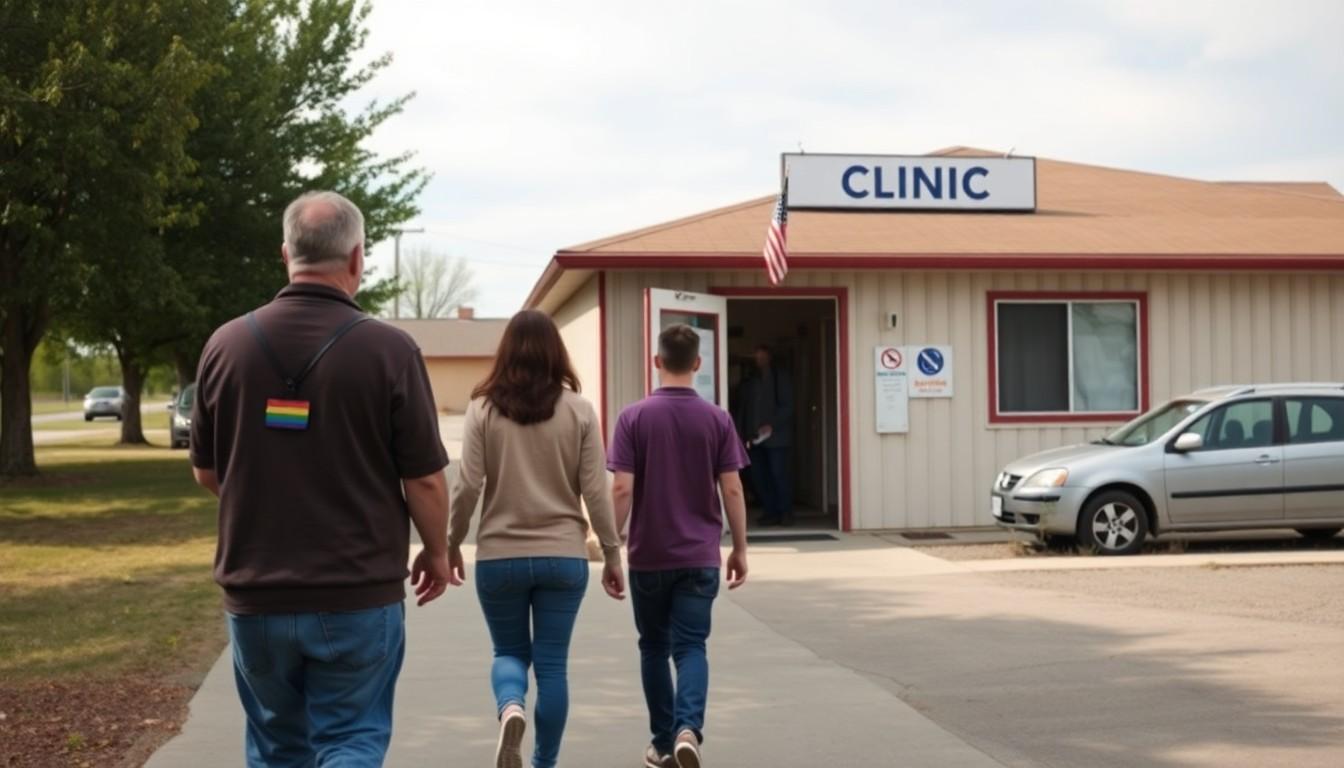
Families across the United States are navigating healthcare barriers, political uncertainty and the everyday work of supporting transgender loved ones. Research and personal accounts show why transgender equality reaches beyond individual rights: it can shape children’s sense of safety, parents’ wellbeing and the inclusiveness of workplaces and communities.
Essential Takeaways
- Families face real barriers: Long waits, limited provider knowledge and restrictive laws can make it harder to find care and support.
- Advocacy often happens at home: Parents may spend time navigating insurance, finding peer groups and seeking reliable information.
- Children feel the climate, too: A Williams Institute survey found that some children of transgender and nonbinary parents had new worries after the 2024 election.
- Inclusion matters at work: A review of 36 studies found supportive workplace policies were associated with positive employee outcomes, though it did not quantify effects on company profits.
- The US estimate is about 2.8 million: The Williams Institute estimates that many people aged 13 and older identify as transgender.
The family work behind transgender equality
A young transgender girl preparing for her first puberty-blocker treatment, with her mother beside her, is a hopeful image. But it sits against a harder reality: for many families, finding informed, supportive care can mean long waits and searching for providers who understand their needs.
LGBTQ Nation describes parents turning to online resources when they don’t feel confident that a doctor can offer trans-inclusive guidance. Its account also points to the less visible work of support: handling insurance, finding peer groups and travelling to community programmes. Much of this advocacy happens far from a public stage, one determined conversation at a time.
Why the policy climate reaches children
The legislative picture is difficult to ignore. The Williams Institute reports that the ACLU documented more than 600 anti-transgender bills at state level during 2025. The institute says 29 states had adopted at least one law in the restrictive areas it analysed by the end of December that year, including healthcare, sport, school programmes and facilities.
Those figures describe legislation, but families experience the climate in more personal ways. A Williams Institute survey of 108 transgender and nonbinary parents found that children’s worries were among the issues parents reported after the 2024 election. The study records the experiences of its respondents, rather than representing every transgender family in the country.
Support can change parents, too
LGBTQ Nation’s account presents a child coming out not only as a moment of change for that child, but as a turning point for parents. Some become more empathetic and resilient, and take on advocacy after discovering that the support their family needs isn’t readily available.
That work can begin with something simple: listening, learning and finding reliable information. For families, a trusted community or an informed professional can make the path feel less isolating. It’s a reminder that support is often built through practical, repeated acts of care.
What inclusive workplaces can show us
The case for inclusion extends beyond family life. A Williams Institute review of 36 studies found that LGBT-supportive workplace policies and climates were associated with outcomes such as greater job commitment and satisfaction, better workplace relationships and improved health outcomes for LGBT employees.
But the evidence has limits: the review did not produce direct figures for the effect of these policies on company profits. It offers a measured case for supportive workplaces, rather than a promise of a particular financial return. That distinction matters when discussing inclusion: the strongest argument is not always a spreadsheet.
A clearer picture of transgender America
The Williams Institute estimates that around 2.8 million people aged 13 and older in the United States identify as transgender. It describes this as an estimate based on national health-survey data and statistical modelling, not a count of every individual.
That figure gives a sense of scale, but it doesn’t capture the many different experiences behind it. As LGBTQ Nation argues, access to healthcare, education and reliable support helps families build safer, more connected lives. The responsibility for that support shouldn’t rest on transgender people alone.
A more supportive community starts with making room for people to live safely and openly.
Source Reference Map
Story idea inspired by: [1]
Sources by paragraph: