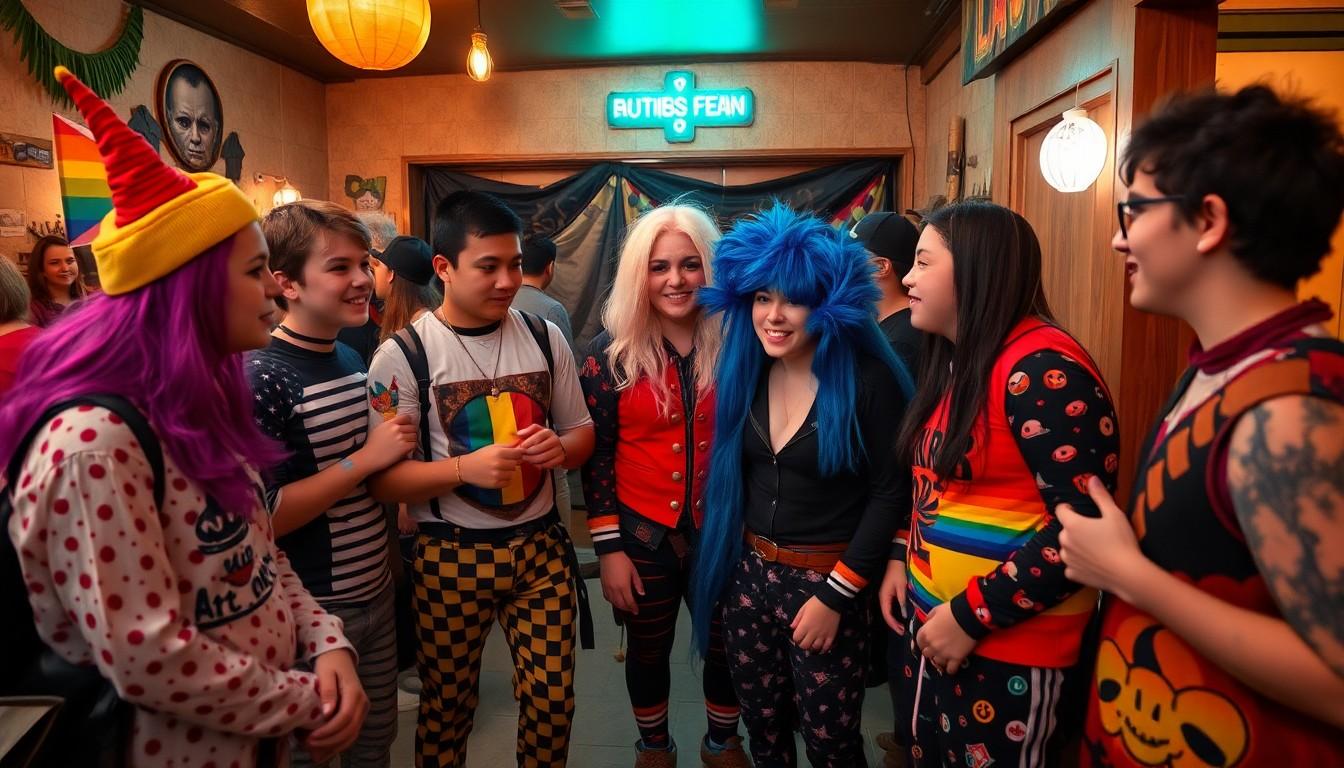
Queer people in Atlanta and beyond are turning Halloween into more than a night of costumes: it can be a chance to play with identity, humour and self-expression. From Monster High characters to deeply specific internet references, “gay Halloween” brings people together through outfits that might leave everyone else asking for the backstory.
Halloween offers room to try on another self
A Frankie Stein costume can be more than green tights and a flash of purple eyeshadow. In VOX ATL’s account, the writer describes dressing as the Monster High character alongside friends dressed as Draculaura and Cleo DeNile, and feeling that the look opened a door to a different version of themself.
That sense of possibility runs through the story. Teenager Raina Lumpris says fashion is one of the main ways she expresses her identity, and that dressing as a character who inspired her helped her do just that.
For some queer people, a costume is also a low-pressure way to test how a different gender presentation feels. VOX ATL’s social media intern Carol Gilley says she’s seen friends try drag for the first time at Halloween, with the costume offering a ready-made explanation if the experiment doesn’t feel right.
What does “gay Halloween” mean?
The phrase usually comes with a mock complaint: “I hate gay Halloween, what do you mean you’re dressed as…” The reveal is often a highly specific pop-culture moment or meme, rather than a familiar ghost or witch. The joke isn’t that the outfit is bad; it’s that it’s so niche that only the right people may recognise it.
Vanity Fair describes the trend as part of a wider shift towards online costume culture and references designed to earn a laugh or a knowing nod. Fast Company also reported a surge of these posts on X in October 2024, with outfits drawing on moments from films, viral stories and internet culture.
That specificity can be the point. As Hyperallergic writes, recognising the reference can turn a costume into a shared inside joke. And if you don’t get it straight away, asking for the “lore” is part of the fun.
The joke can make a community feel closer
A costume built around an obscure reference takes creativity, but it also invites connection. VOX ATL’s Lumpris says these playful, campy choices help people bond, while the publication’s account of a literal “gay son or thot daughter” costume shows how a joke can work on more than one level.
Hyperallergic looks at the deeper cultural role of such references, describing how shared visual codes can help queer people signal identity and find kinship. The outfit may be funny, but knowing why it’s funny can bring people together.
There’s a pleasing balance here: some costumes are made to be admired for their craft, while others are deliberately baffling unless you know the reference. Either way, the wearer gets to turn a private cultural wink into something visible.
A history of expression, with real limits
Halloween’s role as a space for queer expression has a longer history than the current meme. VOX ATL points to the so-called three-article rule, used by police from the 1940s to the 1960s to target people for cross-dressing, and says Halloween offered an exception to those norms.
The story also connects that history to Washington Initiative 638, presenting the measure as part of a wider debate over gender expression. Ballotpedia’s summary says the initiative was approved and sets out requirements concerning eligibility for school sports designated for female students. That description establishes what the measure covers; the broader interpretation of its significance belongs to VOX ATL’s analysis.
It’s a reminder that the freedom to dress up can carry different weight for different people. For some, the costume is simply a laugh; for others, it can be a rare chance to feel more at home in their own skin.
Follow the fun, not the rulebook
If you’re choosing a costume, start with a character, joke or reference that means something to you. It doesn’t need to make sense to everyone in the room: shared recognition can be part of the appeal, and explaining the reference can be just as enjoyable as wearing it.
The stories also show that there’s no single way to take part. You might go for an elaborate character, a subtle nod to a favourite cultural moment, or a gender presentation you’ve been curious about. What matters is that the choice feels like yours.
For VOX ATL’s Gilley, the confidence she found in costume has carried into other parts of life. That’s the quiet power of Halloween: a playful night can sometimes help people discover what feels right.
It might be a costume for one night, or the start of feeling more like yourself.
Source Reference Map
Story idea inspired by: [1]
Sources by paragraph: