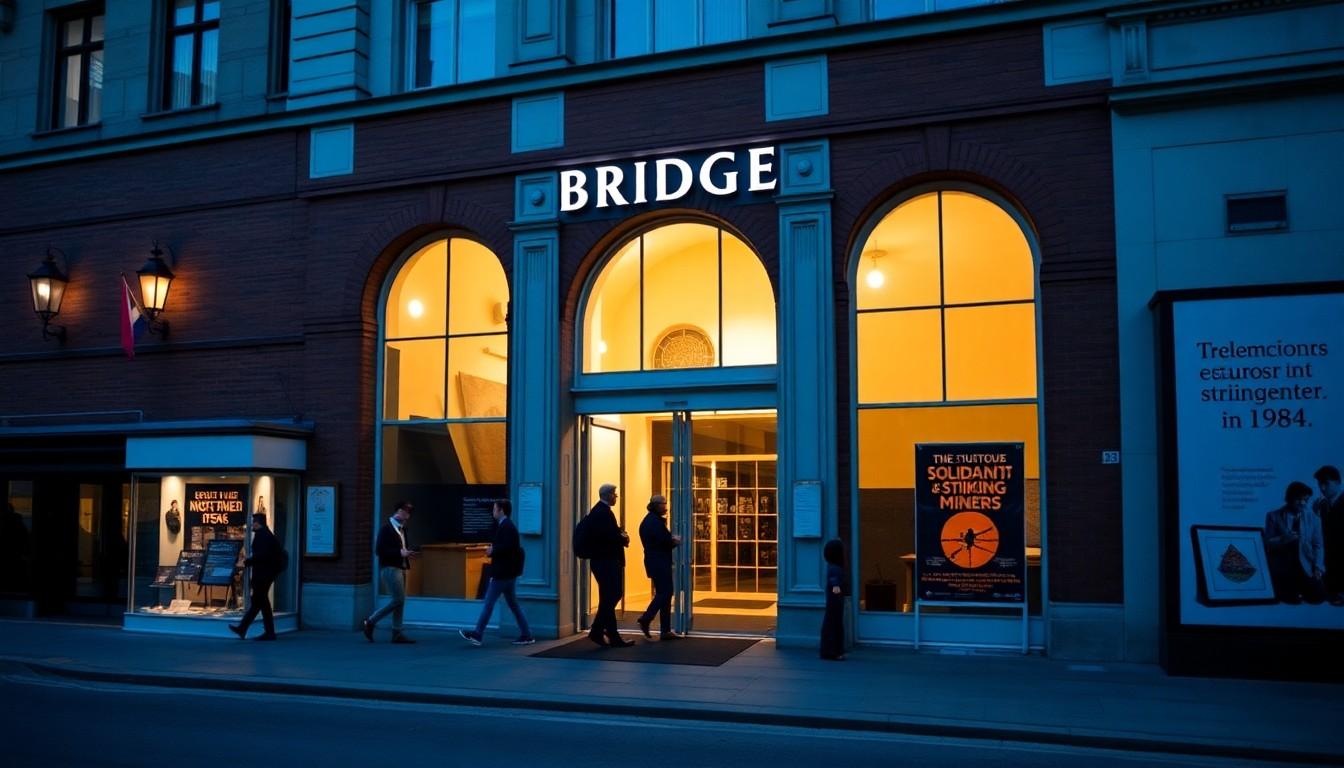
A fresh set of production images offers a glimpse of PRIDE the Musical at London’s Bridge Theatre, where the story of lesbian and gay campaigners supporting striking miners is now on stage. Based on the 2014 film, the production reunites director Matthew Warchus and writer Stephen Beresford, following sold-out runs in Cardiff and at the National Theatre.
Essential Takeaways
- New images: Production photographs show PRIDE the Musical at the Bridge Theatre.
- A real-life alliance: The story follows Mark Ashton and lesbian and gay campaigners supporting miners during the 1984 strike.
- A creative reunion: Director Matthew Warchus and writer Stephen Beresford return to the story they made into the award-winning 2014 film.
- A journey to London: The production follows sold-out seasons in Cardiff and at the National Theatre.
New PRIDE images capture the show’s London arrival
There’s a lively sense of scale in the new production photographs for PRIDE the Musical, now playing at London’s Bridge Theatre. West End Theatre says the images mark the show’s arrival after sold-out runs in Cardiff and at the National Theatre.
The pictures offer a window onto a story rooted in solidarity: in the summer of 1984, 24-year-old activist Mark Ashton brings lesbian and gay campaigners together to support striking miners. The official PRIDE the Musical website describes the stage show as a story of friendship and hope, set against the miners’ strike and the AIDS crisis.
How two communities found common ground
The musical centres on the founding of Lesbians and Gays Support the Miners, or LGSM, and its campaign to back miners during the 1984 strike. Scene describes the alliance as a meeting of communities that might not otherwise have come together, with solidarity becoming a significant part of LGBTQ+ history.
Sony Pictures’ synopsis of the 2014 film also traces the activists’ effort to support mining families, and the common ground that develops between the two groups. That’s the heart of the story: a political campaign becomes a human connection, built in difficult circumstances.
From award-winning film to Bridge Theatre stage
PRIDE the Musical adapts the 2014 film, bringing back the creative partnership of director Matthew Warchus and writer Stephen Beresford. The official show website confirms their return for the stage version, while BroadwayWorld reports that the production moved from sold-out performances at Cardiff’s Sherman Theatre to the National Theatre before reaching the Bridge.
The score adds another dimension to the story. Scene says the music draws on protest songs, pop, rock, disco and Welsh choral traditions, with Christopher Nightingale, Josh Cohen and DJ Walde composing the score.
What the production images reveal
The new photographs are a useful first look at the Bridge Theatre production, but they’re also a reminder of how much the show’s appeal rests on its ensemble and its collective story. West End Theatre’s gallery includes performers such as Ryan Kopel, Samuel Barnett, Carl Spencer and Courtney Stapleton.
For readers weighing up a theatre visit, the show’s path from Cardiff to the National Theatre and now the Bridge gives a clear sense of its journey. The official website provides ticket-booking information, along with links to the cast, creative team and gallery.
A story of solidarity with a lasting pull
The production’s central friendship began in a sharply divided moment, but its message is not limited to the past. Scene reports that audiences at the Bridge Theatre’s opening performances gave standing ovations, while the official site’s review excerpts praise the show’s energy, humour and emotional impact.
And that mix matters. The story carries political weight, yet its focus on people finding unexpected common ground gives it warmth as well as urgency.
A new set of images can only hint at the experience, but PRIDE’s story of solidarity is already the reason to look closer.
Source Reference Map
Story idea inspired by: [1]
Sources by paragraph: