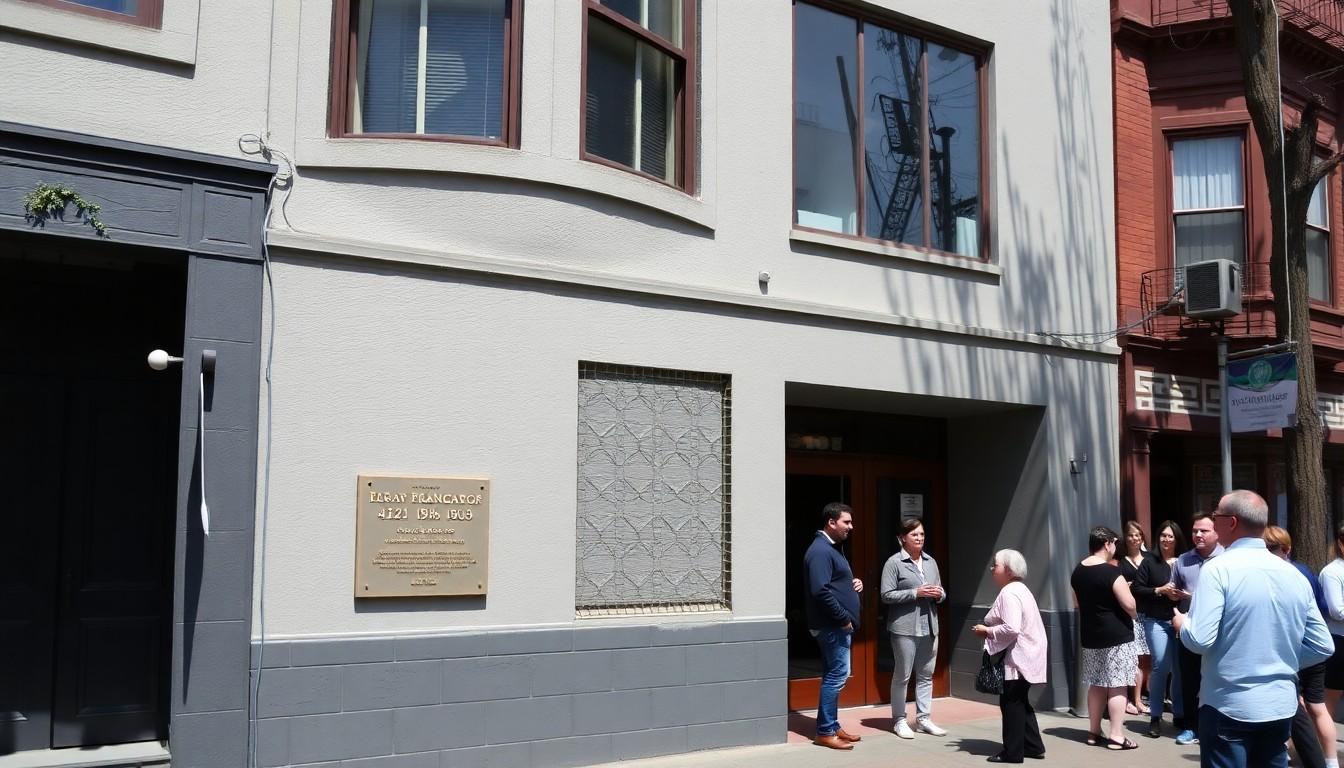
A new Rainbow Honor Walk plaque in San Francisco’s Castro neighbourhood recognises lesbian rights pioneer Phyllis Lyon, placing her name beside that of her late wife, Del Martin. The pairing honours not only Lyon’s activism, but a partnership that helped shape LGBTQ history and still resonates with the community.
Essential Takeaways
- A public tribute: Lyon’s plaque was unveiled outside 4121 19th Street on 15 November.
- Together again: It sits beside the existing plaque for her wife, Del Martin.
- A history of organising: Lyon and Martin co-founded the Daughters of Bilitis, an early lesbian rights organisation.
- A lasting memorial: The Rainbow Honor Walk places markers to deceased LGBTQ figures throughout the Castro.
Two plaques, one enduring partnership
The new plaque for Phyllis Lyon was installed beside Del Martin’s marker, bringing the couple’s names together on a Castro street. At the ceremony, Rainbow Honor Walk board president Donna Sachet joined other well-wishers to mark the occasion.
The Rainbow Honor Walk places historical markers around San Francisco’s LGBTQ neighbourhood to recognise figures who have died. Here, the arrangement carries its own quiet meaning: Lyon and Martin are commemorated side by side, as partners in life and in activism.
The organising that changed lesbian history
Lyon and Martin co-founded the Daughters of Bilitis in San Francisco in 1955. The Library of Congress describes it as the first lesbian rights group in the United States, noting that it began as a social club and grew into a national organisation.
That history also had other founders. The Library of Congress records that Filipina organiser Rosalie “Rose” Bamberger proposed the social club, and that the first four couples met at her and Rosemary Sliepen’s home. Martin served as the group’s president and Lyon as its secretary.
The pair also helped bring lesbian voices to a wider audience. The California Museum says they launched The Ladder in 1956, the first nationally distributed lesbian publication.
Why the plaques feel especially personal
Lyon died in 2020, after Martin, who died in 2008. The couple married in San Francisco in 2004 and again in 2008, after California legalised same-sex marriage, according to the California Museum.
Their lives together were also closely bound to their public work. The San Francisco Bay Times describes the adjoining plaques as a tribute to a shared life and a long partnership in activism, rather than simply two separate honours. It’s a small detail in bronze, but one that makes the memorial feel intimate.
Travel disruption kept two friends away
Kate Kendell, a longtime friend of the couple, and Rainbow Honor Walk co-founder David Perry couldn’t attend the ceremony. The Bay Area Reporter said the lingering effects of a federal aviation ground stop on 13 November left them stuck in Palm Springs.
The Associated Press reported that the nationwide stop was lifted later that day, but travel disruption continued, with delays, cancellations and diversions. The report provides context for the wider disruption, though it doesn’t confirm the pair’s individual travel circumstances.
A memorial that keeps history close
Perry praised Lyon’s contribution and recalled her and Martin’s founding of the Daughters of Bilitis. Kendell, reflecting on Martin’s death and Lyon’s grief, said seeing their plaques together brought comfort and helped ease the sense of loss felt by friends and the wider community.
That emotional response speaks to what public memorials can do: make a history visible in the place where people live, walk and gather. For Lyon and Martin, the Castro marker honours both the work they shared and the bond that outlasted one another.
A walk through the Castro can now bring Lyon and Martin’s story into view, side by side.
Source Reference Map
Story idea inspired by: [1]
Sources by paragraph: