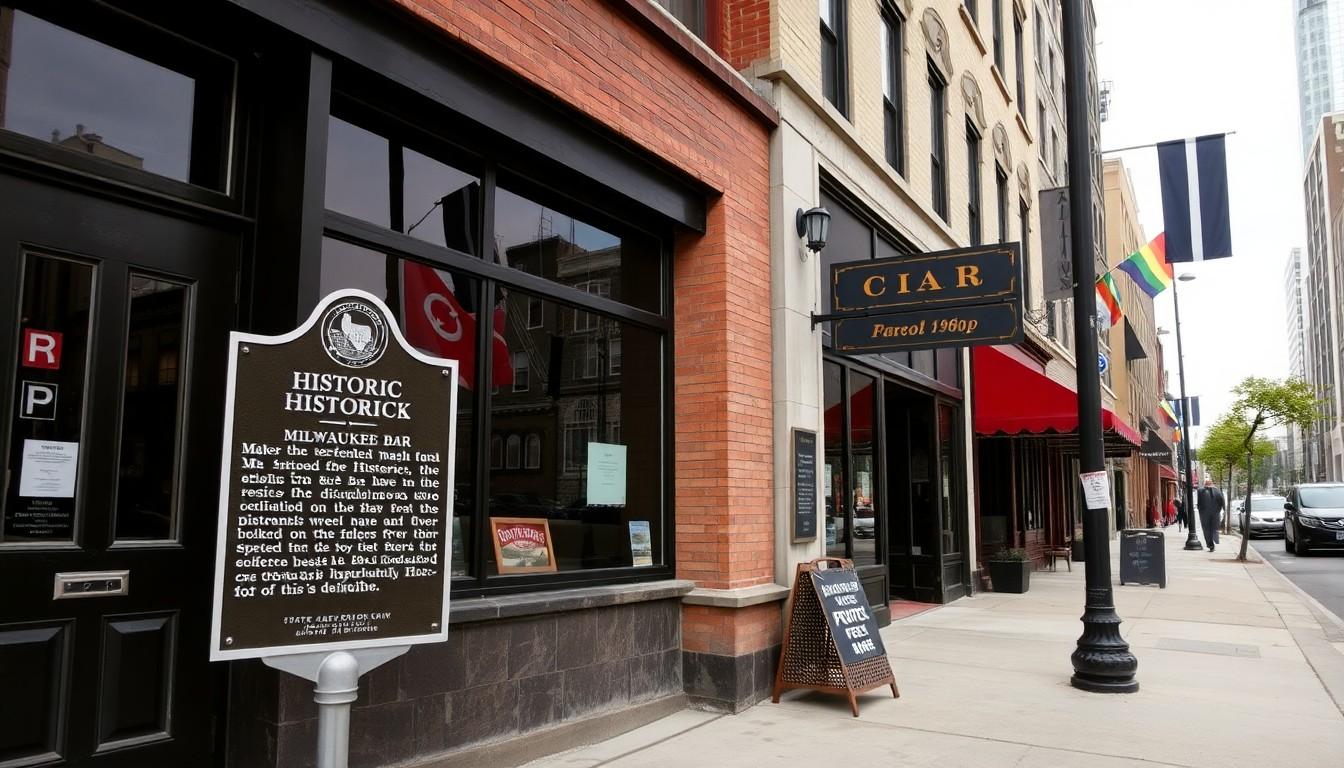
Milwaukee’s This Is It! may have closed, but its story is about to take a lasting place in Wisconsin’s public history. A state historic marker will be dedicated outside the former bar on Thursday, 19 November, recognising a venue that welcomed generations of LGBTQ customers and served as far more than a night out.
The bar has closed, but its story stays visible
For nearly 57 years, This Is It! stood at 418 E. Wells St. in downtown Milwaukee. Now, a historic marker outside the former bar will give its community legacy a permanent public home.
The Wisconsin LGBTQ History Project says the marker recognises the venue’s contribution to Wisconsin history and its importance as a gathering place for LGBTQ people. It’s a modest-looking object with a big job: keeping a local story in view.
A dedication with deep Milwaukee roots
The public dedication is scheduled for 1 p.m. on Thursday, 19 November, outside the former bar. Milwaukee Mayor Cavalier Johnson, Wisconsin Historical Society CEO Christian Overland and Milwaukee County Board Chairwoman Marcelia Nicholson-Bovell are among those expected to speak.
Also on the speaker list are Wisconsin LGBTQ History Project Vice President Ricardo Wynn and Sarah Freiheit, granddaughter of founder June Brehm. Milwaukee Neighborhood News Service independently lists the ceremony as a community event honouring the bar and Brehm.
Founded in 1968, built around belonging
June Brehm and Michael Latona founded This Is It! in August 1968. The Wisconsin LGBTQ History Project describes it as a place where gay people could feel safe, welcome and respected, serving several generations of customers.
The bar’s role extended beyond its main room. Over the years, it hosted drag and ballroom programming, held alcohol-free events for teenagers and displayed a rotating LGBTQ history exhibit. It also supported community organisations and causes, according to the History Project.
Why This Is It! closed its doors
The bar announced its permanent closure on 9 March 2025, after nearly 57 years. OnMilwaukee reported that management pointed to the lingering impact of the COVID crisis and an eight-month closure of the street and pavement outside the venue.
That combination proved difficult to overcome. The Wisconsin LGBTQ History Project’s account also describes the pandemic and later economic pressures, alongside disruption from Wells Street construction. It’s a reminder that a much-loved local institution can still face practical pressures that are hard to absorb.
Who is paying for the marker?
The Wisconsin LGBTQ History Project says it is covering the marker’s design, installation, dedication and maintenance through its LGBTQ Landmarks Program. The project is privately funded, with no federal, state or local taxpayer investment.
For readers who want to support the work, the organisation is accepting additional donations. And while the bar itself is gone, the marker offers a way to keep its place in Milwaukee’s LGBTQ history visible to anyone passing by.
A public marker can’t replace a favourite gathering place, but it can help make sure its story remains part of the city.
Source Reference Map
Story idea inspired by: [1]
Sources by paragraph: