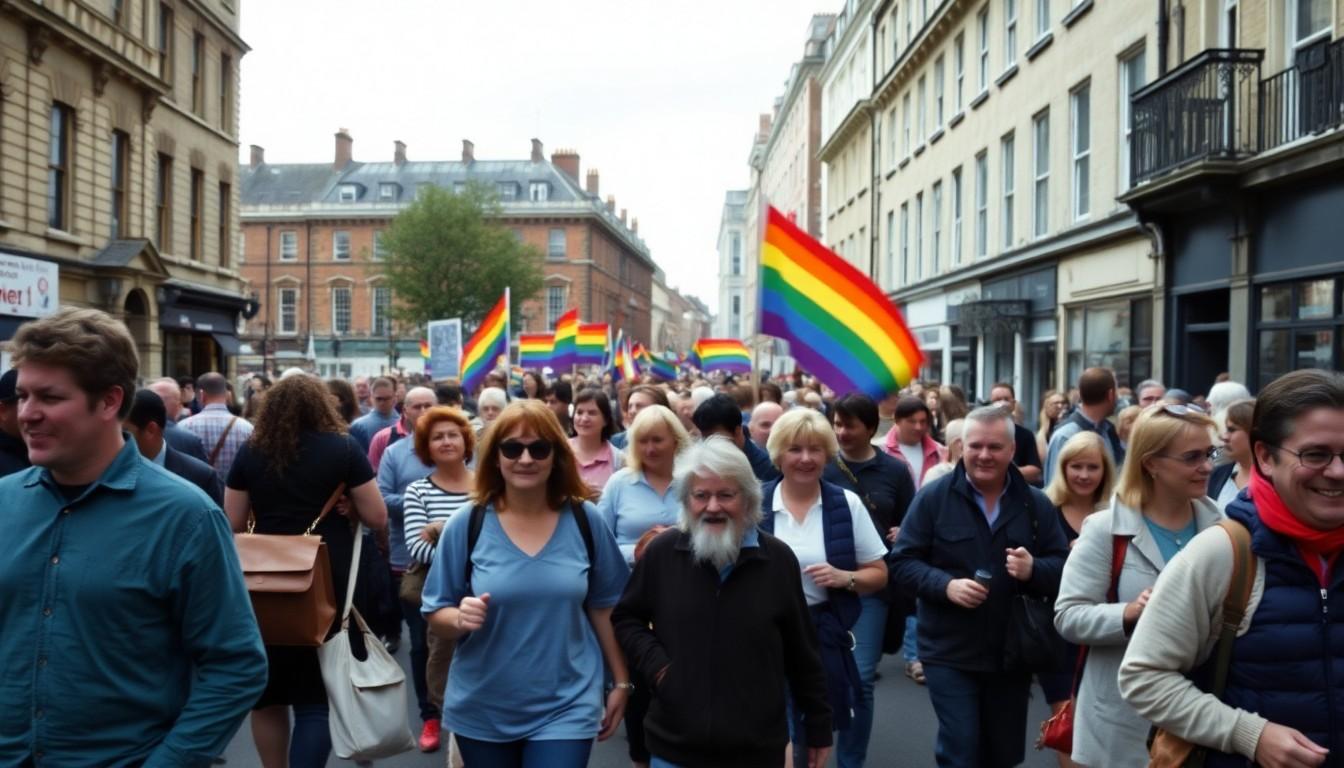
London Pride in 1995 was both a public demonstration and a huge celebration, with a march through the West End followed by music and festivities in Victoria Park. But behind the dancing lay a harder reality: in pre-internet Britain, everyday choices about work, healthcare and housing could carry questions of safety and acceptance.
Essential Takeaways
- A march and a festival: Pride combined a West End march with a major gathering in Victoria Park.
- A big public event: Contemporary reporting said organisers expected around 200,000 people, with performers including Erasure, Boy George and Jimmy Somerville.
- Club culture was part of the programme: The Ministry of Sound hosted a stage, while London nightlife helped shape the festival’s celebratory feel.
- Equality remained uneven: In 1995, the age of consent for gay men was still 18, and Section 28 remained in force.
- Joy had a purpose: The celebration offered community and visibility in a period marked by discrimination and HIV-related stigma.
Pride was more than a night out
In Paul Flynn’s recollection for the Evening Standard, pre-internet gay life had a particular weight in daylight. The night might offer places to meet and socialise, but ordinary decisions could be more complicated: choosing a doctor, employer, landlord or holiday destination could all raise questions of trust and acceptance.
That contrast makes the 1995 Pride story especially vivid. The festival’s music and exuberance weren’t separate from the political climate; collective celebration could also be a way to find one another and be seen.
Victoria Park turned protest into a festival
The Independent’s contemporary report described a march through the West End followed by a large festival in Victoria Park. Organisers expected around 200,000 people, and the advertised line-up included Erasure, Boy George and Jimmy Somerville, alongside beer tents and a marketplace.
The event was also drawing more mainstream attention. The Independent noted corporate sponsors including Evian, Smirnoff, Grolsch and Virgin Megastore, as well as supportive comments from health minister John Bowis. That growing profile sat alongside a continuing fight for acceptance, rather than marking its end.
The dance floor had a public role
Club culture wasn’t just a backdrop to Pride. The Evening Standard connects the festival’s party atmosphere with house music and the influence of the Trade nightclub, while a 1995 report in Music Week records the Ministry of Sound hosting its own stage at the Victoria Park event.
There’s something telling in that combination: a community gathering could be political, social and genuinely fun all at once. The music helped make the event feel like a celebration, while its scale and visibility made it a public statement too.
The law had moved, but equality hadn’t arrived
The legal context was stark. According to the UK Parliament, the 1994 Criminal Justice and Public Order Act lowered the age of consent for gay men from 21 to 18. It would fall to 16 in 2001, so the age remained unequal in 1995.
Section 28 was also still in force. The British Film Institute describes how the measure restricted local authorities from promoting homosexuality, while the London School of Economics Library notes that it limited discussion of same-sex relationships in schools. In the same period, HIV and AIDS carried fear and stigma, themes explored in the BFI’s account of British television coverage.
Why the party still matters
Pride’s history can be easy to flatten into a story of growing crowds and colourful performances. But the 1995 accounts show a more complex picture: a prominent festival unfolding while legal inequality, institutional hostility and uncertainty in everyday life remained real.
That doesn’t make the celebration less joyful. If anything, it helps explain why joy and visibility mattered. A public party could offer connection and recognition at a time when neither could be taken for granted.
Closing Line
Remembering Pride 1995 means holding both sides together: the pressure of the time and the power of showing up.
Source Reference Map
Story idea inspired by: [1]
Sources by paragraph: