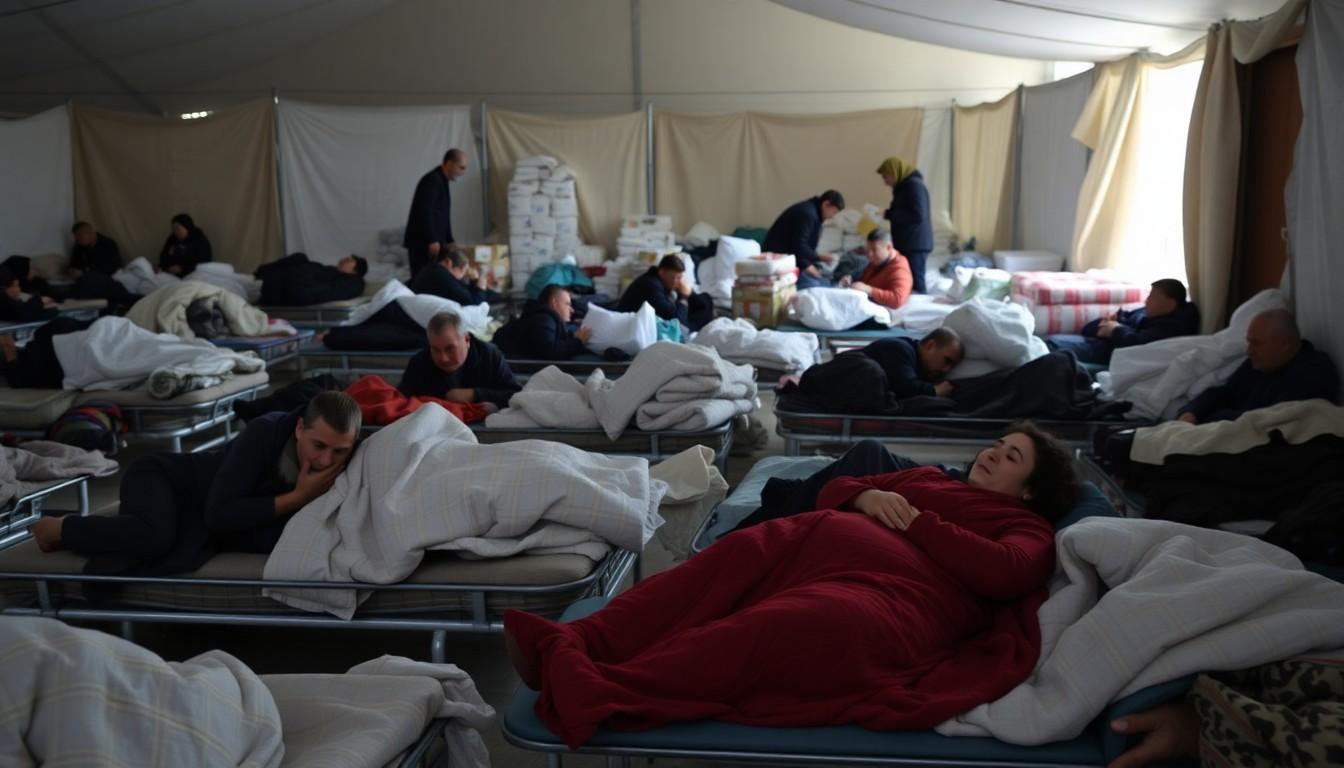
A renewed conflict has forced people from homes across Lebanon, while raising urgent questions about who can safely access emergency shelter. Helem, the Lebanese LGBTQ+ rights group, is urging authorities and aid organisations to make their response inclusive. Its warning matters in a country where same-sex relations remain covered by a contested criminal law.
Displacement brings an old crisis into sharper focus
The conflict has driven people from southern Lebanon and Beirut’s southern suburbs, with families seeking refuge in cars and emergency shelters. Le Monde reported that more than 58,000 people had left their homes by the time of its coverage, while more than 300 shelters had opened. For anyone displaced, a place to sleep is only part of the challenge.
The escalation followed Hezbollah’s rocket attacks towards Israel and Israel’s subsequent strikes in Lebanon, against the backdrop of the wider Iran war. The Associated Press’ timeline traces how the Iran conflict and fighting between Israel and Hezbollah became entangled. Le Monde’s account, meanwhile, captures the strain on people trying to find somewhere safe amid the upheaval.
Why access to shelter isn’t equal for everyone
Helem says LGBTQ+ people displaced in the previous war faced barriers including being turned away from collective shelters, harassment or violence, and difficulty accessing health and psychosocial support. Some were also afraid to disclose their sexual orientation or gender identity. A shelter can exist on paper and still feel out of reach.
The organisation argues that emergency plans must protect people without discrimination, and that staff should be trained to prevent gender-based violence and bias. It also wants authorities to reconsider a shelter model built around the “traditional family”, which can exclude LGBTQ+ people, survivors of domestic violence, migrant workers and those without supportive relatives.
Lebanon’s criminal law adds another layer
Article 534 of Lebanon’s Penal Code provides for up to a year in prison for sexual intercourse described as contrary to nature. The Washington Blade’s report on a decriminalisation campaign describes how the provision remains contested: some judges have declined to apply it to LGBTQ+ people, while advocacy groups say it is still used to target people.
Human Rights Watch has also documented threats to LGBTI people in Lebanon, including political efforts to repeal Article 534 as well as proposals that would criminalise same-sex conduct or the promotion of homosexuality. That history helps explain why revealing one’s identity in a shelter or while seeking services may carry particular fears.
What an inclusive emergency response could look like
Helem is calling for a rights-based approach throughout the planning and delivery of aid, with safe and equal access to services. It also wants specialist civil-society groups involved in designing and monitoring the response, alongside clear standards for reporting and addressing discrimination.
For people choosing where to seek help, Helem’s concerns point to practical questions worth asking: whether a shelter has clear protections against harassment, whether confidential health and psychosocial support is available, and whether staff have relevant training. These are not extras in a crisis. They can determine whether people feel able to ask for help at all.
Safety means more than finding a roof
The Associated Press’ reporting on the regional conflict describes the danger spreading across borders, while Le Monde’s coverage shows the immediate pressures facing displaced people in Lebanon. Helem’s statement brings a further point into view: emergency plans need to account for people whose safety may be compromised not only by conflict, but also by exclusion or stigma.
The group says it is ready to share its expertise with authorities and aid organisations. Its appeal is straightforward: protection should reach everyone, especially when the need for safety is most urgent.
Closing Line
A shelter is only safe when everyone can enter it without fear.
Source Reference Map
Story idea inspired by: [1]
Sources by paragraph: