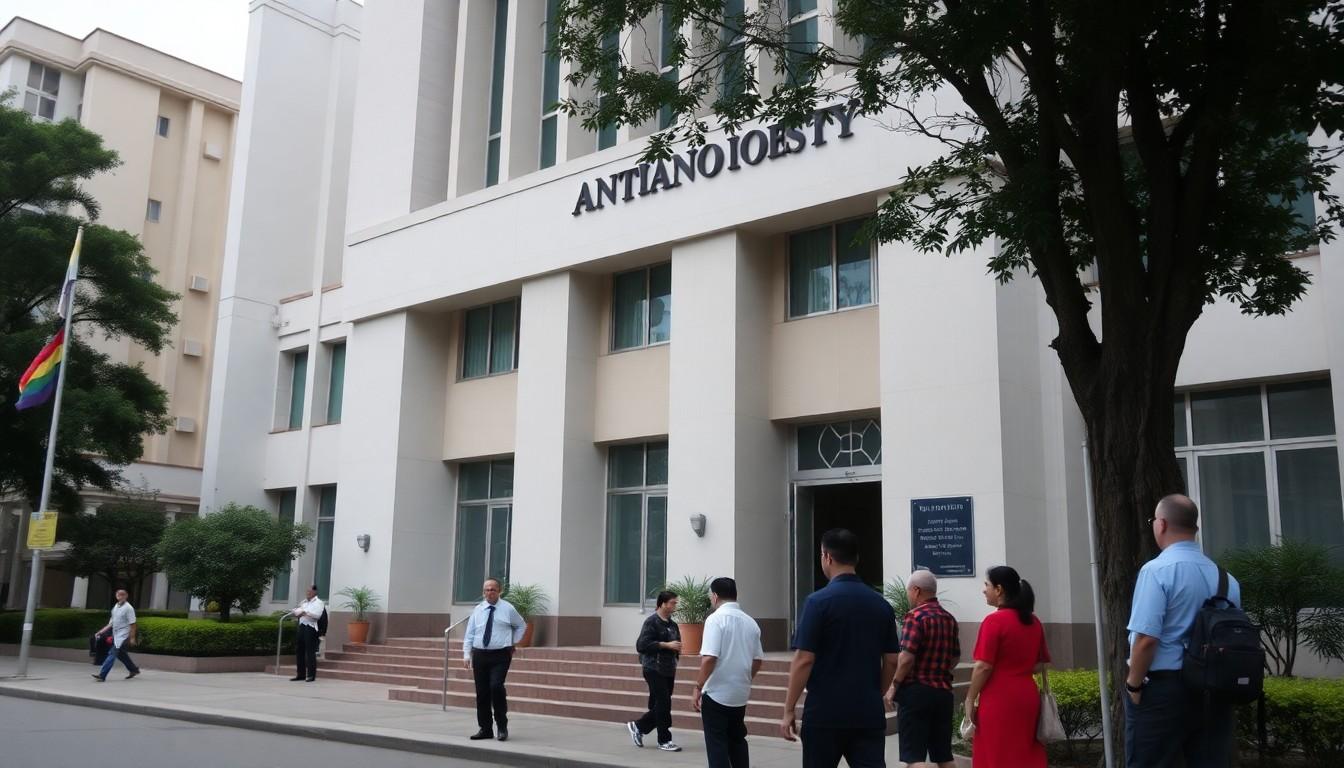
Indonesia's Ministry of Religious Affairs is preparing an academic paper for a proposed bill on preventing the spread of LGBTQ culture. The work brings religious leaders, academics and legal practitioners into the process, while officials point to education and community guidance as possible tools. But the presidential policy cited as its backdrop is a broad defence framework, not a bill focused solely on LGBTQ issues.
The proposal is still at the drafting stage
The Ministry of Religious Affairs is preparing an academic paper to inform a proposed bill on preventing the spread of LGBTQ culture. The drafting process involves religious leaders, academics and legal practitioners, but the paper is still intended as input for Parliament, not a law already in force.
According to ANTARA, team leader Iswandi Syahputra says the work follows Presidential Regulation No. 111 of 2025, Indonesia's national defence policy for 2025-2029. The ministry established a working team through Ministerial Decree No. 1115.
Two routes: religious education and local guidance
The ministry has outlined two approaches: adding prevention material to religious education, and preparing guidance for religious counsellors working with communities. Its official account says the education material is intended to feature across Islamic learning, from early childhood and madrasah education through higher religious education.
That outlines a broad ambition, but not a finished curriculum. The ministry has not provided the proposed material in full, or explained how it would be taught in practice. For now, the distinction matters: these are stated programme plans, alongside a draft academic paper, rather than enacted legislation.
What the presidential regulation does - and doesn't - say
The cited regulation is a general defence-policy framework for 2025-2029. The Coordinating Ministry for Law, Human Rights, Immigration and Corrections says Minister Yusril Ihza Mahendra has stressed that it isn't a standalone law on LGBTQ people. The Ministry of Defence has also described the issue as one example in a wider mapping of non-military threats.
That wider category includes other issues, such as natural disasters and disease outbreaks. So the proposal's connection to the regulation shouldn't obscure the difference between a broad policy instrument and a separate bill that may be put forward to Parliament.
Interfaith input adds a wider social lens
A meeting in Jakarta on 16 and 17 November 2026 brought religious representatives together to contribute to the academic paper. The Directorate General of Buddhist Community Guidance described the gathering as a way to include perspectives from different traditions, while noting that its contributions are inputs to a paper still under development.
The report also highlights Buddhist leader Bhikkhu Nyanasuryanadi Mahathera's suggestions, including moral education, family communication, youth activities and critical digital literacy. That points to a wider discussion about the role of families, education and community settings alongside regulation - although the meeting report doesn't assess the likely effects of the proposed bill.
The next step is a parliamentary discussion
The academic paper is intended for Commission VIII of the House of Representatives as input to a possible legislative initiative. Officials have also described plans for the government and Parliament to prepare an inventory of issues for discussion.
The proposal's stated aims and its potential impact are not the same thing. The available reports describe the ministry's position and outline the process, but they don't settle broader legal or human-rights questions, or show what a final bill would contain. For readers following the issue, the useful distinction is simple: a draft paper can shape debate, but it isn't the same as an enacted law.
For now, the proposal remains a work in progress, with Parliament's next steps still to come.
Source Reference Map
Story idea inspired by: [1]
Sources by paragraph: