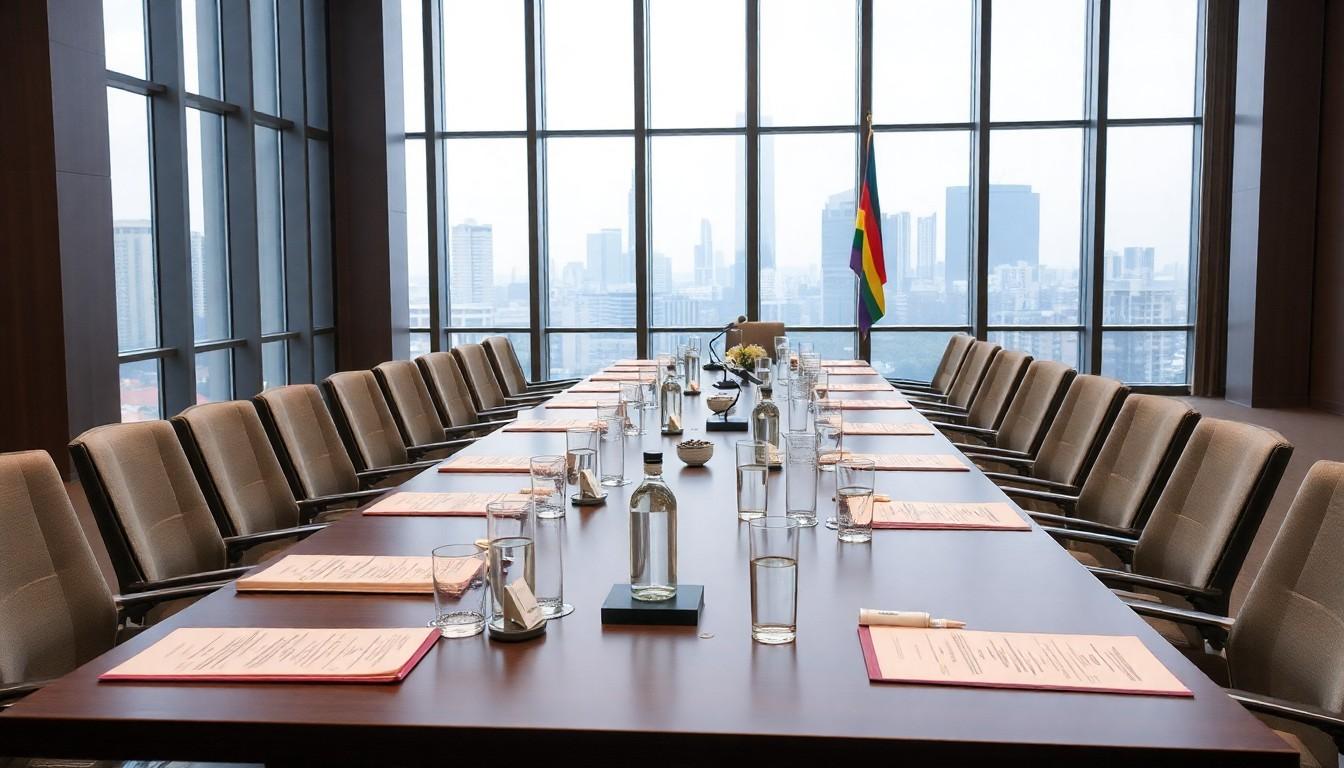
Thailand’s Senate is arguing that equal rights must underpin the country’s Pink Economy as Bangkok bids to host WorldPride 2030. The report connects protections for LGBTQIA+ people with fairer opportunities across creative work, healthcare and small businesses. Its central message is practical: a major event matters most if it leaves behind safer cities, stronger rights and better working conditions.
Equality is the starting point, not a side issue
A new report on Thailand’s Pink Economy makes a clear case: economic growth should not come at the expense of human rights. Prepared by a working group under the Senate Standing Committee on Foreign Affairs, it examines 15 connected industries, from entertainment and publishing to gender-affirming care and beauty services.
The report argues that discrimination can carry economic as well as personal costs, including reduced productivity, mental-health strain and job insecurity. In its proposed cycle, rights and safety build trust; trust can attract people and investment; and the value created should help fund better standards, welfare and equality in turn.
That idea gives Bangkok’s WorldPride 2030 bid a bigger frame than a single event. Thailand’s government has also presented the candidature as an opportunity to promote diversity, develop creative industries and support tourism and the Pink Economy.
Marriage equality is a milestone, with more work ahead
Thailand’s Marriage Equality Law took effect in January 2025, allowing two people to marry regardless of gender. The law also changed marriage terminology to gender-neutral language and extended family-related rights, including provisions connected with property and medical decisions for a spouse.
The first day of registration brought the change into public view, with district offices across the country ready to register marriages. But the Pink Economy report treats marriage equality as a foundation, not a finish line. It calls for legal gender recognition, gender-neutral nationality rules for Thai-foreign couples and reliable access to marriage-related rights in areas such as loans, property and services.
That distinction matters: passing a law is a major step, while making rights work smoothly in everyday life is another. Thailand’s 2026 health report also notes that related legal and administrative changes can take time, and identifies continuing gaps around gender identity recognition.
Fairer work could make the Pink Economy more than a label
The report turns attention to people whose work helps shape Thailand’s cultural and service industries. Performers, makeup artists, hairdressers, writers and film crews may lack standard contracts or welfare protections, it says, despite contributing to a wider economic ecosystem.
Its recommendations include fair pay and social security for drag artists, royalties and ownership rights for Boys’ Love and Girls’ Love creators, and voluntary routes into the formal economy for freelance hair and makeup workers. The goal is for small businesses and individual workers to share in the opportunities around WorldPride, rather than simply provide the labour behind them.
There’s a useful test here for any “Pink Economy” initiative: who gets paid, who has protection, and who retains a share of the value they create? The report also proposes voluntary certification for businesses claiming to be LGBTQIA+-friendly, with consumers, civil society and academics involved in oversight.
Four pilot cities, and a longer-term measure of success
The report recommends placing the agenda in Thailand’s next national development plan and piloting initiatives in Bangkok, Pattaya, Phuket and Chiang Mai. It also calls for local procurement and dedicated opportunities for small and medium-sized businesses in major projects.
Thailand’s WorldPride bid has been promoted with support from government bodies, Bangkok Pride and other public- and private-sector partners. At a Bangkok event in July 2026, officials and representatives from Pride networks gathered to build support for the candidature and reaffirmed commitments to equality and human rights.
Still, the report’s proposed measure of success is not simply how many people attend. It points instead to lasting changes: stronger laws, safer cities and better-protected workers. That’s a more demanding yardstick, but it gives the event a meaningful legacy to aim for.
The real legacy will be felt after the celebrations
WorldPride 2030 is presented as a deadline for reform, with the report calling for six permanent legacies spanning legal rights, city infrastructure and fair contracts. Its wider point is that an event can create momentum, but lasting progress depends on what changes for people at work, in healthcare and in public services.
For Bangkok’s bid, the strongest promise may be the one that reaches beyond the spotlight: a fairer economy in which LGBTQIA+ people can work, create and build businesses with dignity and security.
The lasting measure will be whether those rights and protections are felt in everyday life.
Source Reference Map
Story idea inspired by: [1]
Sources by paragraph:
- Paragraph 1: Lead article only
- Paragraph 2: Lead article only
- Paragraph 3: [3]
- Paragraph 4: [4], [5], [7]
- Paragraph 5: [2], [6]
- Paragraph 6: Lead article only
- Paragraph 7: Lead article only
- Paragraph 8: [3]
- Paragraph 9: Lead article only
- Paragraph 10: [3]
- Paragraph 11: Lead article only
- Paragraph 12: Lead article only