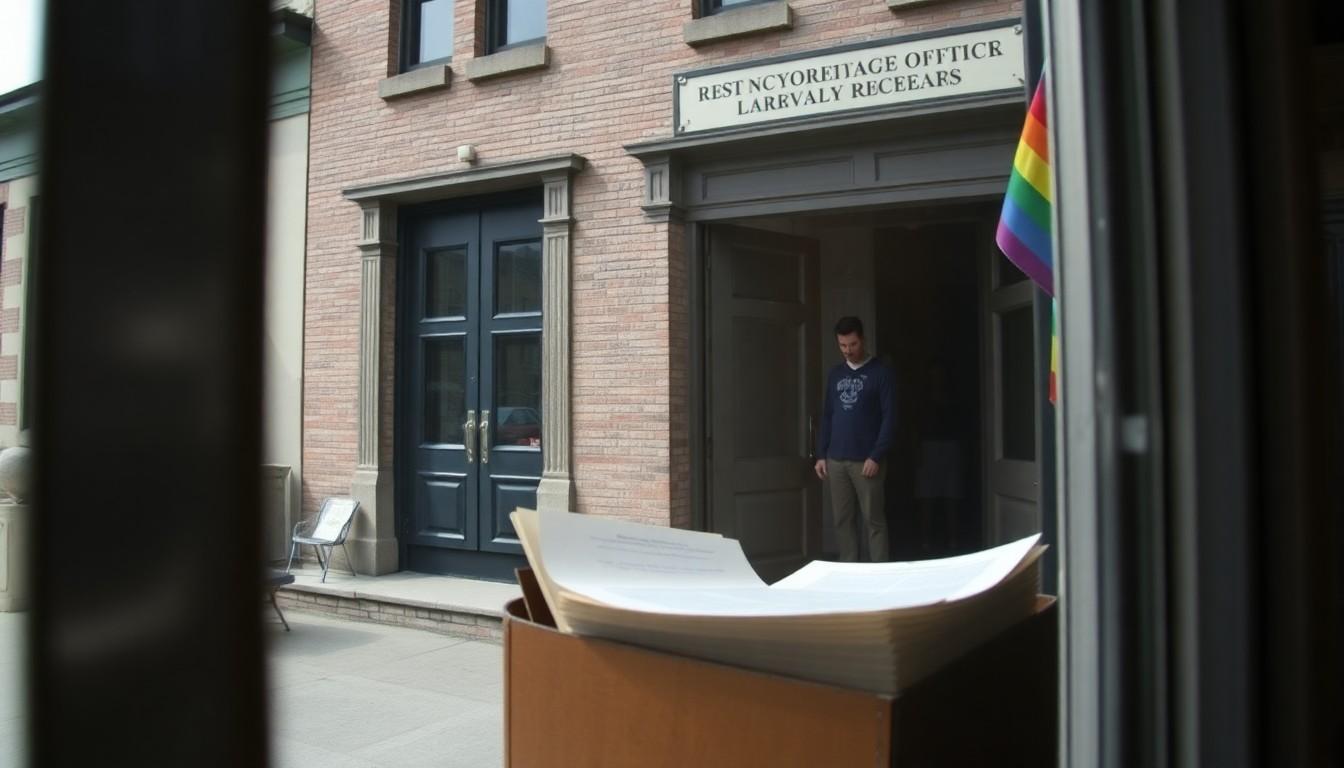
New York’s LGBTQ+ historic places are the focus of a new statewide report, which sets out how communities can identify and preserve them beyond New York City. The exploratory project, led by the Preservation League of New York State, highlights the value of local knowledge and the challenges of documenting histories that have often been hidden or erased.
Essential Takeaways
- A first step: The project began in 2025 to develop a framework for identifying, documenting and nominating LGBTQ+ historic properties across New York State.
- Local history matters: The report warns that approaches used in one region may not suit another.
- Research needs care: Changing terminology, privacy, fragile sites and historic erasure all make documentation more complex.
- Practical support is proposed: The next steps include an LGBTQ+ Historic Sites Action Plan and Toolkit, and a History Action Fund.
- The work is collaborative: Preservation organisations, regional knowledge holders, State Parks and the City of Ithaca contributed to the project.
A statewide report looks beyond New York City
The new report is a starting point, not a finished catalogue of LGBTQ+ landmarks. Its aim is to give people across New York State a framework for recognising places connected to LGBTQ+ history and considering how they might be preserved.
The Preservation League of New York State says the project was partly inspired by the NYC LGBTQ Historic Sites Project. That city-focused work has documented sites through themes, maps and community contributions, offering a useful example while leaving room for a broader statewide approach. (5)
Why documenting LGBTQ+ history takes care
Historic-site research can sound straightforward: find a place, establish its story, record its significance. But the report describes a more delicate task. Terminology evolves, some histories were kept private, and certain places or resources may be vulnerable or short-lived. Deliberate concealment and erasure can also leave researchers with an incomplete record. (2, 4)
The study argues that this work calls for specialist research skills, sustained public engagement and cultural sensitivity. That combination matters because the goal is not simply to mark a building on a map, but to understand the people and communities connected to it without flattening their stories. (4)
One statewide template won't fit every region
New York’s LGBTQ+ history is diverse and closely tied to local circumstances, the report says. A method that works in one part of the state may not translate neatly to another, so regional knowledge and relationships are essential rather than optional extras. (2, 4)
That need for local detail is reflected in the project’s stakeholder committee, which brought together preservation organisations from across the state. Regional LGBTQ+ knowledge holders were also interviewed, while committee members made progress through research, new connections and, in some cases, new initiatives. (2, 3)
What the report recommends next
The Preservation League has proposed an LGBTQ+ Historic Sites Action Plan and Toolkit, alongside a History Action Fund. The League says it is already working with the New York State Office of Parks, Recreation and Historic Preservation on how to advance these ideas. (3)
The full report also recommends convening a statewide network and exploring a public repository for project materials. Together, those proposals point towards practical support for local groups, rather than expecting every community to build its research capacity from scratch. (4)
A living record, not a closed list
New York State Parks already introduces places and people connected to LGBTQIA+ history, while noting that its selection is not comprehensive and that New York City is over-represented. Its examples span activism, arts and community life, including sites outside the city. (6)
That makes the statewide report’s emphasis on continued research especially relevant. The NYC project also treats its documentation as ongoing, inviting people to suggest sites and share information. Preserving history, after all, is less like closing a file than keeping a conversation open. (5)
The report gives communities a clearer starting point for telling those stories, while recognising that each region will need its own approach.
Source Reference Map
Story idea inspired by: [1]
Sources by paragraph: