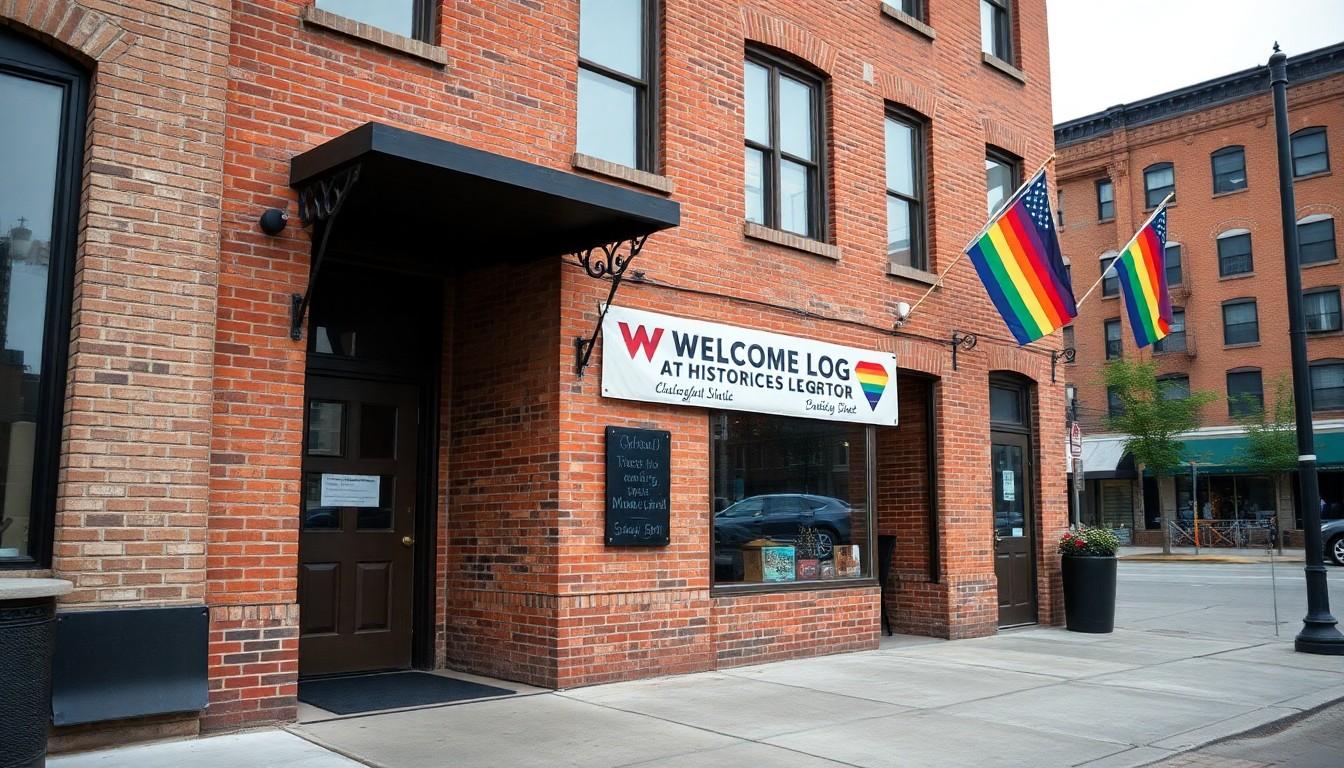
Explore Lexington’s LGBTQ+ history and culture, from a landmark bar and historic rights protections to Pride events and queer-owned businesses. For visitors weighing a trip to Kentucky, the city offers more than a welcoming downtown: it’s a place where local history, community life and everyday travel can sit side by side.
Essential Takeaways
- A long community history: Lexington’s LGBTQ+ story includes gathering places, local advocacy and landmark legal changes.
- Rights protections: The city’s 1999 Fairness Ordinance covered discrimination in housing, employment and public accommodations.
- Historic nightlife: The site of today’s Bar Complex has served as an LGBTQ+ gathering place for decades and hosted a 1970 wedding ceremony for Marjorie Jones and Tracey Knight.
- Events bring people together: Annual celebrations include Lexington Pride Festival, Kentucky Black Pride and North American Bear Weekend.
- Plan around downtown: VisitLEX recommends downtown as a walkable base, with history, venues and visitor attractions close at hand.
Lexington’s LGBTQ+ story is part of the visit
Lexington’s appeal for LGBTQ+ travellers isn’t just about finding a good night out. Its local history is visible in venues, public landmarks and community celebrations, giving a city break a deeper sense of place.
VisitLEX recommends downtown as a walkable base and points visitors towards the Pride of Place self-guided tour. It connects sites linked to more than two centuries of local LGBTQ+ history, including rainbow crosswalks and a mural honouring Sweet Evening Breeze.
That history matters because the city’s present-day community didn’t appear overnight. The Faulkner Morgan Archive preserves material connected to Sweet Evening Breeze, placing her among the figures whose stories help shape Lexington’s LGBTQ+ heritage.
How Lexington built a record of rights
Lexington’s Fairness Ordinance, passed on 8 July 1999, added sexual orientation and gender identity as protected classes in housing, employment and public accommodations. The Lexington-Fayette Urban County Human Rights Commission also describes its role in addressing discrimination complaints and promoting equal treatment.
A decade earlier, the Kentucky Supreme Court’s decision in Commonwealth v. Wasson struck down the state law criminalising consensual same-sex sexual activity. The ruling relied on protections in the Kentucky Constitution, making it a major legal milestone in the state’s LGBTQ+ history.
More recently, Emma Curtis’s 2024 election to Lexington’s urban county council marked another moment of representation. The Lexington Herald-Leader reported that she became the first transgender person elected to the council, and was believed to be the first transgender person elected to a city office in Kentucky.
A historic bar with a story behind the doors
The Bar Complex is more than a place to dance. The Kentucky Historical Society records its address as one of Kentucky’s oldest continuous LGBTQ+ gathering places, with patrons meeting there discreetly as early as 1939.
John Hill and Estel Wilson opened The Gilded Cage at the site in 1963, where same-sex dancing and drag shows took place. The venue later operated under other names, including The Living Room, before becoming associated with today’s Bar Complex.
In 1970, the location hosted the wedding ceremony of Marjorie Jones and Tracey Knight. It’s also tied to the legal challenge that led to the overturning of Kentucky’s sodomy law, giving the address a significance that reaches well beyond its nightlife.
Pride events and community gathering spots
For a visitor, the easiest way to get a feel for the city may be to pair a history stop with a community event. VisitLEX highlights the Lexington Pride Festival in June, Kentucky Black Pride and North American Bear Weekend, alongside the Imperial Court Coronation.
The tourism guide says the June festival draws about 50,000 people downtown. That scale makes it a major date on the local calendar, while the range of events offers different ways to connect with the community.
For a quieter stop, VisitLEX also points to queer-owned Lussi Brown coffee shop and bar, as well as Crossings and The Bar Complex. The guide directs visitors seeking regional resources to the Lexington Pride Center, a useful place to start when planning beyond the usual tourist itinerary.
Make the most of a Lexington visit
Start downtown if you want to keep the day simple: VisitLEX describes it as walkable and uses its self-guided Pride of Place tour to connect local history with the city’s present-day culture. You can build in time for a coffee stop or a visit to one of the gathering places along the way.
If you’re travelling for a festival, check the event details before you go and make those dates the anchor for your plans. And if you’re interested in the history, leave room to pause at the historic marker and the Bar Complex site; knowing what happened there changes how an ordinary street corner feels.
Lexington’s story isn’t a promise that every visitor will experience the city in the same way. But its landmarks, local protections and active community life make a strong case for looking beyond broad assumptions about the region.
A good visit can begin with a walk, a local story and a little curiosity.
Source Reference Map
Story idea inspired by: [1]
Sources by paragraph: