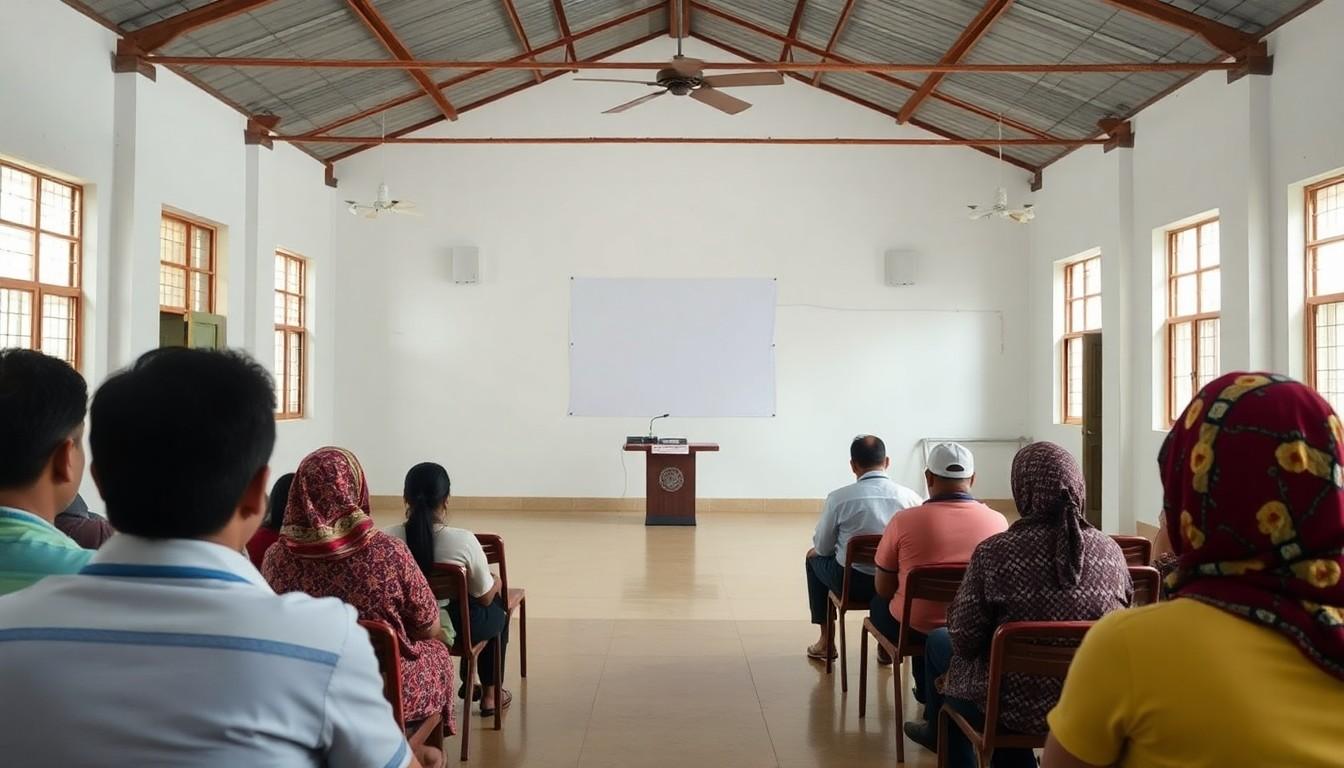
A public meeting in South Kalimantan has put Indonesia’s approach to LGBT issues in the spotlight. MP Habib Aboe Bakar Alhabsyi told residents that the country’s laws set boundaries around marriage and public conduct. But the legal texts he cited address specific matters, so it’s important to separate his political claims from what the statutes actually say.
Key takeaways
- The setting: Habib Aboe spoke at a public meeting with residents in Barito Kuala, South Kalimantan.
- Marriage law: Indonesia’s 1974 Marriage Law defines marriage as a bond between a man and a woman.
- Constitutional context: Article 28B covers family formation through lawful marriage and separately sets out children’s rights.
- Specific offences: The Criminal Code and Pornography Law address defined conduct; the supplied legal texts do not make LGBT identity itself a crime.
- A useful distinction: The politician’s remarks are not the same as an independent legal analysis of sexual orientation, gender identity or the laws’ application.
A residents’ meeting turns to LGBT policy
At a gathering in Barito Kuala, South Kalimantan, residents asked Indonesian MP Habib Aboe Bakar Alhabsyi about the Government’s approach to LGBT people. The question prompted a firm response, framed around family values, public order and the country’s legal rules.
JPNN reported that Aboe said Indonesian law does not recognise same-sex marriage. He also argued that authorities could act against conduct in public involving violations of decency, coercion, children or pornography. Those are his claims as reported by the outlet, rather than a court ruling or a comprehensive legal assessment.
What the 1974 Marriage Law says
The official text of Indonesia’s Marriage Law defines marriage as a bond between a man and a woman, with the aim of forming a family. That is the statutory wording behind Aboe’s reference to the law during the meeting.
But the scope matters. The law’s definition of marriage is not, by itself, proof that every action associated with LGBT people is unlawful. The legislation database also notes that the original law has been amended, so the current legal position should be checked against the updated rules.
Article 28B also covers children’s rights
Indonesia’s Constitution says everyone has the right to form a family and continue their descendants through a lawful marriage. Article 28B also separately guarantees children the right to live, grow and develop, and to receive protection from violence and discrimination.
Those provisions provide important context, but they do different jobs from the Marriage Law’s definition. Reading the constitutional article alongside its child-protection guarantees offers a fuller picture than relying on a single phrase to settle a broader debate.
Public-decency rules are specific, not a blanket label
The Criminal Code’s provisions on decency address defined acts, including certain conduct in public or in front of another person without consent. The Pornography Law likewise sets out prohibitions relating to specified pornographic material, including material involving children.
These statutes are relevant to the situations Aboe mentioned, but their wording does not make someone’s LGBT identity an offence. Whether a particular act falls within a law depends on the facts and the relevant legal requirements; a politician’s broad description cannot settle that question on its own.
Why careful legal framing matters
The meeting offered a public platform for residents to raise a sensitive issue, but JPNN’s account focuses mainly on Aboe’s position and provides little space for competing views or independent legal interpretation. That makes the primary legal texts especially useful for checking what the provisions say, and just as useful for noticing what they do not establish.
For readers, the clearest approach is to distinguish marriage rules, child-protection guarantees and offences defined by statute from claims about LGBT people as a group. In law, the details matter.
A careful reading keeps the political argument and the legal text in their proper lanes.
Source Reference Map
Story idea inspired by: [1]
Sources by paragraph: