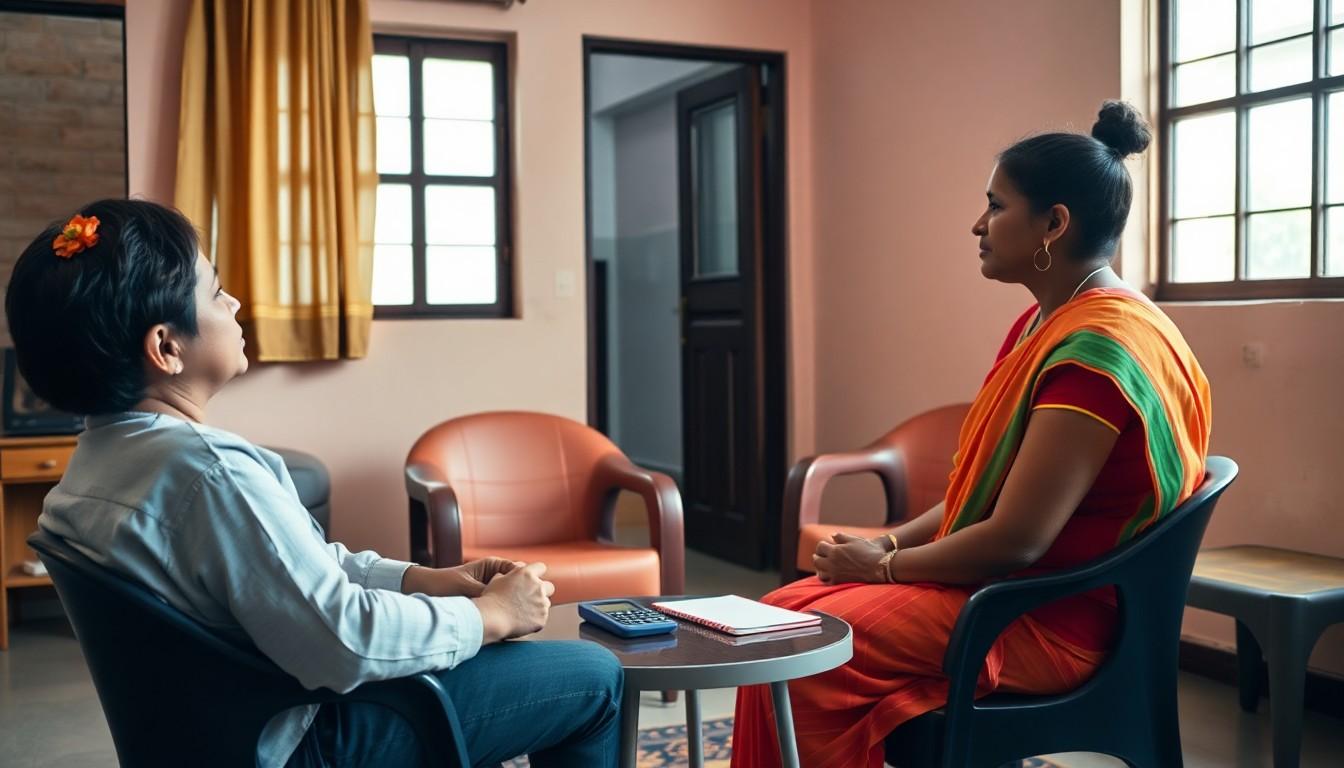
A quiet, non-judgemental conversation can matter when someone feels isolated or unsure where to turn. In India, Safe Access’s Community Wellbeing Project trains queer and transgender people to offer one-to-one emotional support to others in the community. The project grew from gaps in access to affirming care, and it gives people a way to speak with someone who may understand their experience.
Essential Takeaways
- Community-led support: Safe Access’s project trains LGBTQ+ peers to provide structured emotional support.
- A free, confidential service: Safe Access describes its calls as free, confidential and one-to-one.
- Training and guidance: Peer supporters learn about listening, boundaries and ethical practice, with guidance from queer mental health practitioners.
- A choice of supporter: The service lets people browse supporter profiles and choose someone who feels like a good fit.
- Not emergency care: The project offers emotional support, not crisis intervention or clinical counselling.
A familiar voice can make a difficult call easier
Gautam Ram Chandra once struggled to find other queer and trans people they could connect with in Lucknow. They also faced discrimination while trying to access healthcare. Years later, through Safe Access’s Community Wellbeing Project, they began listening to people describing some of the same feelings of isolation.
That work is personal, but it has a clear purpose: to offer a space where people can speak without being judged. Safe Access presents the project as a way for queer and transgender people to support one another through emotional distress linked to stigma or discrimination.
According to Safe Access, its free, confidential calls are one-to-one and led by trained LGBTQ+ peer supporters. People may want to talk about identity, loneliness, family rejection, relationships or discrimination, among other concerns.
From healthcare gaps to peer support
Safe Access began with work to improve access to queer-affirmative healthcare, including helping people find professionals more likely to offer respectful care. Its founder, Shubham Choudhary, developed the Community Wellbeing Project after the organisation identified a need for more accessible emotional support.
The idea builds on something already familiar in many communities: turning to people with shared experiences. Safe Access’s approach adds training, boundaries and supervision, so peer supporters can listen responsibly without being expected to solve every problem.
Its current programme information describes training and guided practice, with queer mental health practitioners offering supervision. The organisation says the role is to help someone feel less alone, not to fix them.
Choosing someone to talk to
Safe Access’s service page says people can browse supporter profiles and use details such as location and identity-related information to find someone they may feel comfortable speaking with. The service is designed to be flexible: callers can get in touch again, speak with the same supporter when available, or try someone else if the first conversation does not feel right.
That choice can make the first step feel more manageable. A person might prefer to speak with someone who shares a language or understands a particular part of their experience; the project’s profile-based approach is intended to help callers find a suitable match.
Safe Access says calls are not recorded and caller numbers are masked. Its live service page is the best place to check current schedules and access details, as these can change.
Support has boundaries, and that matters
Peer support can offer space to talk, reflect and consider possible next steps. Find A Helpline describes the project as a source of emotional support, while making clear that it is not an emergency, crisis or clinical counselling service.
That distinction is important. Someone seeking immediate help or professional care may need a different service, and peer support should not be mistaken for therapy. Safe Access’s model combines community experience with training and professional guidance, while keeping the focus on listening and mutual support.
The project also gives supporters a route into the work: Safe Access describes its training as virtual and guided, with ongoing supervision. Its page says applications for the 2026 programme are closed, so anyone interested in joining should check for updated information rather than assume a place is available.
A listening space can travel both ways
For Gautam, supporting others also created a sense of connection they had once struggled to find. The project’s story includes another example: Rohan first turned to the service when he found it difficult to discuss his identity and distress at medical college, then decided to become a peer supporter himself.
That movement from seeking support to offering it captures the project’s community-led spirit. It doesn’t remove the wider barriers people face, but it can make a difficult moment feel less solitary.
A good place to start is Safe Access’s live service page, where callers can check current options and choose a supporter.
The Source Reference Map only permits sources [2] and above, which are verification summaries; source [1] is excluded from the body map because it is the lead article and must appear only in the story-idea line. The map can therefore attribute paragraphs to [3], [4], [5], [6], or [7], while paragraphs drawing on story details from the lead should be marked “Lead article only”. Paragraphs 1-3 of the body section, then subsequent paragraphs in order, need mapping. Count: H21 p1 Gautam lead only; p2 Safe Access [3]; p3 [3]. H2 2 p1 Safe Access history based [6], [2]; p2 [4], [2]; p3 [4]. H2 3 p1 [5]; p2 interpretation based [5]; p3 [5]. H2 4 p1 [7]; p2 [7]; p3 [5]. H2 5 p1 Gautam and Rohan story lead only [2] also summary verifies; [2]. p2 interpret from project narrative perhaps [2], [3]. p3 2026 applications [4]. Closing not numbered. Need produce source map. But issue body claim current service page exact facts, safe. Let's finalize.