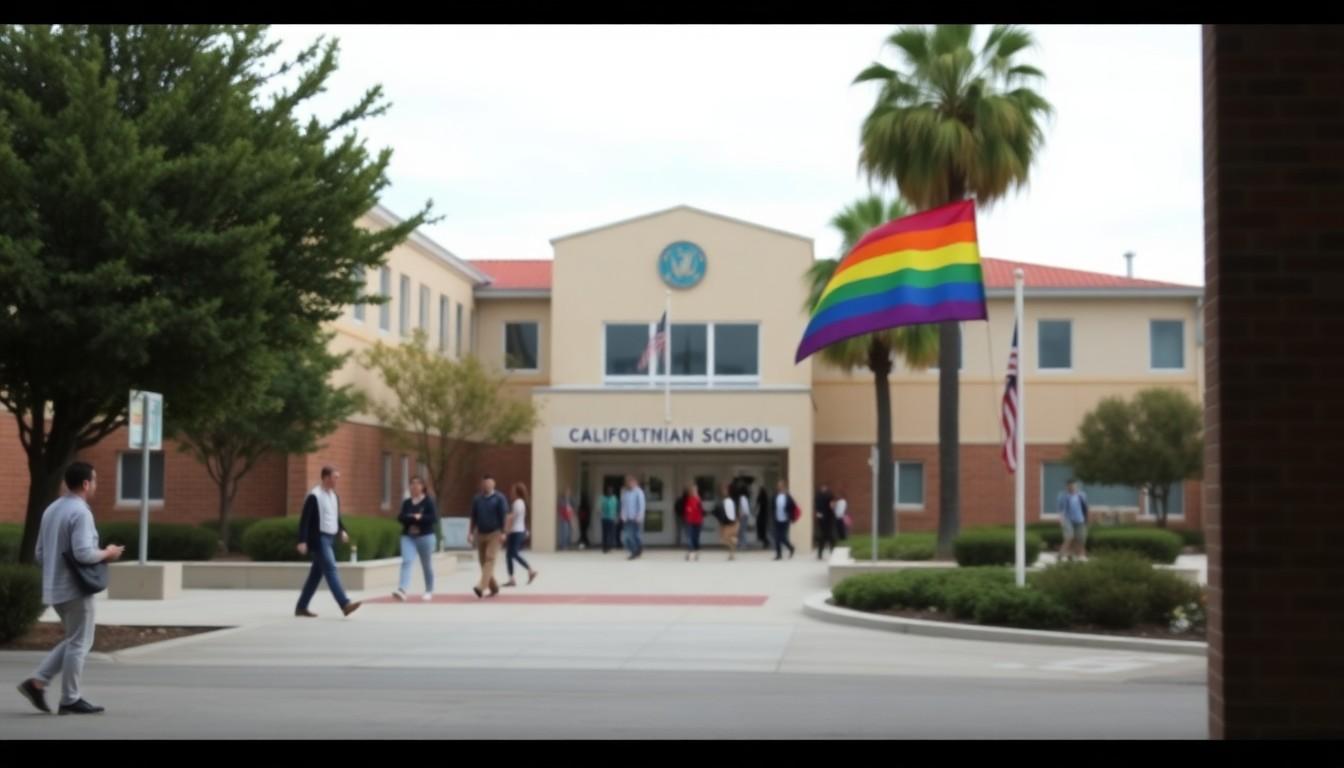
California’s 2026 LGBTQ+ Issues Conference has put school policies, parental rights and the Supreme Court’s Mirabelli v. Bonta decision under scrutiny. The ruling lifted a stay on an injunction for parent plaintiffs while litigation continues, but its precise reach remains contested. That distinction matters for teachers, families and anyone trying to separate court orders from the arguments surrounding them.
Essential Takeaways
- The Supreme Court acted on an interim basis: In March 2026, it lifted a stay on the injunction for parent plaintiffs, while the wider litigation continues.
- The dispute centres on school disclosure: The case concerns policies involving pupils’ names and pronouns, gender identity information and communication with parents.
- The ruling’s reach is disputed: The ACLU of Southern California says AB 1955 remains in effect, while the Supreme Court opinion and court orders set out the specific relief granted.
- CTA held a 2026 conference: The association’s event page confirms the conference, but doesn’t independently verify claims about individual sessions or speakers.
A court ruling, not a final word
Mirabelli v. Bonta sits at the centre of a difficult question: how should schools handle a pupil’s gender identity when the pupil wants privacy from parents? The Supreme Court’s March 2026 decision lifted a stay on an injunction for the parent plaintiffs, finding they were likely to succeed on their claims at this stage of the case. The litigation itself is still ongoing.
That procedural detail is important. The Court was considering whether the injunction should remain paused while an appeal proceeded, not issuing a final ruling on every issue in the case. Its opinion discusses parents’ authority over their children’s upbringing and education, the connection between school transition and mental health, and safety concerns. The precise scope of its decision is set out in the opinion, rather than in broader summaries. According to the Supreme Court’s opinion and the Civil Rights Litigation Clearinghouse, the case grew from a 2023 challenge to California school policies on gender identity and parental notification.
What happened at the CTA conference?
The California Teachers Association’s 2026 LGBTQ+ Issues Conference brought the dispute into a professional setting. CTA’s event page confirms the association organised the conference, but it doesn’t verify what individual presenters said or what appeared in their slides.
The lead account alleges that several sessions offered a narrow interpretation of Mirabelli, including claims that schools faced legal uncertainty over disclosure. Those allegations rely on presentation materials and a workshop recording described by the author, rather than on CTA’s event page. That distinction matters: an official conference listing confirms the event, but it can’t settle what was said in a particular room.
AB 1955 remains part of the argument
The debate also turns on AB 1955, California’s SAFETY Act. The California Department of Education says the law took effect on 1 January 2025 and provides guidance on its provisions. Its webpage also includes a notice added in March 2026 concerning the Mirabelli injunction.
But the law’s relationship to the case is contested. The ACLU of Southern California argues that AB 1955 remains in effect, including protections against blanket disclosure policies. The Supreme Court’s interim decision and the district court injunction need to be read for their specific terms; neither an advocacy FAQ nor a government summary, on its own, resolves every question about the ruling’s scope.
How to read claims about the ruling
When a legal decision is still moving through the courts, small differences in wording can carry real weight. A stay, an injunction and a final judgment aren’t interchangeable, and a ruling that gives relief to certain plaintiffs shouldn’t automatically be described as settling every school’s obligations.
For families and educators, a useful first step is to check the primary documents. The Supreme Court opinion explains what the justices decided at this stage; the case history helps track how the dispute developed. The Department of Education page and ACLU FAQ offer useful context, but they present different explanations of the legal position and should be read with that in mind.
The human stakes sit alongside the legal ones
The court documents discuss parental authority, students’ mental health and safety. Those concerns can pull in different directions, which helps explain why the policy debate is so charged. The Supreme Court opinion addresses safety as part of its reasoning, while the ACLU’s FAQ emphasises limits on broad disclosure requirements.
For now, the clearest account is also the least dramatic: the Supreme Court restored the injunction for parent plaintiffs while the appeal continued, and important questions remain under litigation. In a debate full of confident claims, that procedural precision is worth holding on to.
Check the court documents before treating any single summary as the last word.
Source Reference Map
Story idea inspired by: [1]
Sources by paragraph: