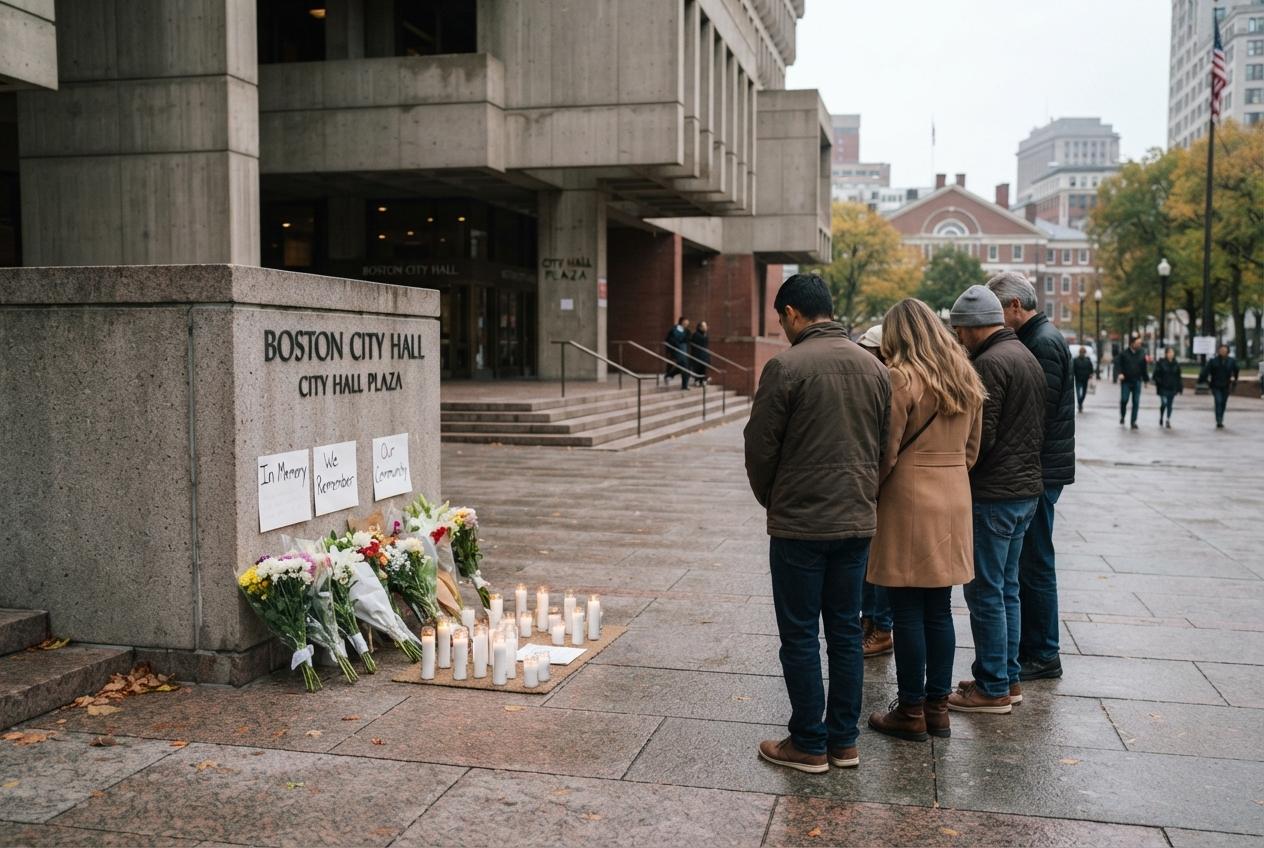
Boston is recognising Transgender Day of Remembrance on 20 November 2026, during a week dedicated to transgender awareness. The observance honours transgender and gender-diverse people killed by anti-transgender violence, while the city’s proclamation also points to ongoing discrimination and barriers in daily life. Its message is clear: remembrance matters, and so does the work that follows.
Essential Takeaways
- Boston’s recognition: The City Council recognises 20 November 2026 as Transgender Day of Remembrance.
- A day with roots in Massachusetts: The observance began in 1999 to memorialise Rita Hester, a Black transgender woman from Massachusetts.
- More than remembrance: The city’s resolution highlights continuing violence, discrimination and systemic barriers.
- A week leading into the day: Transgender Awareness Week runs from 13 to 19 November, ahead of the annual observance.
Boston’s recognition puts remembrance in the civic spotlight
Boston is marking Transgender Day of Remembrance with a formal City Council recognition for 20 November 2026. The observance honours transgender and gender-diverse people who have lost their lives to anti-transgender violence, giving the date a solemn purpose beyond the calendar.
According to the City of Boston, the Council’s resolution also draws attention to continuing violence and discrimination, as well as barriers in housing, employment, education and healthcare. The message is both commemorative and practical: honour those lost, while recognising the conditions that still need to change.
The story behind the 20 November observance
The day was first observed in 1999 to memorialise Rita Hester, a Black transgender woman from Massachusetts. GLAAD says transgender advocate Gwendolyn Ann Smith began the observance as a vigil for Hester, who was murdered in 1998.
Boston’s account also traces local remembrance to the lives and deaths of Hester and Chanelle Pickett. It describes the first observance as taking place in Boston and San Francisco, helping explain why this annual day carries particular local meaning as well as international reach.
Awareness Week leads into a day of remembrance
Transgender Awareness Week runs from 13 to 19 November, with Transgender Day of Remembrance following on 20 November. GLAAD’s calendar lists those annual dates, giving the week a clear arc: visibility and understanding lead into a day focused on those lost to violence.
That sequence matters. A memorial can hold space for grief, while the wider week offers a chance to learn about transgender people and the issues affecting their lives. Neither needs to stand alone.
The resolution links remembrance with everyday rights
The City of Boston says the resolution affirms the dignity, safety and full inclusion of transgender, non-binary and gender-diverse residents. It also acknowledges systemic barriers in areas that shape everyday life, from finding housing or work to accessing education and healthcare.
National findings add context to why those concerns matter. The Human Rights Campaign Foundation reports that its tracking identified 399 fatal-violence cases involving transgender and gender-expansive people in the United States since 2013, while cautioning that figures can change as information emerges. Its report also describes discrimination as a barrier in housing, employment and healthcare.
A city recognition, and the work beyond it
Boston’s public notice records that Councilor Mejia offered a resolution recognising 20 November 2026 as Transgender Day of Remembrance at a Council meeting on 4 November. The City’s announcement sets out the substance of that recognition: remember those lost, affirm the dignity of residents and continue addressing violence and discrimination.
A proclamation can’t do all that work on its own, of course. But it can make clear what a city chooses to honour, and what it says still needs attention.
Remembering lives lost matters; building safer, more inclusive communities matters every day.
Source Reference Map
Story idea inspired by: [1]
Sources by paragraph: