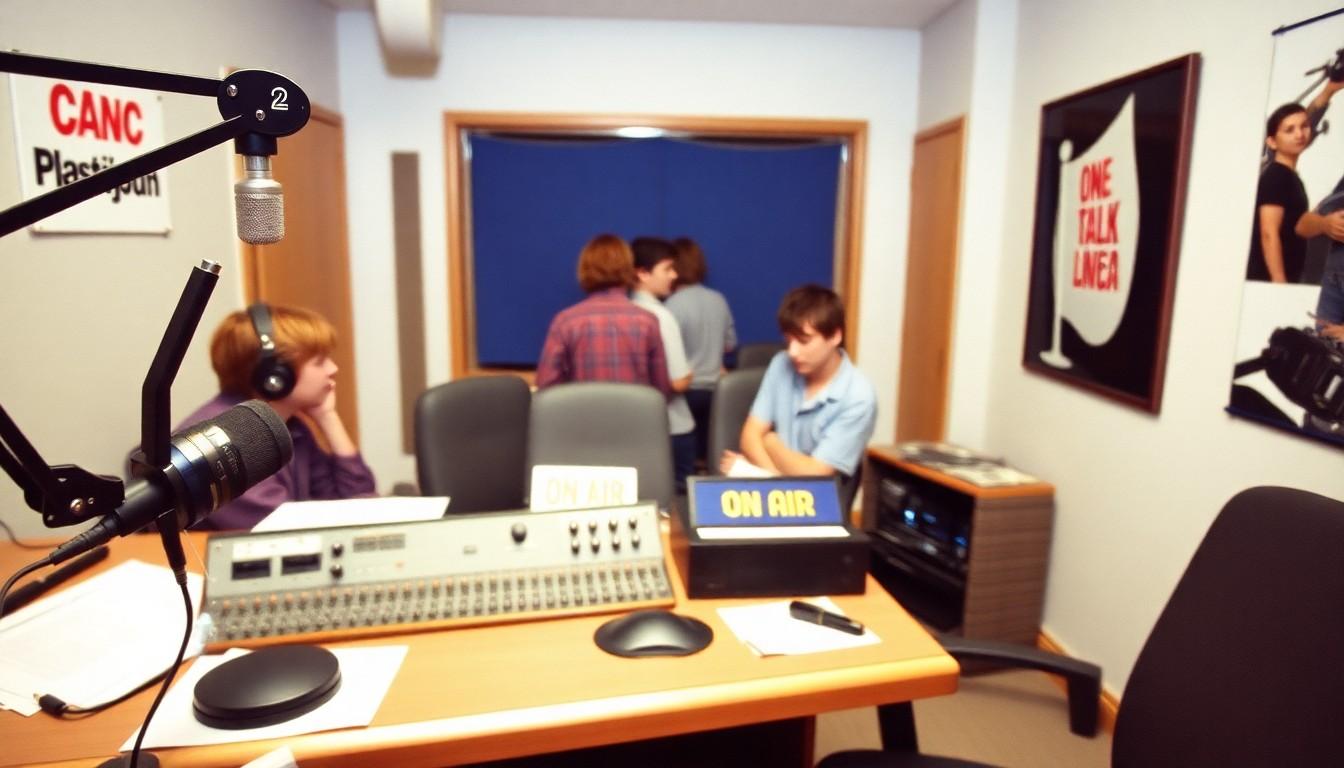
Before social media, LGBTQ teenagers in 1990s St Louis had few ways to find one another or hear their experiences reflected back. The Gay ’90s offered something unusual: a radio show made by young people themselves. Its story is one of friendship, nerve and the power of being heard, even when the microphone could make coming out very public.
Essential Takeaways
- A rare platform: The Gay ’90s began in October 1995 as a teen segment on KDHX’s Out & Open.
- It grew on air: The feature expanded from a short segment to a half-hour and then a full-hour programme, airing twice a month.
- Young people set the agenda: Topics included coming out, suicide prevention, safer sex, dating, education and activism.
- Support came first: St Louis PFLAG and the youth group Growing American Youth helped Rosen find community before the radio show took shape.
- The national-first claim needs care: Contemporary reporting called it the first show of its kind, while noting there was no agency keeping track of similar programmes.
A microphone, and a risk
In 1995, appearing on air as an LGBTQ teenager could mean being outed across the St Louis region. For Adam Rosen, Mike and Shauna, that leap became the beginning of The Gay ’90s, a KDHX radio feature by and for gay and lesbian teenagers.
The show grew from a guest appearance on Out & Open, an adult programme hosted by Amy Doll and Linda Serafini. Contemporary reporting in the Wisconsin Light described the teenagers’ aim as giving young people a forum to talk about their lives and easing fear through conversation and education. That’s a simple idea, but one that carried real weight when many young people were dealing with bullying, discrimination or the possibility of rejection at home.
The support behind the show
Rosen’s account traces the story back to coming out to his parents and finding support through St Louis PFLAG and Growing American Youth, known as GAY. The youth group offered friendship and a place to learn about LGBTQ history and community life. PFLAG’s wider history shows how parent-led groups had also grown into networks for family support and advocacy across the United States.
That context matters. The Gay ’90s didn’t appear out of nowhere: St Louis already had community media, including Out & Open, and local LGBTQ newspapers had helped people share information and find one another. A history paper on the Central West End places KDHX programmes within that smaller local media landscape. The teen show’s distinct contribution was putting young voices directly on air.
Teenagers chose what mattered
The programme started as a short feature and grew into a half-hour, then an hour-long show, airing on the first and third Fridays of each month. According to Rosen’s account, nearly a dozen young people took part over its two-year run, which ended in 1997. A contemporary Wisconsin Light report described the segment as lasting about 20 minutes at the time it was published, a useful reminder that the format evolved.
Its subjects reached well beyond coming out. The teenagers discussed suicide prevention, safer-sex education, dating, LGBTQ history, school inclusion and planning for the future. They also took calls from listeners. In a media environment with few visible queer role models, that mix of practical information and ordinary teenage hopes gave the programme a particular kind of warmth: young people weren’t only talking about risk, but about the lives they wanted to build.
A difficult backdrop, with some legal history
The programme came of age amid serious social and legal pressures. The Missouri Supreme Court’s 1986 decision in State v. Walsh upheld a state statute criminalising certain same-sex sexual conduct, including conduct between consenting adults in private. Separately, Washington University Libraries documents the use of St Louis’s cross-dressing ordinance to harass gender-nonconforming people, including arrests in the 1980s.
Those records help explain why a public platform mattered, but they don’t verify every detail of Rosen’s personal recollections or establish what every teenager experienced. The distinction is worth keeping clear: legal records can show the rules and court decisions of the period, while the radio story offers a personal account of how young people sought connection within that climate.
Was it the first of its kind?
The claim that The Gay ’90s was the first teen talk-radio show of its kind in the United States is compelling, but it needs a careful footnote. The Wisconsin Light called it the first such call-in show in the country, while also noting that no agency tracked these programmes and that a journalist association leader couldn’t recall another example. Rosen says his own search through media archives hasn’t turned up a precedent, but absence of a record isn’t proof that none existed.
What is clearer is the programme’s local importance. KDHX management considered extending or increasing the broadcast after positive listener feedback, according to the contemporary report. More than a historical milestone, the show was a place where teenagers could speak as themselves, and where listeners could hear that they weren’t alone.
Sometimes a microphone doesn’t just amplify a voice; it helps people find one another.
Source Reference Map
Story idea inspired by: [1]
Sources by paragraph: