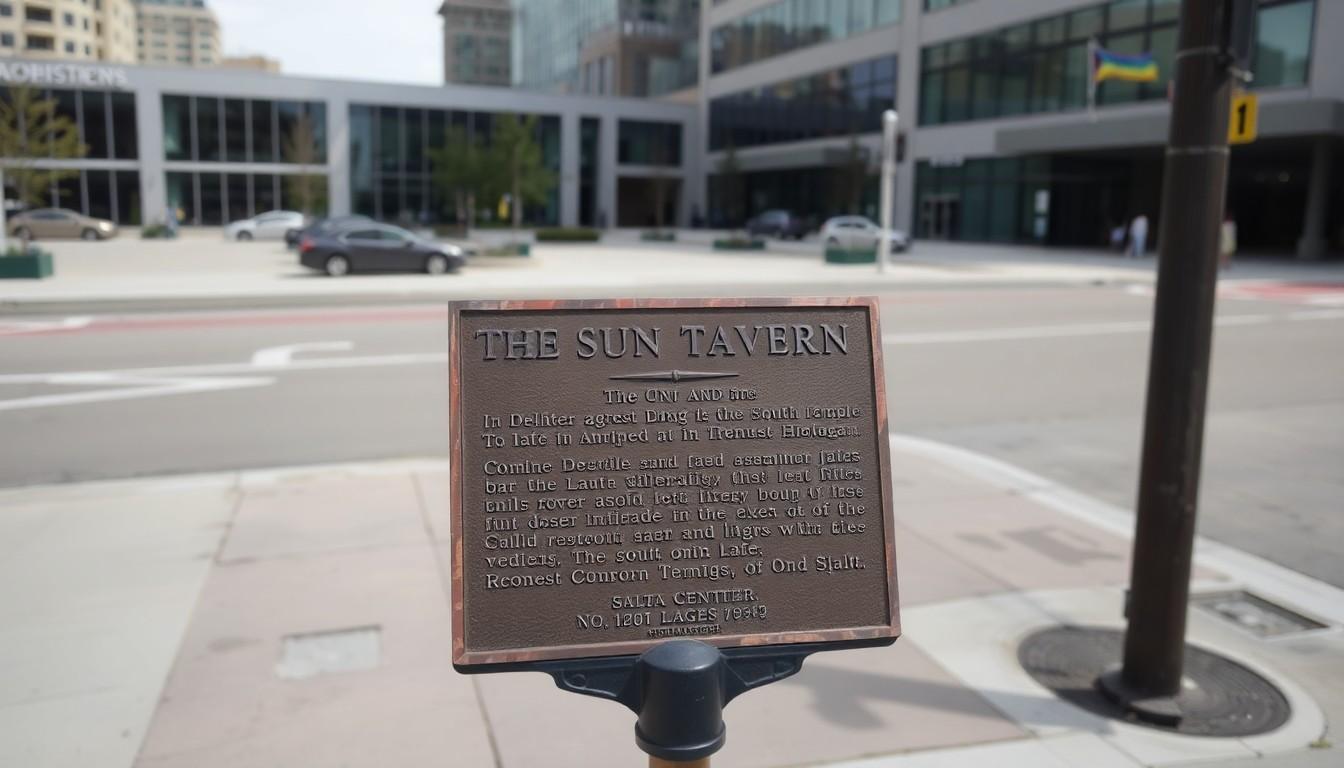
A new historical marker in downtown Salt Lake City honours the Sun Tavern, a gay bar that became a vital meeting place for Utah’s LGBTQ+ community. Opened in 1973, it offered more than a night out: its informal networks helped people organise, connect and lay early groundwork for Pride.
Essential Takeaways
- A marker for a lost landmark: It stands across the street from the Sun Tavern’s original site, now occupied by the Delta Center.
- A place to gather: The bar opened in 1973 and became a hub for socialising and community organising.
- Pride roots: Joe Redburn, Nikki Boyer and others helped organise Utah’s first Pride celebration in 1975.
- A wider history: Early gathering places and volunteer efforts helped shape later LGBTQ+ organisations in Utah.
The Sun Tavern’s story is now part of the streetscape
A permanent historical marker brings the Sun Tavern’s story back into view in downtown Salt Lake City. The original bar stood near the northwest corner of South Temple and 400 West, where the Delta Center now sits, so the marker gives passers-by a way to recognise a place that no longer exists.
The Salt Lake Tribune reports that the marker was unveiled on 4 October 2026, across the street from the former site. The project was proposed by the Mildred Berryman Institute for LGBTIQ2S+ Utah History and supported through a city programme intended to recognise histories often left out of public memory.
More than a night out
The Sun Tavern opened in 1973 and became one of Utah’s early gay-owned, gay-focused bars. According to The Salt Lake Tribune, it was a safe haven for many people and a frequent venue for gay and lesbian organising.
That role mattered in a city where welcoming places to gather were limited. Utah’s community-history account describes the Sun Tavern as a de facto community centre as well as a social venue, while setting it among other neighbourhood bars and meeting places. The bar offered more than a place to spend an evening; it helped people find one another.
How a bar helped build Utah Pride
Joe Redburn, Nikki Boyer and other community members helped organise Utah’s first Pride celebration in 1975, according to The Salt Lake Tribune. The Salt Lake Tribune’s oral history of Utah’s Pride organisations also describes an early gathering associated with Redburn and Boyer that became the state’s first Pride festival.
Early community organising reached beyond the bar, too. The Salt Lake Tribune’s oral history says a community centre was established in 1974 using space connected with Redburn’s bar, giving people a place to meet beyond nightlife. The centre lasted only a short time, but the account shows how local relationships and volunteer effort helped lay foundations for later organisations.
The timeline has more than one milestone
The early history of Utah Pride isn’t a single neat date. The Utah Historical Society distinguishes early gatherings from the state’s first Pride march, which it dates to 1990. Its account also notes a 1974 gathering at the Great Salt Lake hosted by the Sun Tavern’s owner.
That distinction helps make sense of the different milestones: a community gathering, an early Pride celebration and a later march were not necessarily the same event. The Utah Historical Society also traces the later establishment of the Utah Stonewall Center in 1991, now known as the Utah Pride Center.
The building changed, but the connection endured
As downtown Salt Lake City developed, the Sun Tavern moved to another site. Its later premises were badly damaged by the 1999 tornado, while the original location had already given way to the Delta Center.
The Salt Lake Tribune and Salt Lake Magazine both connect the bar’s changing locations with the broader story of its legacy. Salt Lake Magazine recounts how the Sun Tavern and The Trapp later informed the name The Sun Trapp, while former patrons and staff remembered the venue as a place to find friendship and acceptance. Buildings can disappear or change hands; a community’s memory is harder to shift.
A marker can’t recreate the room, but it can keep the story in view.
Source Reference Map
Story idea inspired by: [1]
Sources by paragraph: