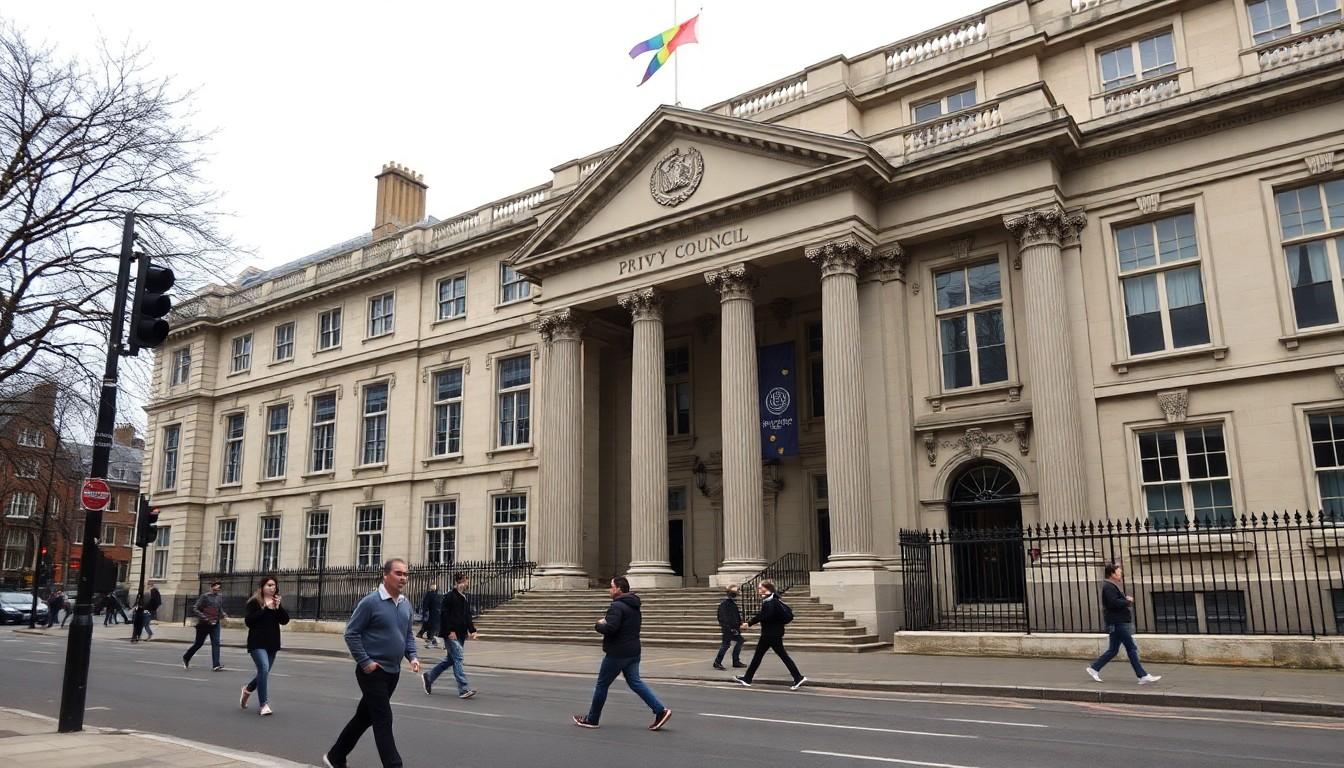
A unanimous Privy Council ruling has changed the legal position on private, consensual same-sex relations in Trinidad and Tobago. Jason Jones’s long-running challenge succeeded in London, where the court found the criminalising provisions could not be justified under the Constitution. The decision also sharpens attention on a separate appeal in Saint Vincent and the Grenadines.
Essential Takeaways
- Jones won his appeal: The Privy Council unanimously allowed his challenge to sections 13 and 16 of Trinidad and Tobago’s Sexual Offences Act.
- The ruling is specific: The court said the provisions must be interpreted so they do not criminalise private, consensual sexual relations between adults of the same sex.
- Privacy and identity mattered: The judges considered the effect of criminalisation on Jones’s private life and identity.
- Another Caribbean case is pending: Javin Johnson and Sean Macleish are challenging related provisions in Saint Vincent and the Grenadines.
A unanimous ruling brings Jones’s long fight to a head
The Privy Council has ruled unanimously in Jason Jones’s favour, finding that Trinidad and Tobago’s laws cannot be used to criminalise private, consensual same-sex relations between adults. The decision gives a clear legal outcome to a case that has travelled through the country’s courts before reaching the London-based body.
The Privy Council’s official case materials say Jones challenged sections 13 and 16 of the Sexual Offences Act 1986, which prohibit buggery and certain other sexual acts. The Board allowed his appeal and dismissed the Attorney General’s cross-appeal.
The Associated Press describes the outcome as a major victory for LGBTQ rights. That language reflects more than a courtroom result: it marks a significant change in the treatment of private relationships under these provisions. [2][3][4]
Why the judges focused on privacy and identity
At the heart of the appeal was whether the laws could survive constitutional scrutiny, including whether older provisions were protected from challenge and whether the restrictions were reasonably justifiable. The Privy Council concluded that they were not.
In its press summary, the court says the judges considered how criminalisation affected Jones’s private life and identity. It held that the provisions must be interpreted so they do not criminalise private, consensual sexual relations between adults of the same sex.
The Guardian’s pre-judgment profile traces the case’s colonial-era legal roots and the years of campaigning around the challenge. The history matters because laws can continue to shape people’s lives and sense of safety even where prosecutions are not being pursued. [3][5]
The decision has a wider Caribbean echo
The ruling concerns Trinidad and Tobago, but its reasoning is being watched beyond the country. In Saint Vincent and the Grenadines, Javin Johnson and Sean Macleish have separately challenged sections 146 and 148 of the Criminal Code, which address buggery and gross indecency.
The Human Dignity Trust’s case digest records that the High Court dismissed their challenge in February 2024. That case is distinct from Jones’s, and the Privy Council decision does not itself determine the Vincentian appeal.
Still, the legal questions overlap in important ways, particularly around constitutional rights and the justification for criminalising intimate conduct. The Associated Press also places the Trinidad and Tobago decision in a wider regional context, noting that some Caribbean countries retain laws against same-sex intimacy while courts elsewhere have struck down similar provisions. [4][6]
What the ruling does, and what it doesn’t
For readers following the case, the key point is to keep the legal scope precise. The Privy Council ruled on the meaning and effect of Trinidad and Tobago’s challenged provisions; it did not issue a blanket ruling on every similar law in the region.
The official case page and press summary are the clearest guides to what the court decided. They set out the case history, the constitutional questions and the final outcome, while the Human Dignity Trust digest helps distinguish the separate Saint Vincent and the Grenadines litigation. [2][3][6]
That distinction may sound technical, but it matters: a landmark decision can influence how similar cases are argued without settling them automatically. [2][6]
A milestone, with another case still to follow
The Privy Council’s decision closes a major chapter in Jones’s challenge, but it also gives fresh weight to the questions being argued in other Caribbean courts. For Johnson and Macleish, the Vincentian appeal remains a separate legal test with its own facts and proceedings.
The court’s reasoning puts private life and personal identity at the centre of its analysis. That is a powerful reminder that constitutional language is not abstract to the people whose relationships and dignity are affected by the law. [2][3][6]
The ruling is a landmark for Jones, while the next chapter in Saint Vincent and the Grenadines remains to be decided.
Source Reference Map
Story idea inspired by: [1]
Sources by paragraph: