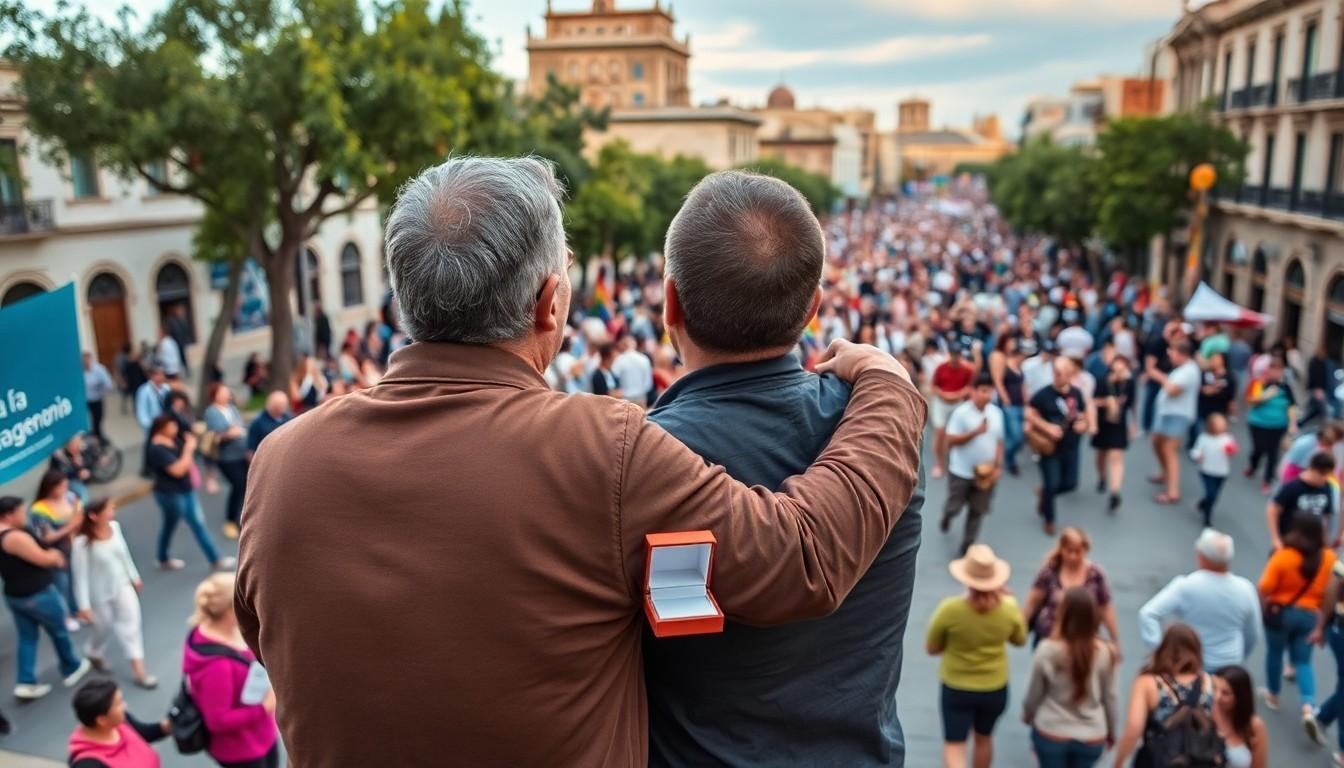
A marriage proposal brought a tender moment to Posadas’s Pride March, where Victor asked his partner Carlos to marry him after 12 years together. Carlos said the public setting felt right: the march was a place to celebrate their relationship while making LGBTIQ+ love visible and standing alongside others calling for equality and the protection of rights.
Essential Takeaways
- A milestone in public: Victor proposed to Carlos during Posadas’s Pride March on 14 November 2026.
- Twelve years together: The couple met at a public university in Posadas.
- More than a personal celebration: Carlos linked the proposal to visibility, freedom and defending rights.
- A collective gathering: The march brought together LGBTIQ+ community members, social organisations and local residents.
A proposal with Pride at its heart
The proposal turned a march into a personal milestone, with the city’s streets offering a vivid backdrop for a couple’s next chapter. Carlos said he was surprised, but believed the event was the right place to make their relationship visible.
For Carlos, the moment belonged to more than the two of them. He connected it with the march’s purpose: celebrating Pride, affirming the freedom to be oneself and defending rights he felt were at risk.
Twelve years together, and a public beginning
The couple’s story began in Posadas, where they met at a public university. After 12 years together, the proposal added a new moment to a relationship rooted in the same city where the march took place.
Carlos also described the struggle for rights as one shared across generations, encompassing people at the march, those who couldn’t be there and those still to come. That wider meaning gave the proposal a feeling of solidarity as well as romance.
Why the march matters beyond one couple
Misiones Online reported that the march brought together members of the LGBTIQ+ community, social organisations and local residents. The procession travelled from the flagpole at the junction of Mitre and Uruguay avenues to Plaza San Martín, with artistic and cultural activities forming part of the day.
El Territorio described the event as a call for equal opportunities and protection from discrimination and hate speech. That context helps explain why a public declaration of love could feel especially resonant: celebration and advocacy shared the same streets.
Young people and the freedom to be themselves
Carlos praised the young people at the march for showing up and expressing who they are. His comment points to one of the day’s clearest themes: visibility isn’t only about being seen, but about being able to take part as yourself.
And while a proposal is intensely personal, this one unfolded in a setting shaped by collective hopes. The couple celebrated their relationship alongside a wider community asking for dignity, inclusion and the freedom to live openly.
A celebration with a wider message
The march ended at Plaza San Martín, where cultural activities and a festival were part of the programme. El Territorio also reported that participants used the event to call for equal opportunities, public policy and a stronger voice for LGBTIQ+ organisations.
Carlos’s words brought those public themes back to the couple’s own lives. Their proposal was a celebration of 12 years together, but also a reminder that love can be both intimate and visible.
A joyful yes can carry a message well beyond the couple saying it.
Source Reference Map
Story idea inspired by: [1]
Sources by paragraph: