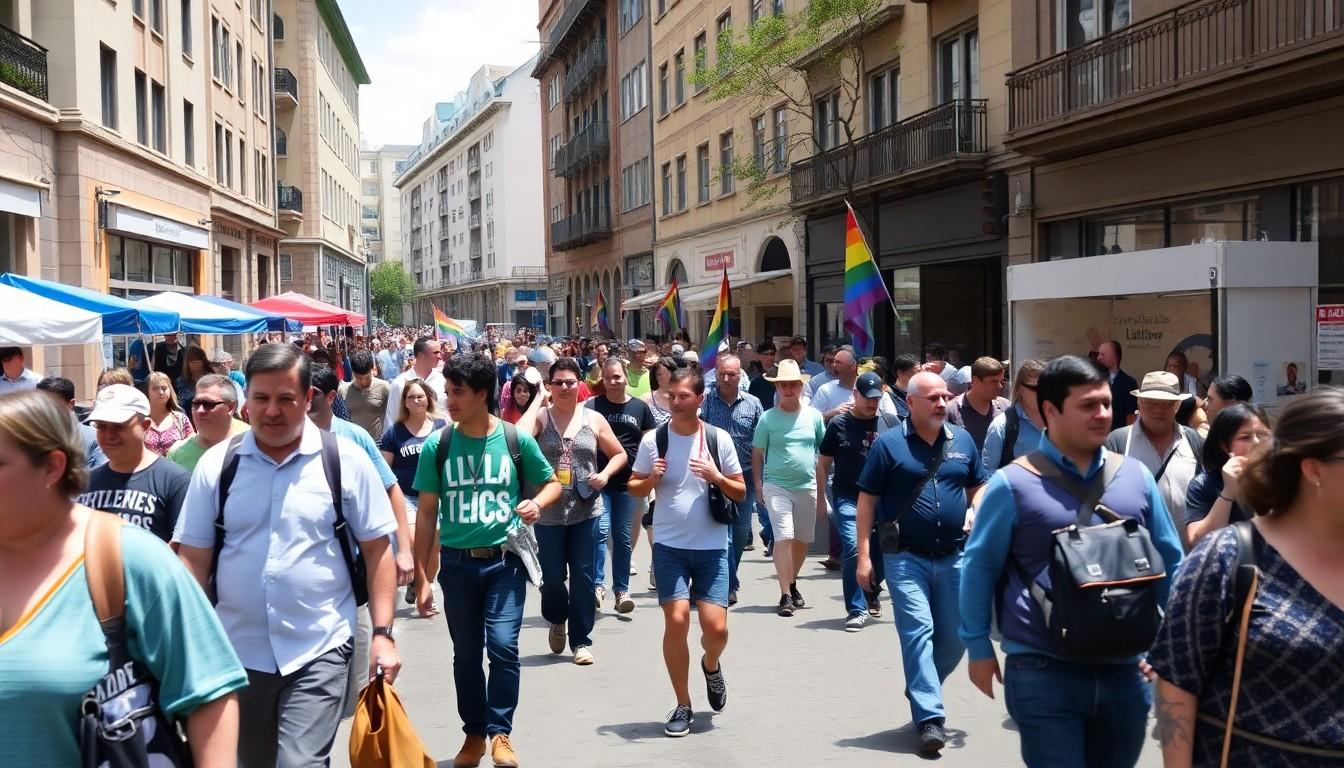
Colourful flags and expressive outfits filled Neuquén’s streets for the city’s 26th Pride March, where celebration sat alongside a clear message: LGBTQ+ people have the right to live openly and safely. At the gathering, participants described the march as a place to find community, express themselves and defend rights in a climate they say remains hostile.
Pride in Neuquén brings celebration and protest together
A market, local performances and the sound of pop music set a bright scene at Neuquén’s Pride gathering. But beneath the colour and festive atmosphere was a serious purpose: participants said the march offers visibility, solidarity and a public stand for LGBTQ+ rights.
According to Río Negro, activities began at 15:00 at the Espacio Intercultural Graciela Alonso, with the march expected to start at around 19:00. A festival was planned afterwards, with Córdoba band La Simbiótica closing the event.
For some people, the gathering is also somewhere to feel safe and accepted. Josefina told Río Negro that some attendees come while hiding their plans from family, and described the event as a refuge.
A place to be yourself, together
Denise described Pride as a chance to show who she is without fear of judgement. She attends with Noel, whose venture, Del Palo Estampas, has taken part in the march for a decade, and said the event brings friends together to dress as they like and enjoy themselves.
That joy doesn’t cancel out the protest. León, of Argentina’s Association of Travestis, Transsexuals and Transgender People, said that people can be angry about injustice and still dance, laugh and celebrate. As he put it, the occasion is a march, not simply a festival programme.
Ederson, a Venezuelan member of Pumas Patagónicos FC, connected his experiences at Pride events in Venezuela, Buenos Aires, São Paulo and Neuquén through a shared demand: to live with respect and pride. The settings may differ, but that basic hope travels easily.
Neuquén’s march carries a history of resistance
For long-time activists, Pride is rooted in earlier struggles against police harassment. Tatiana Breve of the same association recalled that, before discriminatory clothing rules were repealed, trans women could be detained for wearing clothes considered inconsistent with the sex on their identity documents.
An academic study of trans people’s experiences in Neuquén between 2012 and 2020 describes the effects of institutional and police violence, including fear of police, unjustified detention and barriers to basic rights. It also records the history of the clothing rules that remained in force until 2011.
That context helps explain why taking up space in public matters to marchers. Roni described Pride as both a political act and a form of resistance, urging people to stand together to protect rights already won.
Why visibility still matters
Organisers said that the current climate brings fresh concerns. Juan “Pocho”, from the organising commission, told Río Negro that insults, discrimination and hate speech have made public gatherings feel more difficult to organise safely.
Breve also warned that hostility isn’t limited to physical or verbal attacks. She pointed to reduced state support and underfunded programmes intended to protect rights, arguing that the absence of support can also leave people exposed.
The march’s references to Azul Semeñenko, a trans woman and state employee who was murdered, underline those concerns. Neuquén’s Public Prosecutor’s Office reported in October 2025 that the case was being investigated as a transfemicide; that account described investigative steps and preliminary findings, not a final court verdict. For marchers, remembering her is part of insisting that violence against trans people cannot be ignored.
Pride is a celebration, but not only that
Across the stories shared at the march, one idea kept returning: community can offer connection and strength, especially when people face rejection or discrimination. The event makes that support visible, while also giving people a way to demand safer lives and equal respect.
There’s room for music, laughter and bold outfits, but the celebration carries a serious message. Pride, as participants described it, is a way to show up for one another and insist on the right to exist.
Neuquén’s Pride March brings joy and resistance into the same streets.
Source Reference Map
Story idea inspired by: [1]
Sources by paragraph: