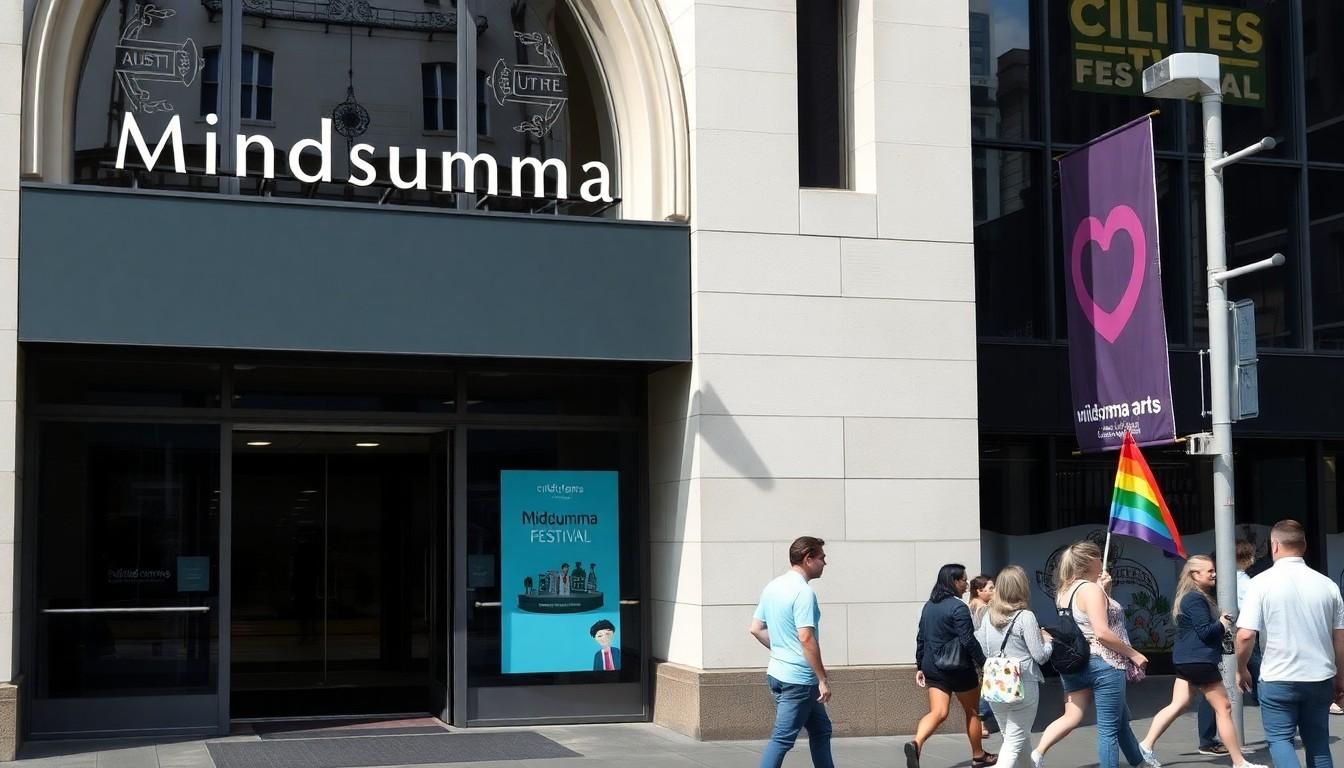
Melbourne’s Midsumma Festival has won the LGBTIQA+ category at the 2026 Melbourne Awards, celebrating its contribution to queer arts and community life. The 22-day festival drew 334,531 attendances and generated $29.9 million in direct economic impact, showing how a programme built around creative expression can also bring people together and support activity across the city.
Essential Takeaways
- Award recognition: Midsumma won the LGBTIQA+ category at the 2026 Melbourne Awards.
- A major audience: The 22-day festival recorded 334,531 attendances across 222 events.
- Wider impact: Midsumma reported $29.9 million in direct economic contribution and $86.4 million in broader economic impact for Victoria.
- Access matters: Forty per cent of events were free, and 96 per cent of surveyed attendees said they felt safe and welcome.
- Community finalists: Lesbirun and The Pinnacle Foundation were also finalists in the LGBTIQA+ category.
Midsumma’s Melbourne Award reflects more than a big crowd
A festival attendance figure can look like a dry statistic, but Midsumma’s results point to something more immediate: thousands of opportunities to encounter queer art, stories and community across Melbourne and Victoria. The Star Observer reported that the festival won the LGBTIQA+ category at the 2026 Melbourne Awards, after attracting 334,531 attendances over 22 days.
The numbers are substantial, but the festival’s contribution isn’t only measured in ticketed events or footfall. Midsumma says 92 per cent of attendees felt more connected to community, while 96 per cent felt safe and welcome. Those measures offer a glimpse of what cultural participation can mean beyond simply filling a venue. [3], [4]
A long-running platform for queer arts
Midsumma has been part of Melbourne’s cultural life since 1988, giving LGBTQIA+ artists a platform and audiences space to experience queer perspectives. The Star Observer quoted CEO and Creative Director Karen Bryant describing the award as recognition of the festival’s place in the city’s cultural landscape and its work supporting visibility, representation and access to the arts.
That role has grown into a sizeable programme: Midsumma’s 2026 report lists 222 events, with 40 per cent free to attend. It’s a useful reminder that a festival can be ambitious without making every experience dependent on a paid ticket. [2], [3]
The festival’s impact reaches beyond the stages
Midsumma reported $29.9 million in direct economic contribution from its 2026 festival, alongside a broader estimated economic impact of $86.4 million for Victoria. The festival also said it supported an estimated 360 full-time-equivalent jobs, connecting the cultural programme with activity across the wider economy. [3], [4]
Those figures give the award a second dimension. Midsumma’s recognition isn’t just about the performances and exhibitions themselves; it also reflects the people, places and businesses that can benefit when a major festival draws audiences into the city and beyond. That’s a compelling case for treating arts and culture as part of everyday civic life, not an optional extra. [2], [4]
Other finalists show different ways to build connection
The award category also included Lesbirun and The Pinnacle Foundation, two organisations whose work takes a different route to community connection. Lesbirun brings lesbian and queer women together for regular running, walking and social activities, while The Pinnacle Foundation supports young LGBTQIA+ Australians through scholarships and mentoring. [2], [6], [7]
Their work makes for an interesting comparison: one creates space for friendship through movement and shared activities, while the other backs education and personal guidance. Midsumma’s festival sits alongside them as a large-scale cultural gathering, but all three reflect how connection can be built in more than one way. [6], [7]
What the award says about Melbourne’s cultural life
The Melbourne Awards recognise contributions to the city’s community life, and the 2026 ceremony was scheduled for Saturday, 14 November, according to the City of Melbourne’s entry guidelines. Midsumma’s win places queer arts and culture firmly within that broader picture of what makes a city thrive. [1], [5]
There’s something heartening in seeing a festival’s reach recognised alongside the work of community groups and education charities. The figures tell one part of the story; the welcome, visibility and shared experience behind them are what make the recognition feel meaningful. [2], [3]
Midsumma’s win celebrates a festival where cultural impact and community connection go hand in hand.
Source Reference Map
Story idea inspired by: [1]
Sources by paragraph: