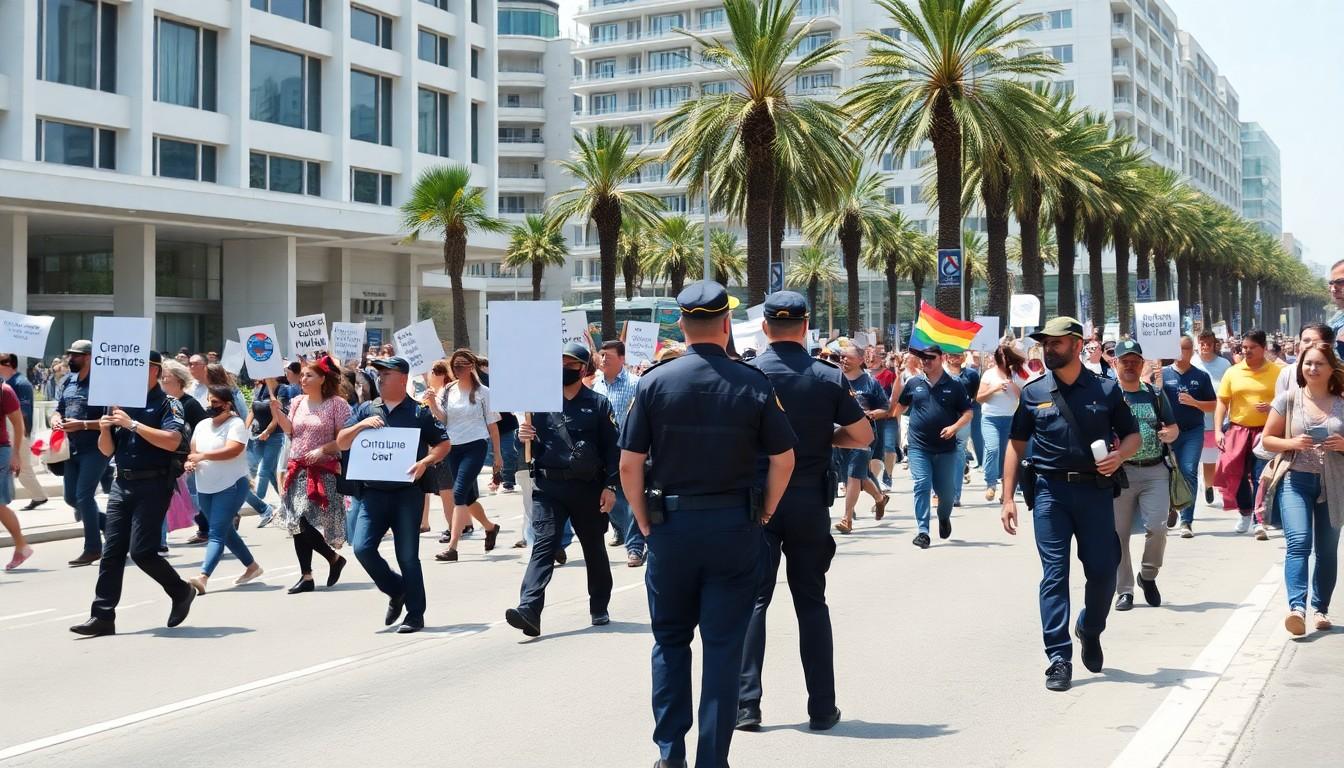
A rainbow flag unfurled in Antalya became a striking act of defiance as LGBTQ+ activists joined a climate march during COP31. With international campaigners forming a protective cordon and police imposing tight security, the march offered Turkish voices a place in a global protest, while underscoring the risks facing rights defenders.
Essential Takeaways
- A public act of defiance: LGBTQ+ activists joined a civil society climate march in Antalya and unfurled rainbow flags.
- Security was tight: Marchers were searched, the route was enclosed by barriers, and police examined placards.
- The crackdown has a wider context: Rights organisations report detentions, raids and restrictions affecting LGBTQ+ people and advocacy groups since September.
- The march had broader aims: Climate campaigners called for climate justice, stronger action on fossil fuels and fairer climate finance.
A rainbow flag, raised with care
A rainbow flag can be a vivid symbol of solidarity. In Antalya, unfurling one also carried an obvious sense of risk: LGBTQ+ activists joined a civil society climate march as international campaigners gathered around them for protection.
The Guardian reported that a 20-year-old activist, Őzgǔr, described displaying the flag as dangerous and said she felt constantly on the run. Another marcher, Beren, said she was glad to wave a flag but wished her transgender friend, who was detained, could have joined.
Organisers had planned the activists’ participation in advance. Flags were raised only after supporters and media had gathered around the group, turning a brief moment in the march into a carefully prepared show of solidarity.
Why the Antalya march mattered
This wasn’t only a demonstration about LGBTQ+ rights. Thousands took part in the wider march, which brought together environmental groups, trade unions and rights organisations as COP31 negotiations reached their midpoint.
Dawn reported that demonstrators demanded climate justice and stronger action on fossil fuels and climate finance, while criticising the summit for failing to address the needs of people most affected by environmental damage. The march took place under close police supervision and ended without a major incident.
The organisers’ stated aims also went beyond emissions: 350.org said the action called for a fair transition that puts people ahead of corporate profit, alongside climate finance and support for communities facing loss and damage. That broader focus helps explain why rights groups and climate campaigners shared the same streets.
Tight security reflected the risks
The atmosphere around the march was controlled from the outset. According to the Guardian, participants were searched, steel barriers lined the route, and police examined placards and photographed some marchers.
Asad Rehman, chief executive of Friends of the Earth England, Wales and Northern Ireland, said participants had been asked to carry passports and that bags were searched. He described the march as a chance for international campaigners to make space for Turkish voices amid repression.
The extra care taken around the flags was no small detail. For marchers, it meant international support was not just visible; it was part of how the activists could take part.
September’s crackdown loomed over the protest
The march came against a backdrop of reported pressure on LGBTQ+ people and organisations. The Guardian said the crackdown had intensified since September, with police targeting activists at their homes and the offices of rights groups.
ILGA-Europe’s timeline documents reported detentions, arrests, digital restrictions and raids beginning in September. Amnesty International, meanwhile, describes the campaign as part of a wider human rights crisis, including pressure on peaceful assembly and civil society. These are rights organisations’ accounts of the broader situation, rather than reports about the march itself.
The Associated Press also reported on police raids targeting LGBTQ+ and HIV support groups in several Turkish cities. Read together, these accounts give the march’s careful choreography a sharper meaning: participating in public can be an act of courage when the community is already under pressure.
Climate action and human rights shared the route
The demonstration brought together causes that are sometimes treated separately. Yet the organisers framed climate justice as connected to equality and human rights, while marchers called for climate policies that respond to communities affected by environmental harm.
Dawn reported that negotiators remained divided over adaptation finance, climate science and the shift from fossil fuels to clean energy. Against that backdrop, the march gave campaigners a public platform even as expectations for a major breakthrough remained low.
For the LGBTQ+ activists, the march was also a chance to be seen. That matters: a protective cordon may offer practical support, but the voices inside it still need room to be heard.
A flag raised carefully can still make a powerful statement.
Source Reference Map
Story idea inspired by: [1]
Sources by paragraph: