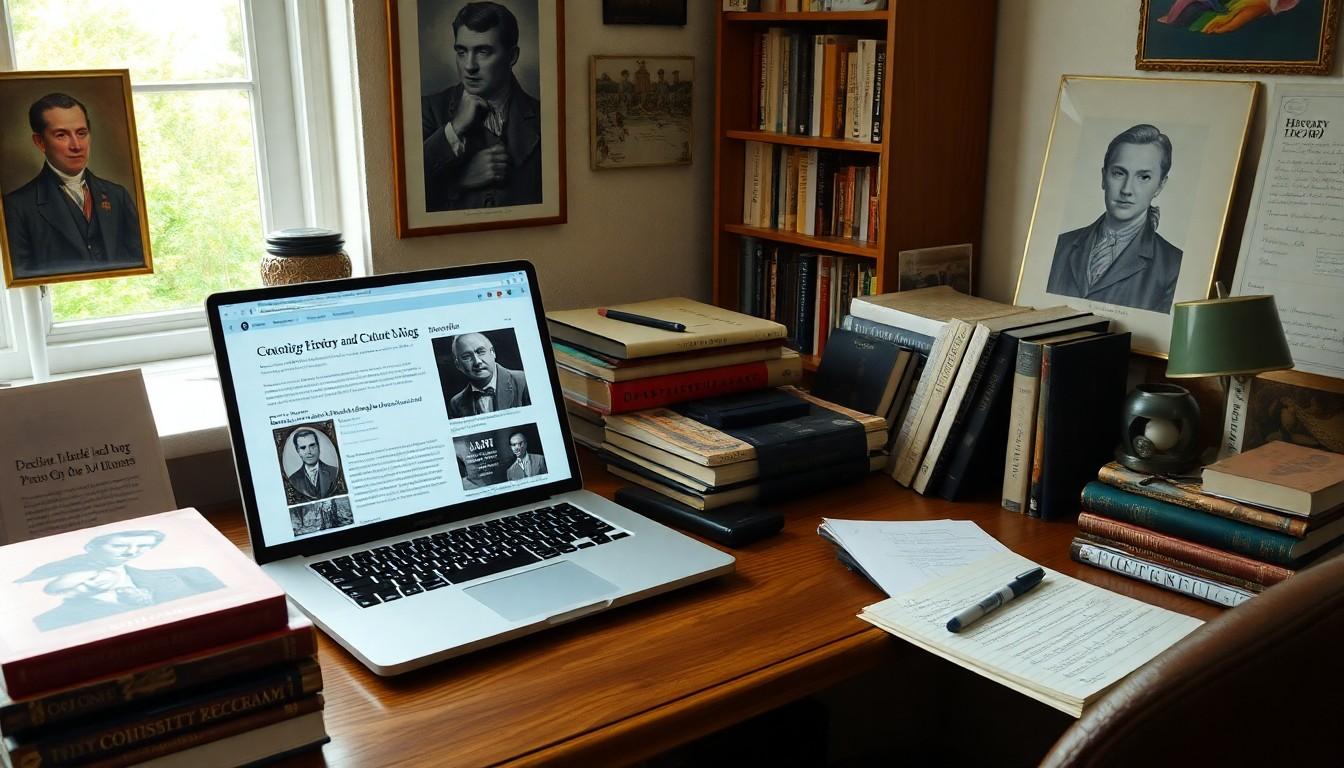
A blog devoted to LGBTQ history, art, literature, politics and culture can be a starting point for wide-ranging discovery. The Closet Professor says it publishes on subjects that catch its author’s interest, with occasional nude images used as illustrations. For readers who want to explore the field further, major libraries and museums offer collections and guides that help put different kinds of evidence into context.
LGBTQ studies reaches far beyond one subject
The Library of Congress describes its LGBTQIA+ collections as documenting lives in the United States and around the world, with particularly strong holdings in politics, history, literature and the performing arts. Its research guide sorts material by subject, format and period, offering several ways into a field that can feel vast at first.
That breadth is part of the appeal. A reader drawn in by a photograph or artwork might follow its historical context into politics, literature or community life. The Library of Congress also points visitors towards further help from its LGBTQIA+ Studies Librarian. (Sources: Library of Congress, UCLA Library) [2][3]
Art can open a door to queer history
Visual art is more than an illustration alongside historical writing. A chapter on LGBTQ history in the United States notes that researchers may draw on artworks, novels, letters, court records and many other forms of evidence to study people and communities.
The Stonewall National Museum & Archives’ timeline of LGBTQ visual art offers a focused route into that material, linking artists and artworks with wider social and cultural settings. It describes itself as a snapshot intended to encourage further exploration, not a complete history. That modest framing is useful: a timeline can spark a question, even when it can't answer everything. (Sources: Stonewall National Museum & Archives, University of Maryland chapter) [4][6]
Start with the question that interests you
For a quick overview or useful terminology, UCLA Library’s reference guide points readers towards works on LGBTQ history, global communities, politics, activism, law, arts, literature and media. It also highlights specialist material on topics such as transgender lives and queer comics.
The Bodleian Libraries’ guide takes a directory approach, pointing to archives, books, journals and databases. It also warns that older sources may use terms now considered inappropriate or offensive, a reminder that historical language needs care as well as curiosity. Some databases listed in the guide require institutional access, so it's worth checking what you can reach before planning a deep dive. (Sources: UCLA Library, Bodleian Libraries) [3][7]
Follow the evidence, not just the label
Fordham University’s People with a History brings together original texts, discussion and images across historical periods and regions. Its material ranges from the ancient Mediterranean and medieval worlds to modern societies across several continents, with bibliographies and thematic sections to help readers continue their research.
That approach pairs well with the University of Maryland chapter’s advice on historical interpretation: identities and terminology change across cultures and periods, so modern labels shouldn't automatically be applied to people in the past. The chapter also cautions against reducing LGBTQ history to a simple story of repression followed by liberation. Context matters, even when a neat summary would be easier. (Sources: Fordham University, University of Maryland chapter) [5][6]
Images deserve context as well as curiosity
The Closet Professor says it uses images from various places, mostly other blogs, and invites rights holders to request removal. That statement reflects the author's own description; the library, museum and university resources discussed here don't verify the permissions or ownership of images in the blog.
For readers, the practical distinction is simple: enjoy an image, but look for information about who made it, when it was created and where it came from. The Stonewall timeline and library guides can help move from visual interest towards more grounded research, while their different formats suit different questions. (Sources: Stonewall National Museum & Archives, Library of Congress, Bodleian Libraries) [2][4][7]
Good research often begins with one intriguing image, then follows the evidence wherever it leads.
Source Reference Map
Story idea inspired by: [1]
Sources by paragraph: