Chris Gallant is meeting scrutiny over photographs from his past with a candid message: he won’t pretend to be someone else. The openly gay Democrat is challenging Republican Nick LaLota for New York’s First Congressional District, and the images have become part of the campaign conversation. But his military and public-service record, as well as his policy priorities, tell a broader story.
The photos became a campaign issue
Photographs of Gallant wearing leather straps and collars have travelled far beyond their original context, turning a past modelling job into a political talking point. News 12 reported that Gallant described their circulation as a coordinated effort to drive him out of the race; the photographs were reportedly linked to a bondage-gear company.
Newsday reported that Gallant confirmed he appeared in the images. His attorney said some showed consensual activity with a former partner, and that Gallant had authorised selected images for product promotion before later asking for them to be removed. The retailer honoured that request, according to Newsday.
There’s an obvious contrast between the campaign trail and the private images, but Gallant hasn’t presented the two as a contradiction. In his interview with The New York Times, he said he had long been open about his sexuality and kink, and that he believed acceptance within his family could extend to the wider world.
Gallant says he won’t campaign from a place of shame
The Advocate describes Gallant as refusing to withdraw from the race or express shame over the photographs. In its profile, the outlet frames the dispute as a question of whether his private life will overshadow a public record built through military service, aviation work and volunteer firefighting.
That record also features in Gallant’s conversation with the Washington Blade. He argued that his service, rather than his sexual orientation, should define his candidacy. It’s a direct response to the way the images have been used in political debate: the candidate is asking voters to consider the whole person, not just the most attention-grabbing picture.
The New York Times interview adds a more personal note. Gallant’s mother was visiting, and he said his fiancé, a National Guard infantryman, was stationed in the Middle East. Those details make the campaign feel less like an abstract contest over image and more like a public test of how much of a candidate’s private life voters feel entitled to judge.
A public-service record sits behind the headlines
Gallant’s background is substantial. The Advocate reports that he enlisted in the Army as a teenager, later worked as an air traffic controller for the Federal Aviation Administration and returned to military service, eventually becoming an Army Black Hawk pilot. The profile also notes deployments, service during the COVID-19 response and volunteer firefighting.
Newsday and RiverheadLOCAL likewise identify him as an Army National Guard helicopter pilot, former FAA air traffic controller and volunteer firefighter. The campaign is his bid to challenge LaLota in New York’s First Congressional District, after winning the Democratic nomination in June, according to Newsday.
The district context matters, too. The Washington Blade describes it as a region where Republicans have historically held an advantage, while Newsday reported that analysts viewed the district as favouring LaLota at the time. The photos may have made Gallant’s name more widely known, but they don’t make the electoral challenge any less steep.
His campaign has bigger questions to answer
Gallant has also put affordability among his campaign concerns. The Shelter Island Reporter says he has highlighted housing costs on Long Island, including the difficulty some of his nieces and nephews have faced in moving out independently. He also cited his mother’s decision to leave the area after finding a two-bedroom rental priced at $4,500 a month; she had a home built in North Carolina for about half that amount.
RiverheadLOCAL lists affordability alongside senior healthcare, infrastructure, coastal resilience, accountability and public safety among the priorities on Gallant’s campaign website. The Washington Blade reports that he wants to restore confidence in government and opposes addressing budget problems through indiscriminate cuts.
Those issues offer voters a different way to assess the candidate: not by whether his past fits a tidy political image, but by what he says he’d do about the costs and concerns shaping life in the district. It’s a more demanding test than judging a photograph, and a more useful one.
The campaign is about more than one set of images
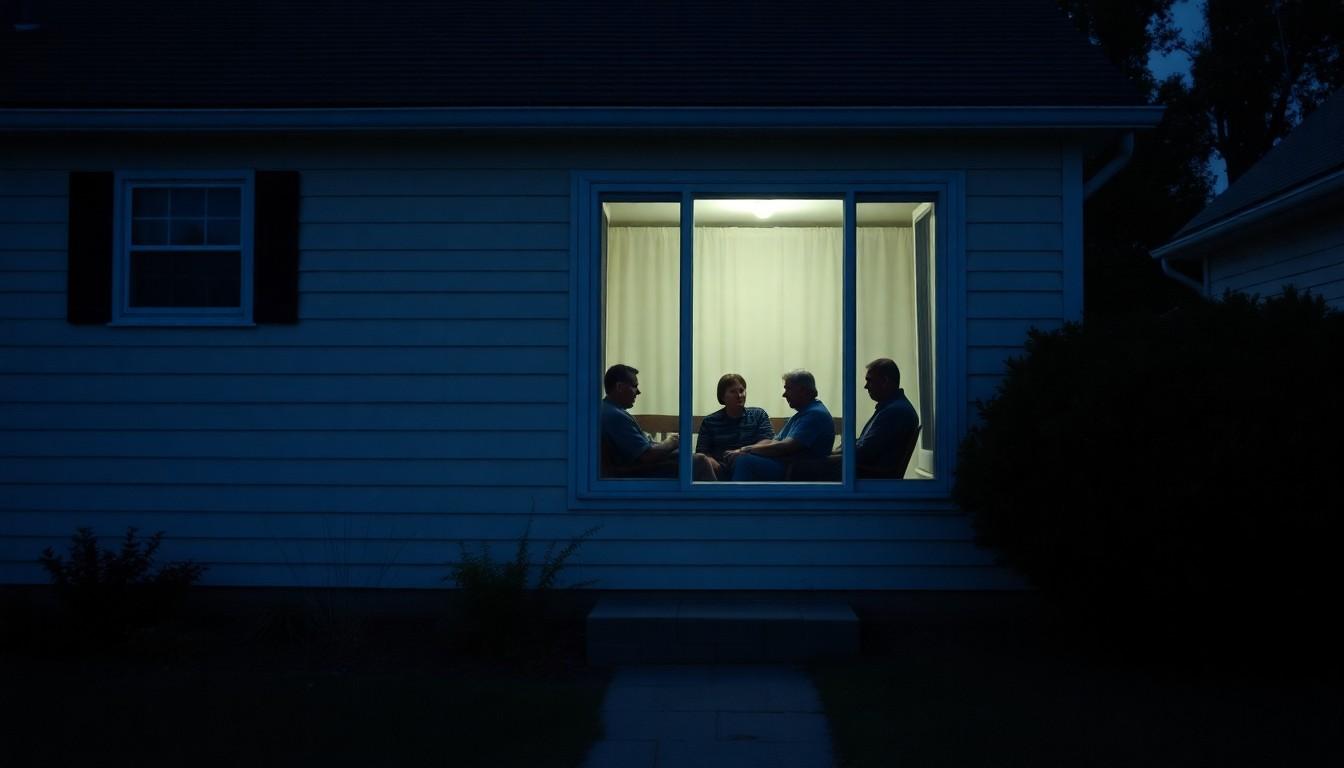
The New York Times found Gallant at home in Amity Harbor, outside the district he hopes to represent; the paper noted that LaLota also lives outside the district. The scene, with family and a friend nearby and canvassing on the evening’s plan, sits worlds away from the online storm around the photographs.
For Gallant, the argument is that neither his private life nor his public service should be edited down to suit other people’s expectations. Whether voters agree with his politics is a separate question. But the campaign has put a very human one in view: how much should a candidate’s private past matter when they’re asking to be judged on their work and priorities?
The clearest way to weigh Gallant’s candidacy is to look beyond the photographs and examine the record, the policies and the choices he’s asking voters to make.
Source Reference Map
Story idea inspired by: [1]
Sources by paragraph:
- Paragraph 1: [2]
- Paragraph 2: [3]
- Paragraph 3: [4]
- Paragraph 4: [4], [7]
- Paragraph 5: [1]
- Paragraph 6: [4]
- Paragraph 7: [7]
- Paragraph 8: [1]
- Paragraph 9: [4]
- Paragraph 10: [3], [5]
- Paragraph 11: [7], [3]
- Paragraph 12: [6]
- Paragraph 13: [5], [7]
- Paragraph 14: Lead article only
- Paragraph 15: [1]
- Paragraph 16: [1], [7]