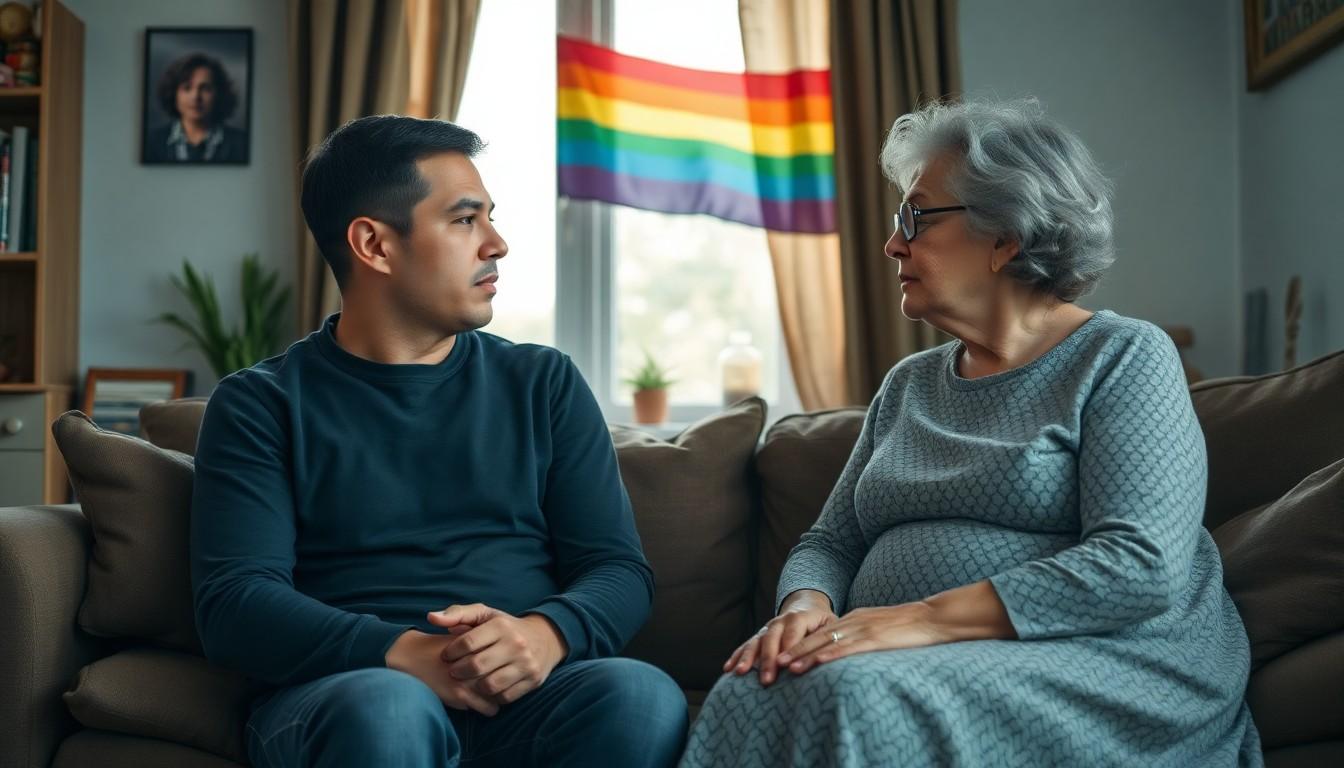
A brutal attack brings Germán and his mother, Rosa, to a long-overdue conversation in A la deriva. At her bar in Bastuel, Rosa admits she feared the world would hurt her son, while Germán makes clear that loving men doesn’t make him weak. It’s a moving moment that reveals how care and fear can become tangled in a family.
Essential Takeaways
- A shocking return: After being beaten over Héctor’s illicit dealings, Germán arrives at Rosa’s bar covered in blood.
- The hurt is public: A homophobic slur has been written on the bar’s terrace.
- Rosa explains her silence: She says she sensed Germán’s sexuality when he was young, but feared others would mistreat him.
- Germán names what he needed: He says he would have preferred more affection and less severity, without holding a grudge.
- The wider danger: Germán’s connection to Vicente and Héctor’s threats have made his private life a source of tension.
A painful moment finally opens the door
Germán arrives at his mother’s bar bloodied after being attacked, with a homophobic slur daubed across the terrace. The violence has left a mark in public, but the most affecting part of the scene is quieter: Germán tries to reassure Rosa, and the two begin to say what they have kept unsaid.
Rosa tells him she had sensed his sexuality since he was a child. She says she stayed silent because she feared other people would notice, treat him badly and see him as weak. That fear, she admits, made her stricter than she should have been.
Germán makes his own definition of strength
Germán’s response is direct: being attracted to men doesn’t mean he isn’t strong. He tells Rosa he would have wanted more tenderness and less harshness, but he doesn’t blame her or hold a grudge.
That balance gives the exchange its emotional weight. Germán can acknowledge what hurt him without turning the conversation into a rejection of his mother. After years of distance, they manage a rare moment of mutual openness.
Rosa’s care comes with complications
Rosa isn’t presented as a simple, soft-edged mother. In an interview with Antena 3, actor Amparo Fernández describes her as caring, strong and sensitive, but also direct and unfiltered. Rosa runs the local cantina, a place where village news passes through, and her family life is shaped by grief and difficult relationships.
Fernández also notes that Rosa favours one son over the other, adding another strain to her role as a mother. That background helps explain why this conversation feels so layered: affection is there, but so are choices and habits that have caused hurt.
The secrets behind Germán’s troubles
Germán’s relationship with Vicente has been a source of tension in the series. Atresplayer’s episode guides describe their private bond after the shipwreck, the difficulty of putting it behind them, and their growing closeness as they spend more time together.
The danger around that secret sharpens when Héctor threatens to expose Germán’s relationship with Vicente. In the same guide, Germán also tells Héctor that he knows what happened aboard the Minerva. So the attack comes against a backdrop of blackmail, concealed truths and an already fraught connection to Héctor’s dealings.
A small opening after years of distance
The scene doesn’t erase the hurt between mother and son, and it doesn’t pretend fear was the same as understanding. But Rosa’s admission and Germán’s honesty give them something they haven’t had for a long time: a conversation in which neither has to hide behind silence.
Sometimes, the clearest sign of strength is being able to say what you needed.
Source Reference Map
Story idea inspired by: [1]
Sources by paragraph: