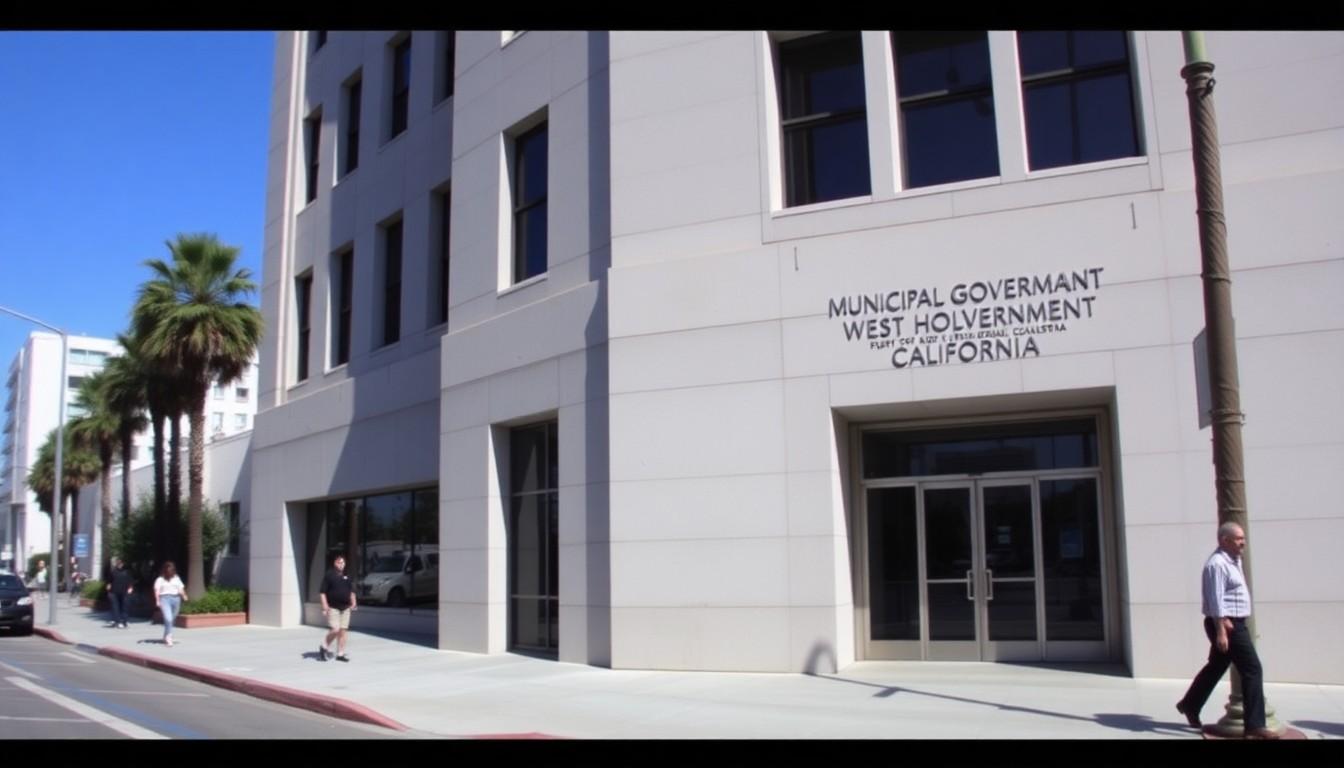
West Hollywood has approved a local registry for relationships involving three or more people, prompting debate about what recognition means. The measure offers some practical protections, but it does not make polyamorous relationships legally equivalent to marriage in California. Here’s what the city’s decision does, where its limits lie and why the distinction matters.
Essential Takeaways
- A local registry: West Hollywood approved a way for people in multi-partner relationships to register with the city.
- Limited protections: Registered partners can access certain local benefits, including hospital and jail visitation rights and some tenant protections.
- Not marriage: The registry does not create the rights of marriage or California state domestic partnership.
- A practical purpose: The measure responds to challenges multi-partner households can face around housing, healthcare and family life.
West Hollywood’s registry is recognition, not marriage
The key detail is easy to miss amid the heated commentary: West Hollywood has approved a municipal registry, not a new form of marriage. The Los Angeles Times reports that the scheme is open to three or more people in a consensual relationship and offers selected protections within the city.
That distinction matters. The registry cannot create benefits governed by California or federal law, and it does not give partners the full rights attached to marriage or state domestic partnership. So while the measure marks a notable form of local recognition, it doesn't rewrite marriage law across California.
The Los Angeles Times also notes that people who live outside West Hollywood may register. That makes the scheme broader than a residents-only service, though its protections remain local and limited.
What practical help can registered partners get?
For households trying to navigate everyday situations, even a narrow set of protections may matter. LAist says registered partners can receive hospital and jail visitation rights, along with some tenant protections.
The policy is part of a wider effort to address practical barriers for non-traditional households, according to the Los Angeles Times. Those can include healthcare, housing, education, parenting and shared assets - areas where the law may not automatically treat several partners as a single family unit.
Still, local recognition has boundaries. The Los Angeles Times reports that the registry's rules don't fit every form of polyamorous relationship, including some arrangements involving separate pairs. A council member said she would pursue amendments, suggesting the city may yet revisit how the system works.
How the registry works, and who can apply
LAist reports that applicants can submit a form and identification in person through the City Clerk, or apply by mail using notarised signatures. People living outside West Hollywood can apply too, according to the outlet.
The programme also sits within a longer local history. LAist notes that West Hollywood created a domestic partnership registry for same-sex couples in 1985, while other municipalities in Massachusetts have adopted multi-partner domestic partnership laws.
But a city registry can't solve every legal question facing multi-partner households. The Los Angeles Times describes challenges involving parentage, birth certificates, health insurance, paid family leave and jointly held property. Families may need legal advice, contracts or business entities to manage arrangements that marriage law addresses through established protections.
The marriage debate needs precise legal language
The Blaze discussion links today's registry to California's 2008 Proposition 8 vote and the Supreme Court's later same-sex marriage ruling. The University of California, Berkeley's Institute of Governmental Studies explains that Proposition 8 concerned same-sex marriage, but also notes that the legal position changed through later court proceedings.
In 2015, the Supreme Court ruled in Obergefell v. Hodges that state bans on same-sex marriage, and refusals to recognise same-sex marriages lawfully performed elsewhere, were unconstitutional under the Fourteenth Amendment. Cornell Law School's Legal Information Institute says the decision treated marriage as a fundamental liberty protected by the Due Process Clause and also found an Equal Protection violation.
That legal history is distinct from the West Hollywood measure. The registry is a local initiative with specific protections; it doesn't extend the Supreme Court's marriage ruling to multi-partner relationships.
Culture, politics and the argument around recognition
In the Blaze interview, Michael Knowles invokes Andrew Breitbart's idea that politics is downstream of culture, then argues that political decisions can also shape culture. PBS Frontline's interview with Joel Pollak offers context for Breitbart's emphasis on engaging with popular culture, Hollywood and media, while presenting the familiar maxim as a shorthand for that approach rather than a universal rule.
The debate around West Hollywood's registry reflects competing views of how legal recognition and social acceptance influence one another. The practical details, though, are less sweeping than some of the rhetoric suggests: this is a city-level system, with selected local benefits and clear limits.
For households affected by the policy, the useful first step is to check exactly which protections the registry provides, then seek specialist legal advice about matters the city cannot cover.
A local registry can offer recognition and practical help, but it isn't a substitute for marriage law.
Source Reference Map
Story idea inspired by: [1]
Sources by paragraph:
- Paragraph 1: [2], [3]
- Paragraph 2: [2], [3], [4]
- Paragraph 3: [2]
- Paragraph 4: [2], [3]
- Paragraph 5: [2]
- Paragraph 6: [3]
- Paragraph 7: [3]
- Paragraph 8: [4]
- Paragraph 9: [6]
- Paragraph 10: [5]
- Paragraph 11: [2], [3], [4], [5], [6]
- Paragraph 12: [7]
- Paragraph 13: [2], [3], [4], [7]
- Paragraph 14: [2], [3], [4]