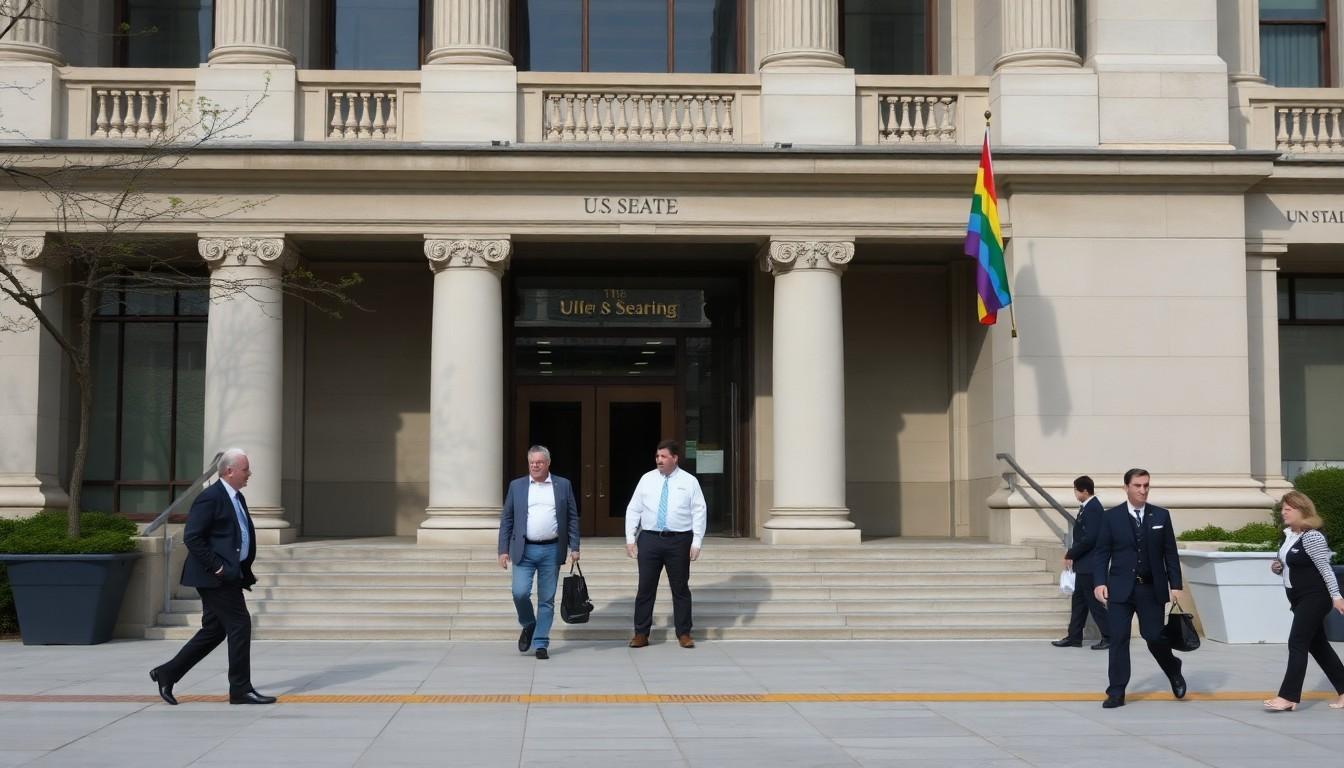
A Senate hearing has put Cissie Graham Lynch’s approach to LGBTQ people facing persecution under scrutiny. Asked how she would protect them as Trump’s nominee for ambassador-at-large for international religious freedom, Lynch spoke of protecting people of all faiths and seeking common ground. But her earlier remarks and the limits of a case she cited leave important questions about how that promise would work in practice.
Essential Takeaways
- The question: Senator Tim Kaine asked how Lynch would protect LGBTQ people in countries where being gay is criminalised.
- Her response: Lynch said she would protect people of all faiths and wouldn’t support Uganda’s law criminalising people for their sexual identity or preference.
- A point of contention: Lynch cited the case of baker Jack Phillips, but the Supreme Court’s ruling turned on the way Colorado’s civil-rights commission treated his religious beliefs.
- Why her past remarks matter: In a published account of her views, Lynch described homosexuality as a sin and said there was no room for compromise on the issue for Christians who believe in Jesus.
The hearing put a difficult question on the table
Cissie Graham Lynch’s nomination hearing turned on a question with real consequences: how would she protect LGBTQ people from persecution abroad? Senator Tim Kaine raised the issue during her appearance before the Senate Foreign Relations Committee, pointing to countries that criminalise people for being gay or LGBTQ.
Lynch replied that it would be her responsibility to protect people of all faiths, and said nobody should be criminalised or persecuted for personal beliefs, The Christian Post reported. Kaine pressed her on whether her earlier opposition to LGBTQ protection laws might make LGBTQ people question whether she would represent them equally.
The exchange exposes a distinction that matters for the job: religious freedom is the office’s stated remit, while LGBTQ people may face persecution because of who they are. The Christian Post reported Lynch’s answers, while the committee’s hearing records confirm the nomination proceedings took place on 10 November 2026.
What the post involves, and what Lynch says she brings
The role is not simply a platform for personal views. The United States Commission on International Religious Freedom says the ambassador-at-large leads the State Department’s International Religious Freedom Office and serves as an ex-officio member of the commission. It describes the ambassador as the principal executive-branch official working on freedom of religion or belief abroad.
In her written opening statement to the committee, Lynch described work with international organisations operating in more than 120 countries. She said that work had brought her into contact with people of different faiths and backgrounds, as well as families displaced because of their beliefs and communities affected by attacks.
That experience is part of the case she made for her nomination. But the hearing’s central challenge was not only whether she had worked in places affected by religious persecution; it was how she would apply the role’s promise of protection to people whose identities are targeted.
Her answer on Uganda left a boundary to examine
Lynch said she would not support a Ugandan law criminalising people for their sexual identity or preference, according to The Christian Post. She also said she would seek common ground across political and religious differences, describing respectful engagement as part of her approach to contentious issues.
That answer offered a clear objection to one example of criminalisation, but it doesn’t resolve the wider concern Kaine raised about equal protection. The hearing summary does not record Lynch addressing the use of such laws against people because of their actual or perceived gender identity.
For readers weighing what was said, the practical distinction is worth keeping in view: rejecting a particular law is not the same as setting out how an official would respond to the full range of persecution. Lynch’s written statement describes a broad commitment to people of many backgrounds, while her hearing answers are where the specific LGBTQ question was put to her.
The Jack Phillips case was narrower than a broad culture-war claim
When Kaine asked about Lynch’s views on LGBTQ protections, she referred to Jack Phillips, the Christian baker who declined to make a cake for a same-sex wedding on religious grounds. The case is frequently pulled into arguments about religious freedom and discrimination, but the Supreme Court’s decision was narrower than a general ruling allowing businesses to refuse service to same-sex couples.
The Supreme Court ruled 7–2 that Colorado’s civil-rights commission had not treated Phillips’s religious beliefs with the neutrality required by the Constitution. It did not decide that Colorado’s anti-discrimination law could never apply in such circumstances, or establish a general right to refuse service.
That distinction matters because Lynch was discussing the case in response to concerns about laws protecting LGBTQ people from discrimination. The court record helps separate what the justices actually decided from the larger argument the case has come to represent.
Past remarks help explain why Kaine pressed her
Lynch’s earlier public comments provide context for the senator’s concern. In a Billy Graham Evangelistic Association article, Lynch said that Christians who believe in Jesus should not compromise on homosexuality, which she described as a sin. She also argued that compassion for LGBTQ people should not require compromising belief in God’s plan.
That record sits alongside her promise to protect people of all faiths and her pledge to find common ground. They are not the same question: a nominee’s religious beliefs, and how she would carry out a government role, need to be considered separately. But when the job involves responding to persecution, the public will want clarity about how that commitment applies beyond faith communities.
The hearing made the issue visible, but the most useful measure will be the detail behind the assurances: who receives protection, and how consistently?
A promise of protection matters most when it reaches everyone facing persecution.
Source Reference Map
Story idea inspired by: [1]
Sources by paragraph:
- Paragraph 1: [2], [7]
- Paragraph 2: [2]
- Paragraph 3: [2], [7]
- Paragraph 4: [6]
- Paragraph 5: [3]
- Paragraph 6: [3], [6]
- Paragraph 7: [2]
- Paragraph 8: [2]
- Paragraph 9: [2]
- Paragraph 10: [2], [4]
- Paragraph 11: [4]
- Paragraph 12: [2], [4]
- Paragraph 13: [5]
- Paragraph 14: [2], [5]
- Paragraph 15: [2], [3], [5]