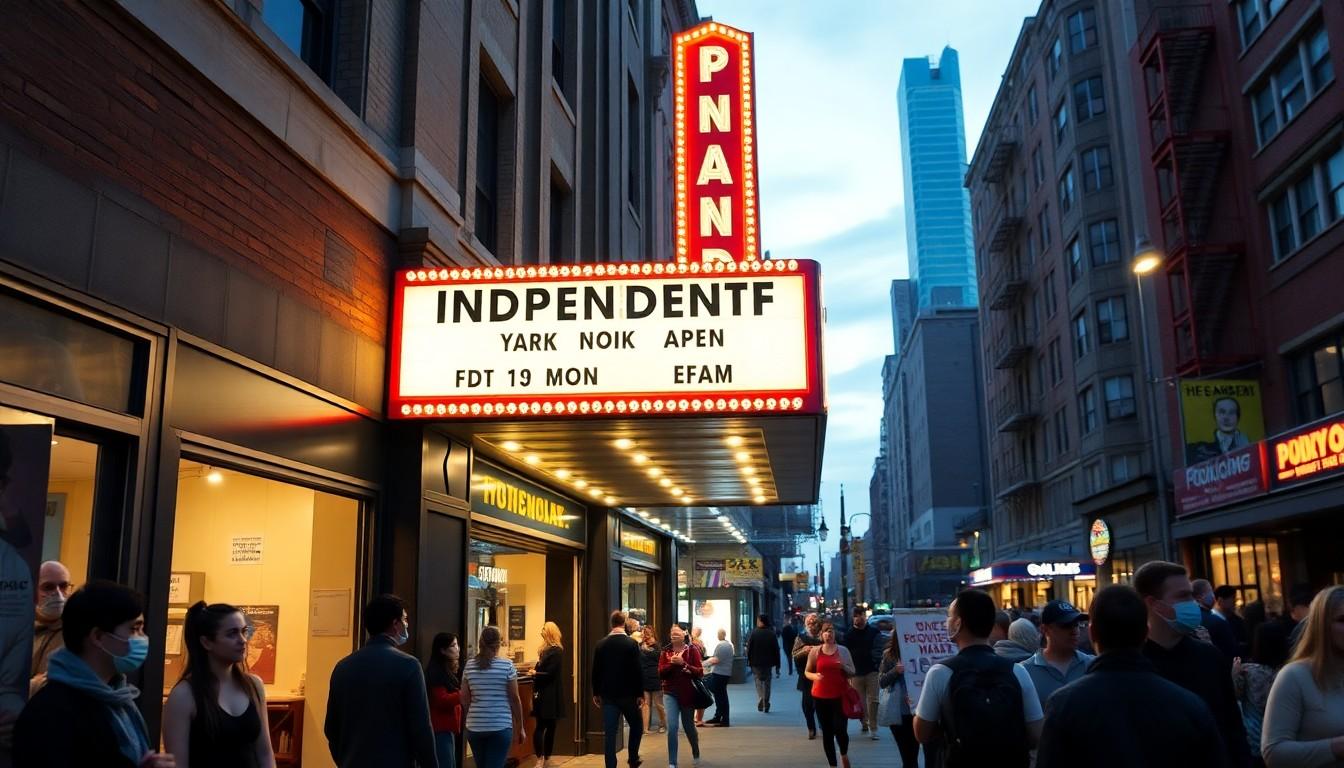
Film critic Melissa Anderson talks about queer New York, the audiences still showing up for new releases and why performers can make a film worth watching. Her reflections range from a newly discovered lesbian sports bar in Brooklyn to the restored documentary Tally Brown, New York, offering a lively case for seeing cinema through its people as well as its directors.
Essential Takeaways
- Queer New York keeps changing: Anderson recalls the lesbian bars she knew after moving to the city in 1996, while welcoming new places and younger perspectives.
- A restored film brings a performer back into view: Rosa von Praunheim’s 1979 documentary follows singer and performer Tally Brown through New York’s underground culture.
- New-release audiences are still there: Anderson says screenings she attends in New York regularly draw audiences, including for independent films.
- She looks closely at actors: Anderson’s “acteurist” approach treats a performer’s screen presence as a source of meaning, not simply an accessory to the director’s vision.
Tally Brown’s New York still feels vivid
Tally Brown had a stage presence that seems to leap out of the screen: bold wigs, long false eyelashes and a personality that could fill a room. In the New York Review of Books, Melissa Anderson writes about Brown through Rosa von Praunheim’s 1979 documentary Tally Brown, New York, recently restored and returned to circulation. The film offers more than a portrait of one performer; it preserves a glimpse of the city’s underground life.
Brown’s working life crossed theatre, clubs, lounges and underground cinema, and she was associated with Andy Warhol’s Factory. The Deutsche Kinemathek describes von Praunheim’s film as a journey into 1970s New York underground culture, interweaving Brown’s songs with moving street scenes and close views of its subject. That mix gives the documentary its particular charge: the city is not just a backdrop, but part of the story. (Sources: Deutsche Kinemathek)
Queer nightlife changes, but Anderson resists nostalgia
When Anderson moved to New York in 1996, she spent long nights in Manhattan lesbian bars and clubs. Some of the places she remembers have since closed; she says the Cubbyhole and Henrietta Hudson remain, alongside Ginger’s in Brooklyn. She’s clear-eyed about the losses, but she doesn’t treat the past as a golden age that the present can’t match.
Instead, younger friends help her keep up with what’s happening now. Anderson describes discovering Athena Keke’s together after a screening: a women’s sports bar in Clinton Hill. The venue says its roots lie in women’s sports watch parties organised around New York from 2023, before it opened its permanent Clinton Hill home in late 2025. It’s a neat example of how a city’s scenes can shift shape rather than simply disappear. (Sources: [5])
New York audiences are turning up for new films
Anderson isn’t persuaded that moviegoing has turned away from the present. She recalls attending a weekday screening of Lee Chang-dong’s Possible Love at Film at Lincoln Center and finding around fifty people there. In her experience, new-release screenings in New York draw audiences across different days and times.
That doesn’t mean she’s untroubled about the industry. Anderson argues that major-studio films can be hemmed in by rigid formulas, including familiar biopic structures and stories built as extensions of existing intellectual property. Independent US filmmakers, meanwhile, continue to make work that reflects their own visions, though funding remains a struggle. The distinction matters: cinema can feel constrained in one corner while remaining lively elsewhere. (Sources: [2])
Why Anderson follows actors, not just directors
Anderson’s critical method gives performers a leading role. She connects her interest in “acteurism” to a MoMA film series curated by critic Dave Kehr in 2014, which organised screenings around actors and their screen personas. MoMA confirms the series’ arrival and Kehr’s role, while Anderson also points to critic Boyd McDonald as an advocate for paying attention to stars.
That approach shaped her thinking about David Lynch’s Inland Empire. Anderson considered Laura Dern not only as the film’s star, but as a kind of co-author whose performance helps viewers navigate its complexity. It’s a useful reminder that when a plot leaves you puzzled, an actor’s face, gestures or delivery can still give you something to hold on to. (Sources: MoMA)
The restored documentary gives the past a present tense
The restoration of Tally Brown, New York makes the documentary available to new viewers, while also returning attention to Brown’s work and von Praunheim’s portrait of the city. The Deutsche Kinemathek’s festival publication records the film as a 1979 work and places its restoration within a film-heritage programme. (Sources: Deutsche Kinemathek)
Anderson’s wider point is less about looking back than staying curious. She admires Brown’s affection for New York without the belief that the city was better in her youth. It’s a generous way to think about cinema, too: the old films matter, but so do the people making new ones and the audiences finding their way into the room.
Take Anderson’s cue: follow the performers, and let the next screening surprise you.
Source Reference Map
Story idea inspired by: [1]
Sources by paragraph: