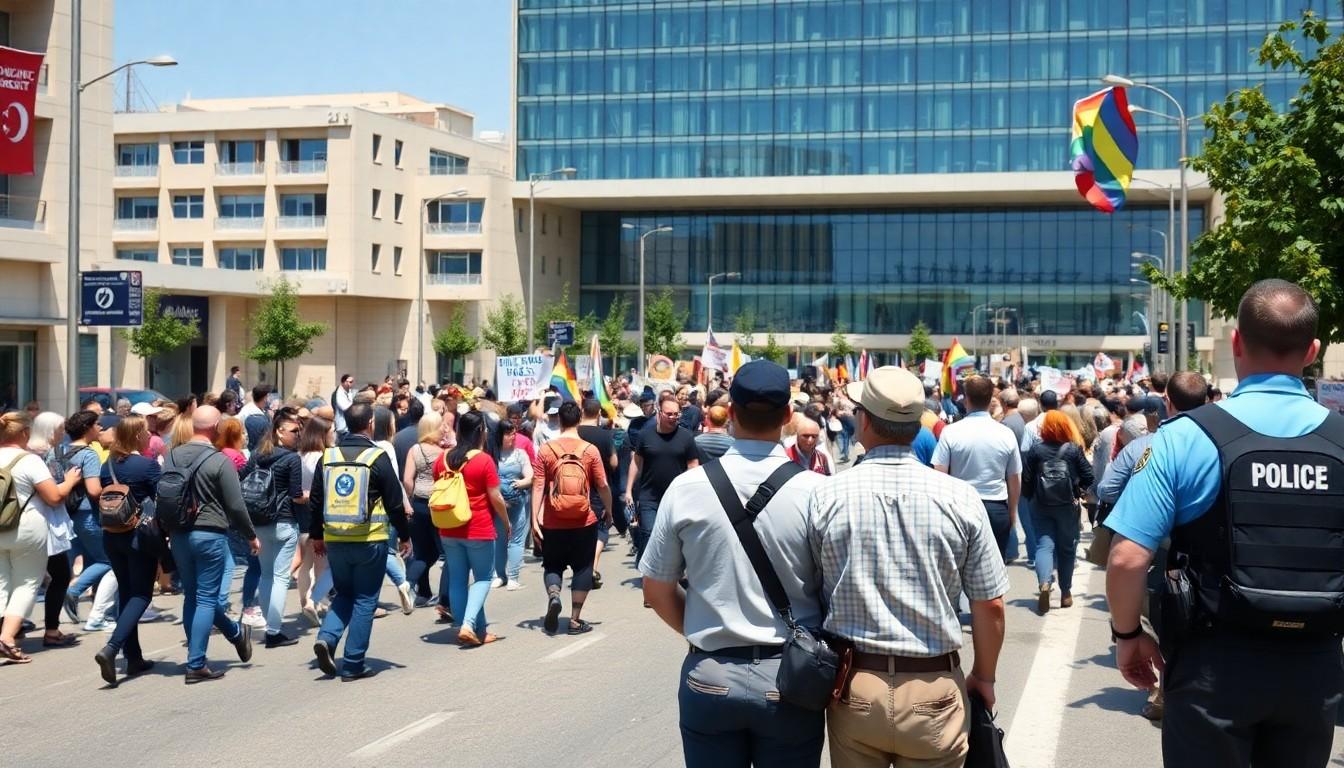
A rainbow flag lifted above a crowd in Antalya carried more than one message. LGBTQ+ protesters joined an international climate march during COP31 despite heightened pressure on rights groups in Türkiye, with fellow campaigners forming a protective cordon. Their appearance brought the risks facing local activists into focus, while linking calls for climate justice with demands for space to speak and organise.
Essential Takeaways
- A public show of solidarity: International campaigners surrounded LGBTQ+ protesters as they unfurled rainbow flags in Antalya.
- A tense backdrop: Amnesty International and Human Rights Watch describe raids, arrests and restrictions targeting LGBTQ+ people and organisations in Türkiye since September 2026.
- A wider climate-justice call: The march brought together local and international groups calling for action on climate change, inequality and human rights.
- COP31 talks continued: The demonstration took place as negotiations were under way at the UN climate summit.
In Antalya, a rainbow flag carried real risk
The most striking image from the Antalya march was a rainbow flag opened only after civil society campaigners had gathered around the LGBTQ+ activists. The gesture was carefully staged, but it also made a simple point: even showing who you are can feel fraught when rights groups face pressure.
The Guardian reported that police searched bags and checked protesters’ placards around the gathering at Aydin Kanza Park. One young Turkish activist said the flag felt dangerous, while another spoke of missing a friend who was detained.
That sense of risk has a wider context. Amnesty International reported raids on LGBTQ+ people and organisations from September 2026, alongside arrests, pre-trial detention and restrictions on online activity. Human Rights Watch also described coordinated police raids and arrests, placing them within a broader threat to fundamental rights.
The crackdown helps explain the careful planning
The march organisers planned the LGBTQ+ presence in advance, making sure flags were available but waiting until activists were surrounded before displaying them. That measured approach reflected the concerns described by rights organisations, rather than a lack of conviction.
ILGA-Europe’s timeline records arrests, digital restrictions and further police operations across Türkiye, including in Antalya. It offers useful context for why a public display of identity might carry particular weight in the city, although its updates document reported developments over time.
For campaigners, international visibility mattered. The Guardian quoted organisers and activists describing the march as a chance to make space for Turkish voices and show solidarity with people facing repression. In that setting, the cordon around the flag-wavers was both practical protection and a visible act of support.
Climate justice brought different struggles together
This wasn’t only a march about one cause. The Guardian described protesters from different countries raising concerns about forests, land fires, local communities and the climate crisis, alongside calls for governments to make polluters pay.
The organisers’ announcement for the People’s Climate March set out a broad agenda: ending fossil-fuel expansion, supporting a fair transition to renewable energy, funding climate action and protecting ecosystems and communities. The Peoples’ Climate Summit also framed its programme around links between climate action, democracy, human rights, labour rights and food sovereignty.
That breadth helps explain why the demonstration drew campaigners with different priorities. The issues may not be identical, but the march offered a shared platform for people who wanted their concerns heard during COP31.
What the march says about COP31
The demonstration took place as climate negotiations continued in Antalya. The Guardian reported that progress on substantive issues had so far been limited, while UN climate negotiator Simon Stiell urged countries to move towards difficult questions and compromise.
The Associated Press provides further context on COP31 as a gathering of leaders, delegates and climate activists, with pressure on governments to advance climate commitments. It does not report on the LGBTQ+ march itself, but it helps explain the international stage on which the protest unfolded.
A climate summit can make space for competing priorities, but the march showed how closely environmental concerns can sit alongside questions of rights and public participation. For the activists who raised the flag, being seen was part of the message.
A visible act of solidarity
The Antalya march brought climate campaigners together, but its most carefully protected moment belonged to protesters facing pressure at home. Their flag was brief and deliberate; its significance was anything but small.
The sources describe a stark backdrop of arrests and restrictions, while the march organisers cast climate justice as inseparable from human rights. That combination made the demonstration more than a call for climate action: it was also a public show of support for people determined to keep speaking.
Solidarity can start with making room for voices that are too often pushed out of view.
Source Reference Map
Story idea inspired by: [1]
Sources by paragraph: