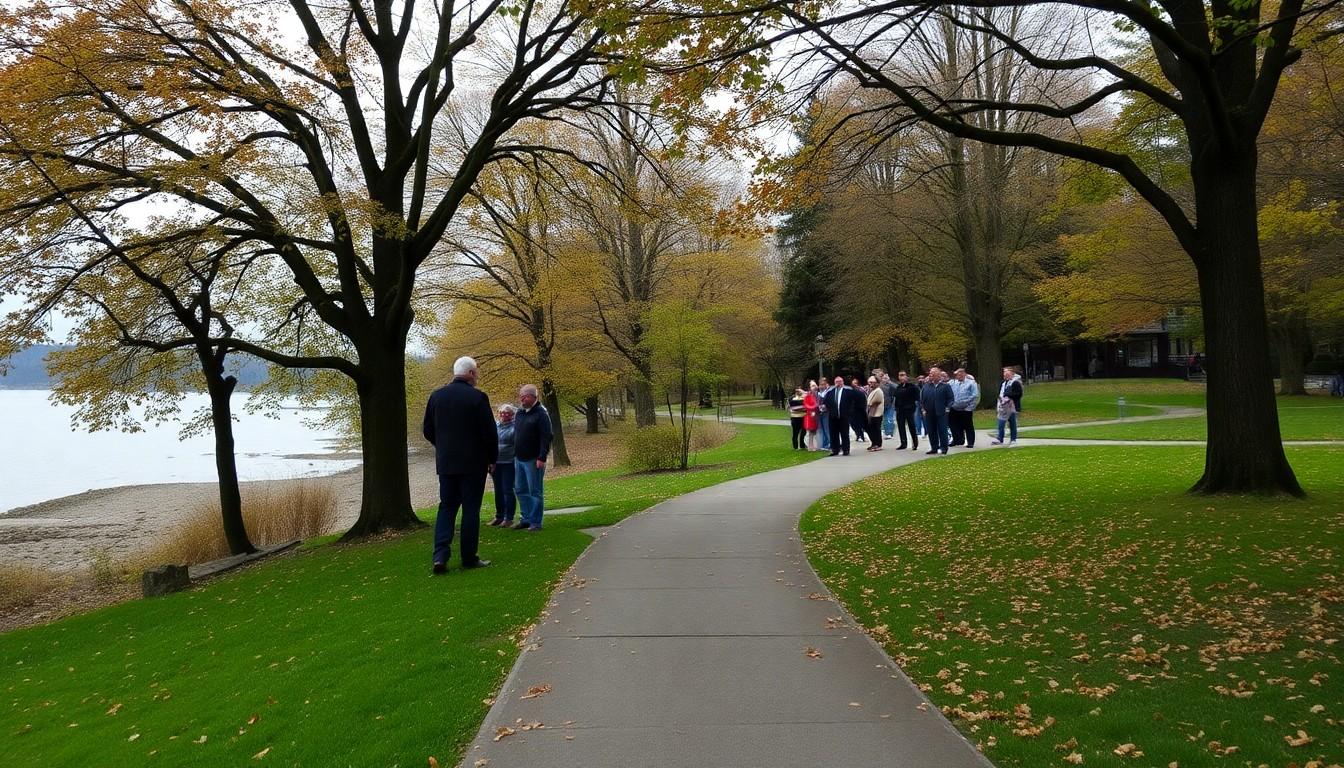
Seattle leaders and community members have gathered at Denny Blaine Park to celebrate its place in LGBTQ+ history. The Seattle park has been used as a clothing-optional gathering place for more than 50 years, and its recognition on Washington’s Heritage Register gives that history a more visible place in the city’s story.
Essential Takeaways
- A historic first: Denny Blaine Park was added to the Washington Heritage Register in September 2025, the first site explicitly recognised for its connection to LGBTQ+ history.
- A community gathering place: The park has served LGBTQ+ people for more than 50 years, according to Seattle’s adopted resolution.
- Recognition comes with work to do: The resolution supports documenting and sharing the park’s cultural history.
- The debate continues: A judge allowed the park to remain open while ordering the city to address unlawful conduct found to be a public nuisance.
A park’s history steps into the spotlight
Denny Blaine Park’s recognition marks a notable moment for Seattle’s LGBTQ+ community: a place shaped by decades of gathering has received explicit historic recognition. At a ceremony on 9 November, city leaders and community members came together to celebrate the park’s significance.
The City of Seattle’s event announcement said the gathering was intended to honour the people who helped preserve the park’s history and underline why LGBTQ+ stories should be documented and shared with future generations. Mayor Katie Wilson and Councilmember Joy Hollingsworth were among those expected to attend.
More than a beach: a place to belong
The Washington State Department of Archaeology and Historic Preservation’s nomination traces the site’s development from Whitman Place, part of an early 20th-century residential development, into a public park shaped by changing patterns of recreation and cultural life. It describes an unofficial clothing-optional beach that has drawn queer community members for more than 50 years.
The nomination notes that lesbian women used the beach from the 1970s and identifies the park’s connection to Seattle’s queer community as part of its historical significance. For visitors, that history is about more than how the shoreline has been used; it’s also about having a space to gather and be visible.
Recognition is only the beginning
Seattle’s adopted resolution formally recognises Denny Blaine Park’s historic and cultural importance, including its role as an affirming gathering place for LGBTQ+ people and transgender and gender-diverse residents. It also backs collaboration between Friends of Denny Blaine, Seattle Parks and Recreation and community partners to document and interpret the park’s history.
That practical next step matters. Historic recognition can make a story easier to share, but keeping it alive depends on how the city and community explain the site’s past to people who come after them.
Clothing-optional use and unlawful conduct are not the same
Denny Blaine’s history has also been caught up in a dispute over how the park is used. KIRO Newsradio host Ursula Reutin described tensions between park users and nearby residents, while the MyNorthwest report noted that clothing-optional use is distinct from unlawful sexual activity.
KUOW reported that a King County Superior Court judge allowed the park to remain open while ordering Seattle to address a public nuisance associated with lewd sexual behaviour. The ruling did not close the park, leaving the city to respond to unlawful conduct while the park’s wider history and community role remain part of the conversation.
The story belongs to the people who kept gathering
The ceremony brought formal recognition and personal meaning together. On KIRO Newsradio, host Gee Scott welcomed the park’s recognition and praised Wilson and Hollingsworth for attending, describing the moment as important for people who have faced pressure to hide who they are.
And that may be the clearest measure of the occasion: the park’s history isn’t only recorded in a register or resolution. It lives in the community that has gathered there, and in the effort to make that story visible.
Let the recognition be a starting point for sharing Denny Blaine Park’s history.
Source Reference Map
Story idea inspired by: [1]
Sources by paragraph: