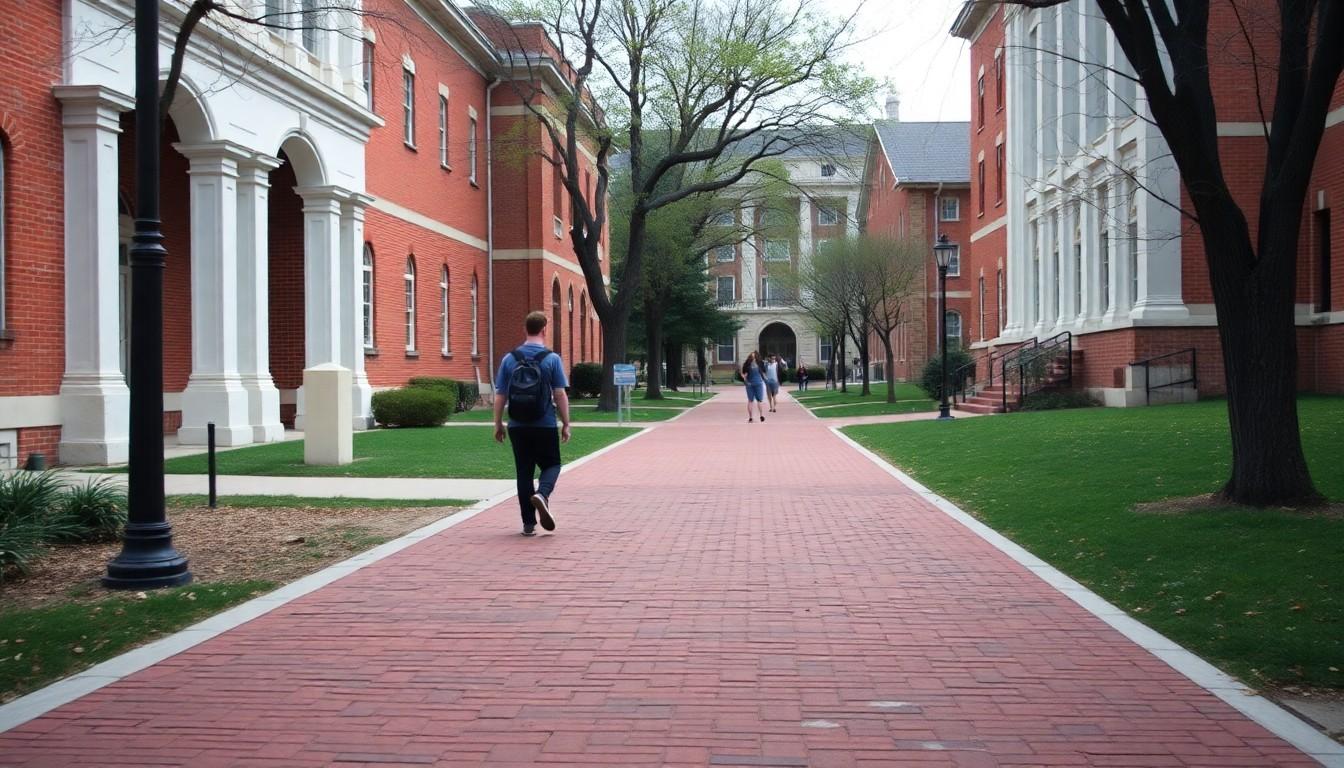
A Black gay writer reflects on Razorback fandom, campus history and the complicated pull of belonging at the University of Arkansas in Fayetteville. Through the legacy of novelist E. Lynn Harris, the essay asks whether a university associated with football traditions and Greek life can make room for students who have often felt on the margins.
Essential Takeaways
- A small share of students: Black or African American students accounted for 3.7 per cent of the Fayetteville campus enrolment in Spring 2025, according to university figures.
- A trailblazing alumnus: E. Lynn Harris was the university’s first Black male cheerleader and first Black editor of its Razorback yearbook.
- A community with a history: Black Americans for Democracy organised to challenge discrimination at the university and put forward thirteen demands.
- A painful point of reflection: The essay recalls Nolan Wells’s death after a Fourth of July boat trip, while the available reporting does not establish that race played a role.
Razorback fandom can look like a world of its own
Razorback football can seem, from the outside, less like a game and more like an invitation to a whole way of life: tailgates, family traditions and a crowd gathered in red and white. For the essayist, that scene stirs both envy and unease, especially when the university’s traditions appear to centre a version of Southern belonging that doesn’t feel equally available to everyone.
The essay’s question is personal as well as institutional: can a Black gay man find community at the University of Arkansas, or will he always feel he’s looking in from the edge? It’s not a simple verdict on the university. Rather, it’s a thoughtful account of the emotional work involved in wanting to belong somewhere that can also feel intimidating.
E. Lynn Harris shows what was possible
Harris offers a powerful point of connection. The University of Arkansas athletics profile confirms that he was the first Black male Razorback cheerleader and the first Black editor of the Razorback yearbook. The Pryor Center’s archival profile also confirms his university milestones, including his honours journalism degree.
His story continued well beyond campus. The athletics profile recounts how Harris left a career in business to pursue fiction, eventually earning major literary recognition. Those achievements make him more than a university first: he’s a reminder that a person can shape a place while also building a life and a public voice of their own.
A small Black community has long had to organise
The essay places Harris’s experience against the history of Black students at the university. The Encyclopedia of Arkansas describes Black Americans for Democracy as an organisation formed to challenge discriminatory practices. Its thirteen demands addressed issues including housing, Greek life, athletics, classroom treatment and representation among university employees.
That history matters because formal access and genuine belonging aren’t the same thing. The university’s Spring 2025 enrolment summary counted 1,164 Black or African American students, or 3.7 per cent of the Fayetteville campus total. It’s a useful snapshot of representation, but it can’t tell us how students experience campus life.
An unsettling reminder, with unanswered questions
The essay also recalls the death of Nolan Wells, an 18-year-old Black junior college football player, after a Fourth of July boat trip to Horn Island with friends. WAFB’s timeline reports that Wells was last seen on the trip and that his body was found near the island two days later. The Associated Press likewise describes the outing, his disappearance and the search for answers.
The reporting does not establish that race played a role in Wells’s death, or that anyone intended him harm. The essay’s response is about the fear and memory the news stirred for its writer, rather than a claim about the cause of the death. Holding that distinction matters: uncertainty deserves care, even when a story prompts painful questions.
Belonging can mean making room and taking space
Harris’s life suggests that a community can sometimes be built deliberately. The essay describes how, after returning to Fayetteville, he mentored Black cheerleaders and brought people together. That doesn’t erase the university’s history or answer whether every Black or queer student can feel at home there, but it offers a vivid example of support taking practical shape.
There’s no tidy resolution here. The essay’s clearest invitation is to take up space, keep questioning who gets welcomed into the centre of campus life, and recognise the people who have made room for others. That may be a more honest kind of hope than pretending the tensions have already disappeared.
It's worth asking not only who gets to join the party, but who gets to help shape it.
Source Reference Map
Story idea inspired by: [1]
Sources by paragraph: