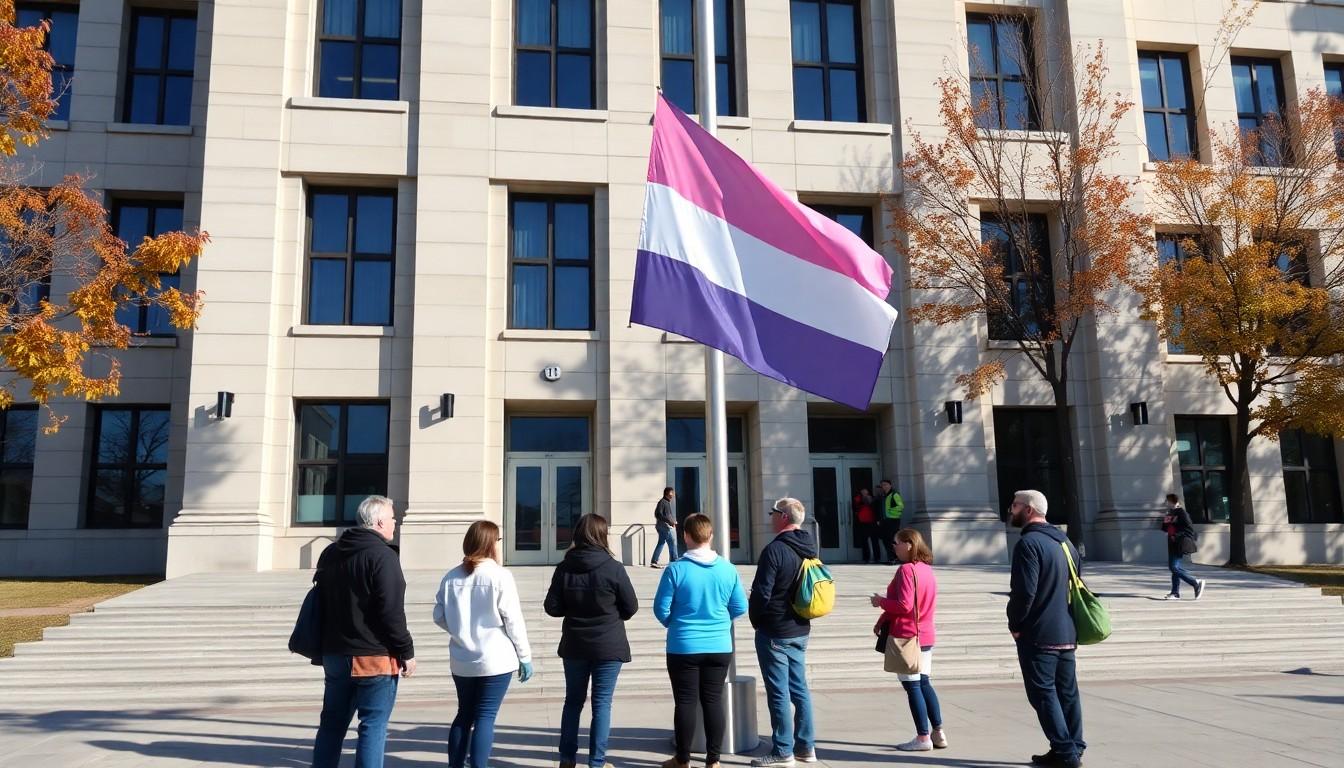
More than 100 volunteers helped Project Rainbow Utah place 1,701 transgender pride flags outside homes across the state, a new campaign record. The effort arrives ahead of Transgender Awareness Week, offering a bright show of community support while also helping fund local LGBTQ+ programmes. Its growing reach matters in a state where public visibility has become a point of contention.
A record number of flags, one neighbourhood at a time
A line of transgender pride flags in front gardens can turn an ordinary street into a quietly powerful statement. Project Rainbow Utah says it distributed 1,701 flags this month, beating last year's total of 1,558 and setting a new record.
More than 100 volunteers gathered on 8 November, collected their pre-planned routes and set off to place flags around Utah homes. FOX 13 reported that the campaign has grown every year, from 493 flags in 2022 to 899 in 2023 and 1,118 in 2024, before last year's total.
There was plenty of practical effort behind the display: Project Rainbow described a day involving mallets and hammers, tacos and a couple of dogs. It's an appealingly down-to-earth picture of a campaign built not just around a symbol, but around people showing up together.
Why visibility carries extra weight in Utah
For operations coordinator Fane Harris, seeing flags appear across neighbourhoods matters because transgender people are facing significant marginalisation. FOX 13 also reported that donations to the campaign reached a record high, with Harris linking that support to a desire among donors to do better.
That backing comes amid Utah policies affecting transgender residents, including rules concerning restrooms and gender-affirming healthcare for minors. The Associated Press reported on a state law restricting which flags may be displayed at public schools and government buildings, a policy whose opponents argued would suppress LGBTQ+ expression.
Still, the story isn't only about politics. Volunteer Ruth Silveira told FOX 13 she hopes the flags will help people see transgender residents as neighbours and fellow members of the community. That kind of visibility may start with a flag, but its meaning is personal.
The flags also help fund local LGBTQ+ projects
Project Rainbow's campaign supports more than a day of delivery. The organisation says its Community Fund has distributed more than $450,000 to LGBTQ+ events and programmes in Utah since 2018, including $67,200 in support during 2026.
Project Rainbow's 2026 funding breakdown says more than 20 grantees received $43,700 directly, alongside $18,500 for Pride festivals and $5,000 for visibility partners. Its Community Fund page explains that the programme grew from surplus flag-campaign proceeds, with support intended for grassroots work such as mental-health initiatives, youth safe spaces, visibility projects and community events.
The 2026 recipients included Pride events, a Diné Pride gathering at Window Rock, a Lavender Graduation and a Trans Day of Visibility celebration. The fund also backs arts and community-building projects, making a flag purchase or campaign subscription one way supporters can help sustain local work.
A city flag with its own message
Salt Lake City's official Sego Visibility Flag will be raised at City Hall at 9.30am on Friday to mark the start of Transgender Awareness Week, according to the lead report. Mayor Erin Mendenhall, Council Member Chris Wharton and Harris are scheduled to speak, followed by a song.
The city's flag page describes the Sego Visibility design as representing Salt Lake City's transgender community. It combines the sego lily with pink and blue stripes and a white stripe, which the city says represents people who are non-binary, intersex, transitioning or otherwise gender non-conforming.
It's a local emblem with a clear purpose: to make recognition visible. Project Rainbow says continued support will help it fund more grants in 2027, so the campaign's impact could stretch well beyond this week's display.
A flag in a front garden is a small gesture, but one that can make a neighbourhood feel more welcoming.
Source Reference Map
Story idea inspired by: [1]
Sources by paragraph: