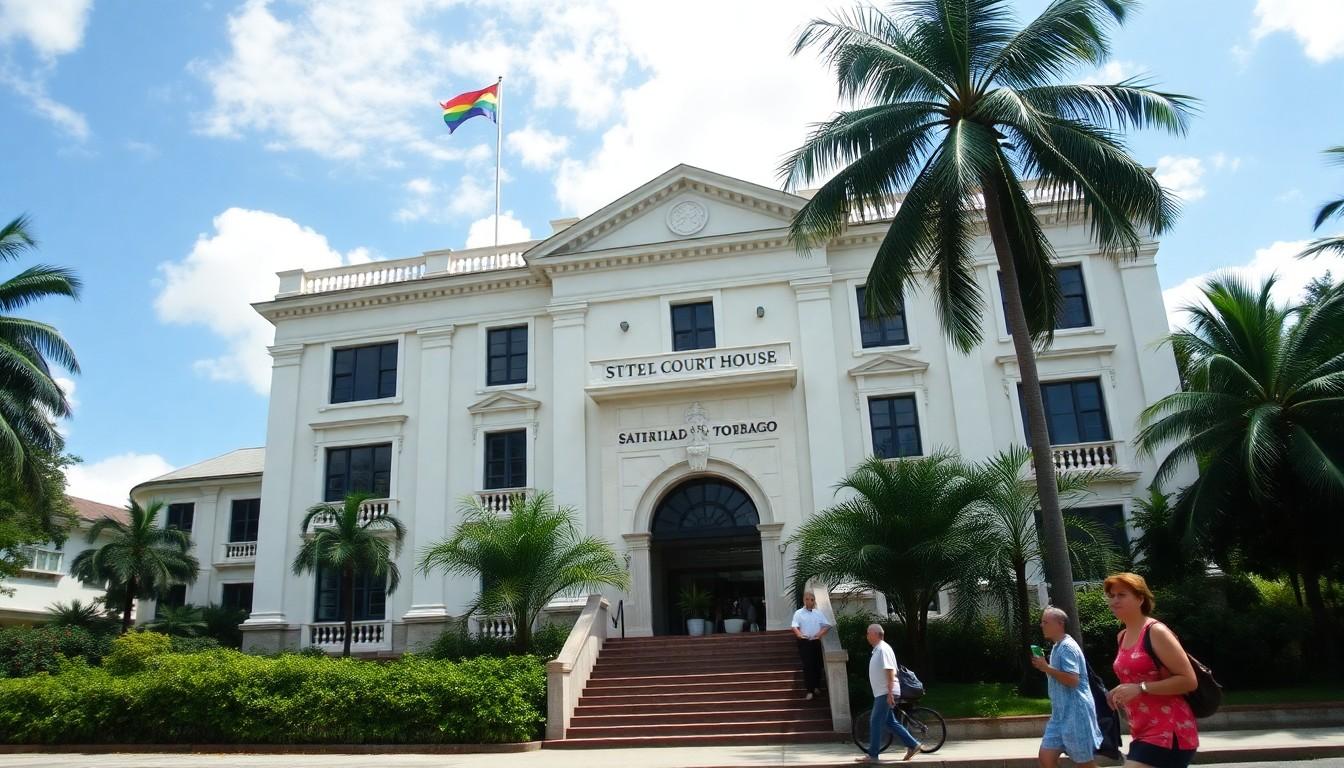
A long-running legal fight over Trinidad and Tobago’s same-sex intimacy laws has ended with a decisive ruling from the Privy Council. The country’s highest court of appeal found that provisions criminalising consensual private activity between adults breached constitutional rights. It’s a landmark legal change, though campaigners say equality in everyday life will take longer.
Essential Takeaways
- The ban has been overturned: The Privy Council ruled that the challenged provisions of Trinidad and Tobago’s Sexual Offences Act infringed constitutional rights.
- A case with several turns: Jason Jones’s challenge followed a 2018 High Court victory and a 2025 Court of Appeal reversal.
- The ruling is specific: It ends criminalisation under the provisions challenged in court, including for consensual activity between adults in private.
- Legal change isn’t the whole story: Jones has warned that discrimination in homes and workplaces may persist.
- The region remains varied: Some Caribbean jurisdictions have overturned similar laws, while criminalising provisions remain elsewhere.
A landmark ruling closes a long legal fight
The Privy Council has overturned Trinidad and Tobago’s criminalisation of consensual same-sex intimacy between adults in private. Its ruling found that the relevant sections of the Sexual Offences Act infringed constitutional rights, bringing a landmark case to a close.
The official Judicial Committee of the Privy Council case page records that Jason Jones challenged sections 13 and 16 of the Act. The case reached the Board after the High Court found the provisions unconstitutional and the Court of Appeal reversed that decision.
The Trinidad and Tobago Guardian reports that the court considered the laws’ effect on intimate relationships and personal identity. It also rejected the idea that a law’s colonial origins alone could justify keeping it in place.
From a 2018 victory to a final appeal
Jones’s legal challenge has had a difficult path. The Guardian reports that the High Court ruled in his favour in 2018, finding the provisions unconstitutional, before the Court of Appeal restored their criminal status in 2025.
Jones then took the case to the Privy Council, Trinidad and Tobago’s final court of appeal. The Associated Press describes the decision as the end of a nearly decade-long legal case, while the official court record confirms the appeal concerned constitutional rights.
That sequence matters: the latest judgment didn’t follow a straight line from challenge to victory. It reversed an earlier reversal, underscoring how much can turn on the final stage of a constitutional case.
The ruling changes the law, not every lived experience
The decision ends criminalisation under the specific provisions challenged in court. But a legal ruling can’t, by itself, guarantee that people feel accepted or safe in daily life.
Jones welcomed the outcome while cautioning that the consequences of a court judgment and the reality of people’s lives are not the same. The Guardian reports that he pointed to the continuing risk of discrimination in homes and workplaces.
That’s an important distinction for readers: the legal position has changed, but wider questions about equality remain. A court can remove a criminal penalty; changing attitudes is a longer, less tidy process.
Caribbean progress is real, but uneven
Trinidad and Tobago joins a wider regional pattern of legal challenges to colonial-era restrictions. Human Dignity Trust records successful cases in Antigua and Barbuda, Saint Kitts and Nevis, Barbados, Dominica and Saint Lucia, among others.
But progress isn’t uniform. The Associated Press notes that some Caribbean jurisdictions still retain laws criminalising consensual same-sex activity, while the Human Dignity Trust says criminalising provisions remain on the books in parts of the region.
So this ruling carries significance beyond one country, but it doesn’t settle the regional picture. It may offer encouragement to campaigners elsewhere, while the laws and conditions they face still vary from place to place.
What the case says about colonial-era laws
The case also turned on whether the challenged provisions could be shielded from constitutional review as inherited law. The Trinidad and Tobago Guardian reports that the Privy Council found the 1986 legislation had materially changed the earlier 1925 ordinance, making it a new law rather than simply a preserved colonial rule.
That reasoning gives the judgment a wider legal dimension. Human Dignity Trust says challenges across the Eastern Caribbean have often focused on rights including privacy, dignity and equality, as campaigners question laws rooted in British colonial rule.
For now, the clearest takeaway is both simple and significant: consensual same-sex intimacy between adults in private is no longer a criminal offence under the provisions at issue. What follows in everyday life will take longer to measure.
A landmark judgment is a beginning, not a guarantee of instant equality.
Source Reference Map
Story idea inspired by: [1]
Sources by paragraph: