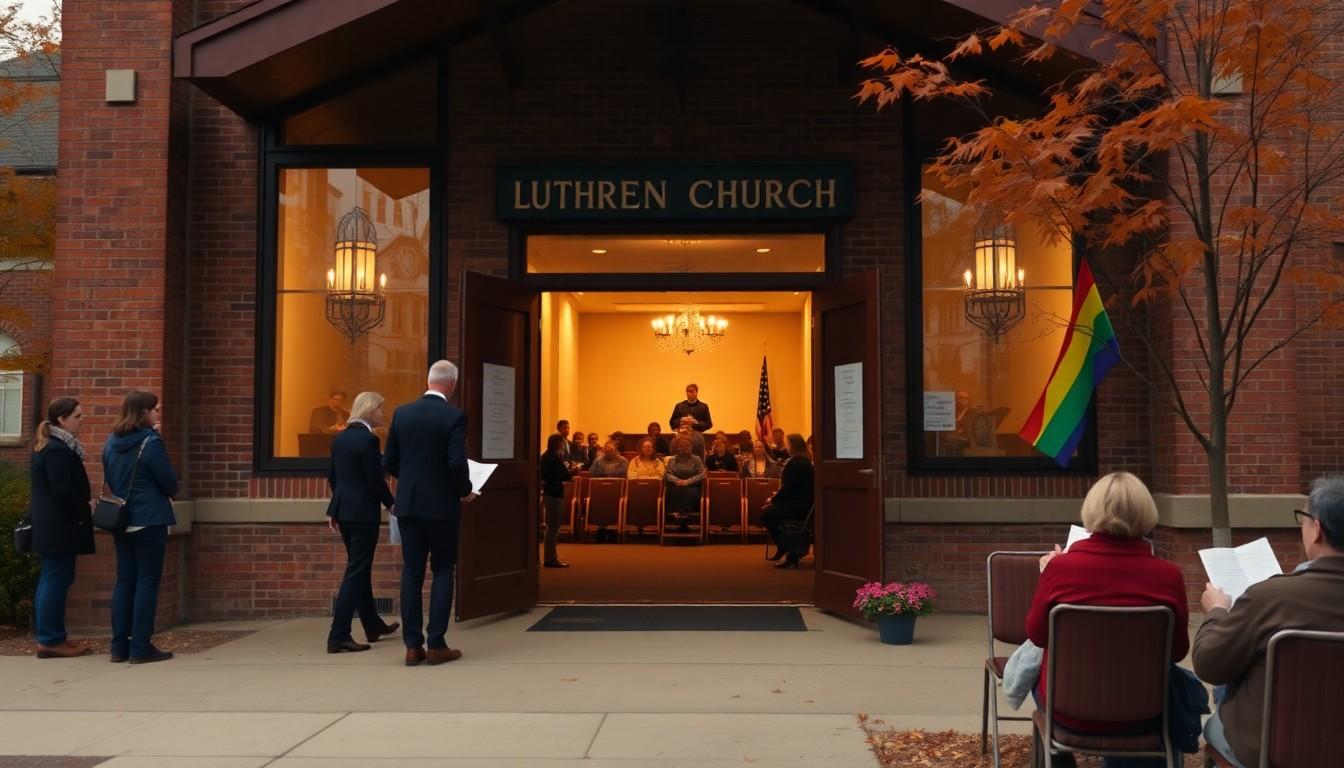
A hymn festival in Evanston brought transgender composers and people from several Christian traditions together through music, art, prayer and reflection. Organised with support from Garrett-Evangelical Theological Seminary’s Garrett Collective, “Sacred, Trans & Blessed” asked churches to look beyond occasional gestures of welcome and make room for trans voices in worship throughout the year.
Essential Takeaways
- A shared gathering: More than 50 people attended in person, with another 15 joining online.
- Trans composers led the music: Their work explored harm, grief, mutual care, gratitude for identity and social change.
- An ecumenical effort: Participants came from Lutheran, Presbyterian, United Methodist and other faith traditions.
- The focus was ongoing inclusion: Organisers argued that trans people should help shape worship beyond special events.
- Latin American voices mattered: Colombian composer Zara Torreglosa joined through connections with Red Crearte.
A hymn festival puts trans voices centre stage
A room filled with music and prayer became a place to ask a direct question: who gets to create the songs and shape the worship of a church? At “Sacred, Trans & Blessed” in Evanston, transgender composers were not simply represented in the programme. They shared work rooted in their own lives and faith.
UM News reported that more than 50 people attended the 8 October gathering at Grace Lutheran Church, while another 15 participated online. The event combined music, art, storytelling, prayer and theological reflection, bringing together people from several Christian traditions.
The festival was supported by Garrett-Evangelical Theological Seminary through its Garrett Collective. Garrett describes the Collective as a platform for continuing theological learning and collaborative resources for religious communities, extending beyond conventional degree programmes.
Why churches need more than a welcome hymn
The project grew from conversations about a gap in church music and liturgical planning. UM News reported that Garrett professor the Rev. Andrew Wymer saw a need for resources grounded in trans experience, while hymn writer and liturgical educator Eli Cooper-Nelson was looking for transgender composers who could contribute their own work.
That distinction matters. A church can speak warmly about welcome, but its hymns, prayers and worship leadership also show whose experiences are treated as part of communal faith. United Methodist Discipleship Ministries offers practical guidance for inclusive worship, including suggestions for prayers, preaching and music that acknowledge people of varied identities.
The songs at the festival took on difficult and tender themes, including harm and violence, grief, mutual care, gratitude for identity and the call to transform the world. Cooper-Nelson’s point, as reported by UM News, was that inclusion shouldn’t stop at one song or a one-off celebration.
A Latin American perspective joins the conversation
Colombian composer Zara Torreglosa brought a Latin American voice to the collaboration. UM News said her work and participation were connected through the Rev. Gerardo Oberman and Red Crearte, a network that creates and shares artistic resources for faith communities.
Red Crearte describes its work as spanning music, poetry and other arts, with resources translated and shared across languages including Spanish, Portuguese and English. That wider reach helps explain why collaboration across countries and cultures can matter in worship: a church’s shared songs needn’t come from only one language or tradition.
For Torreglosa, the invitation was also personal recognition of her work, UM News reported. Her participation made the festival’s message more tangible: broadening who gets to shape worship means listening to creators whose voices have not always been welcomed in those spaces.
Remembrance asks churches to take responsibility
The programme also included a panel on pastoral care, violence against transgender communities and Transgender Day of Remembrance. UM News reported that participants stressed the need to remember Black and racially marginalised trans people, while also considering how religious teachings and practices can contribute to exclusion.
Remembrance, in that account, was not only about naming those who have died. It also meant caring for people attending memorial events, avoiding graphic details that could renew trauma, and offering pastoral support beyond the service.
That is a demanding but useful reminder for congregations: worship can express welcome, yet it can also expose who has been left out. The work is not finished when a church adds one hymn; it continues in the choices made across its services and the people invited to lead them.
What ongoing inclusion could look like
Garrett’s event listing described a programme with a panel for worship planners and an evening festival featuring work by Eli Cooper-Nelson, Zara Torreglosa and Slats Toole. It framed the gathering as a chance to consider how worship, sermons and hymns can centre trans experience and help communities prepare for remembrance.
That planning focus points towards practical next steps for churches: review the words and music used in services, create continuing opportunities for trans people to contribute, and make room for different languages and cultural traditions. These are not just questions for a special calendar date; they shape how a congregation understands whose faith and creativity belong.
The lasting invitation is simple, even if the work takes care: let more people help write the songs, lead the prayers and form the shared life of the church.
Explore the music and consider whose voices your community hears in worship.
Source Reference Map
Story idea inspired by: [1]
Sources by paragraph: