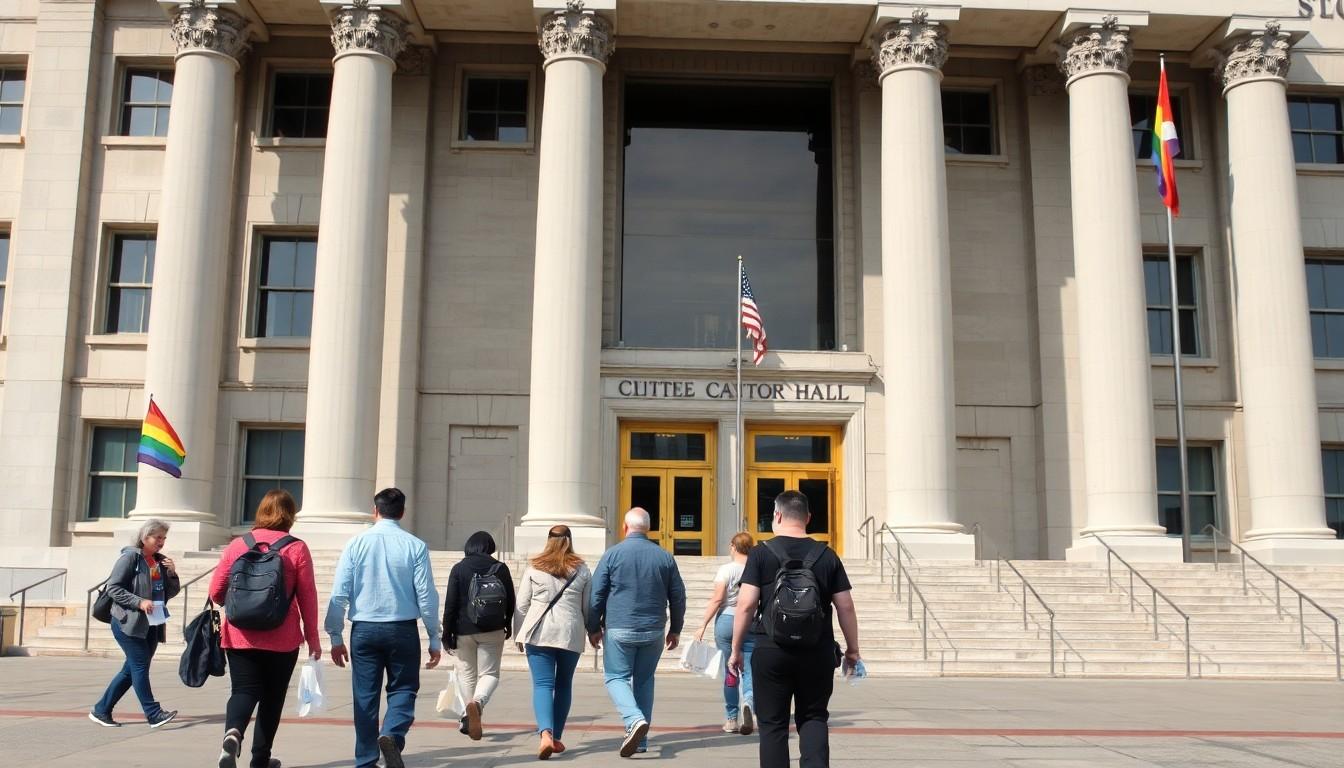
Voters have sent transgender and nonbinary candidates into statehouses and local offices across the United States, from Michigan to Florida. Their victories bring people directly affected by anti-trans policies into the rooms where decisions are made, while offering a striking snapshot of representation and political resolve.
Essential Takeaways
- A wave of wins: Trans and nonbinary candidates secured seats in state and local government across several states.
- Historic firsts: Joanna Whaley won a seat in Michigan's House, while Jaelynn Scott is set to become Washington's first openly trans state legislator.
- Incumbents held on: Leigh Finke, Abi Boatman and Zooey Zephyr were among those returning to office.
- Policy remains central: Candidates highlighted issues including healthcare, housing, affordability and civil rights.
- Results need context: The reports describe historic outcomes, but certified totals and legal details should be checked with election authorities.
Trans candidates win seats across the map
The results reach well beyond one statehouse. In Michigan, Joanna Whaley won 62.5 per cent of the vote and became the first openly trans woman elected to the state House, according to OUT FRONT Magazine and Ballotpedia. Meanwhile, Leigh Finke won a third term in Minnesota with 85.5 per cent, and Kansas representative Abi Boatman was re-elected with 67 per cent.
Chicago also saw a notable result: Precious Brady-Davis was re-elected to the Metropolitan Water Reclamation District, alongside colleagues Eira Corral Sepúlveda and Beth McElroy Krikwood. OUT FRONT Magazine describes Brady-Davis as the first out trans woman of colour elected in the city's history.
Other victories brought new faces into state government. Bentley Hudgins won a Georgia House seat with 92.5 per cent of the vote, while Allison Montgomery flipped an Alabama district and is set to become the state's first openly trans lawmaker. Pride Source also reports first-time trans state legislators in Georgia, Alabama and Wisconsin, alongside wins in Washington and Florida.
Why these wins carry extra weight
Representation matters especially when lawmakers are debating policies that affect trans people's daily lives. In Kansas, Boatman opposed Senate Bill 244, which the reports describe as restricting access to some single-sex spaces in publicly owned facilities and preventing changes to gender markers on identity documents.
In Minnesota, Finke has supported making the state a refuge for gender-affirming care, according to OUT FRONT Magazine. Her re-election, alongside Boatman's return to the Kansas House, puts familiar voices back in debates where trans rights are already a live political issue.
The wider picture isn't simple, though. Axios reports that Washington voters also approved a measure imposing new restrictions on trans girls' participation in girls' school sports. Elections can create new representation without settling the policy arguments that helped make those races consequential.
Firsts, local voices and everyday concerns
Jaelynn Scott is set to become the first openly trans member of Washington's legislature and the first Black trans state lawmaker elected in the United States, according to OUT FRONT Magazine and Axios. Scott leads the Lavender Rights Project, a Black- and trans-led advocacy organisation, and her campaign focused on housing, healthcare, schools and helping families stay in their neighbourhoods.
In Georgia, Hudgins campaigned on healthcare, affordability and civil rights protections, as well as raising the minimum wage and supporting lower-income families. Those priorities give the race a practical dimension: representation is not only about who gets a seat, but also about the everyday concerns they take into office.
Wisconsin and Florida added milestones of their own. Dina Nina Martinez-Rutherford is set to become the first trans person elected to Wisconsin's legislature, while Quinnie Perez will take office in Florida's Orange County Soil and Water Conservation District as the state's first trans woman elected to public office, Pride Source reports.
A varied record of incumbents and newcomers
Some victories were decisive, while others offered a different kind of signal. In Montana, Zooey Zephyr won a third term after running unopposed; in Delaware, DeShanna Neal was re-elected to a third term. Both have already served in office, giving these results a thread of continuity alongside the first-time wins elsewhere.
Whaley's route to office also included a challenge to her ballot filing. Pride Source reports that the Wayne County clerk rejected the challenge before the election, while Ballotpedia records her victory over Republican Ronald Kokinda with 62.5 per cent of the vote. The contrast is a reminder that candidates can face scrutiny over their eligibility as well as the usual campaign contest.
What the election results can, and can't, tell us
Human Rights Campaign president Kelley Robinson said the results showed that LGBTQ+ voters' rights were not up for debate and that the community was not going anywhere, as quoted by OUT FRONT Magazine. The remark captures the defiance running through these races, but the election reports also place the wins amid ongoing disputes over trans rights and public policy.
Vote shares are useful for understanding how individual races unfolded, but they shouldn't be mistaken for a final legal record. OUT FRONT Magazine and LGBTQ Nation present journalistic overviews, and Ballotpedia notes that results can change before certification; official state or local election records remain the place to check certified totals.
The victories mark a wider push for representation, even as the debates continue.
Source Reference Map
Story idea inspired by: [1]
Sources by paragraph: