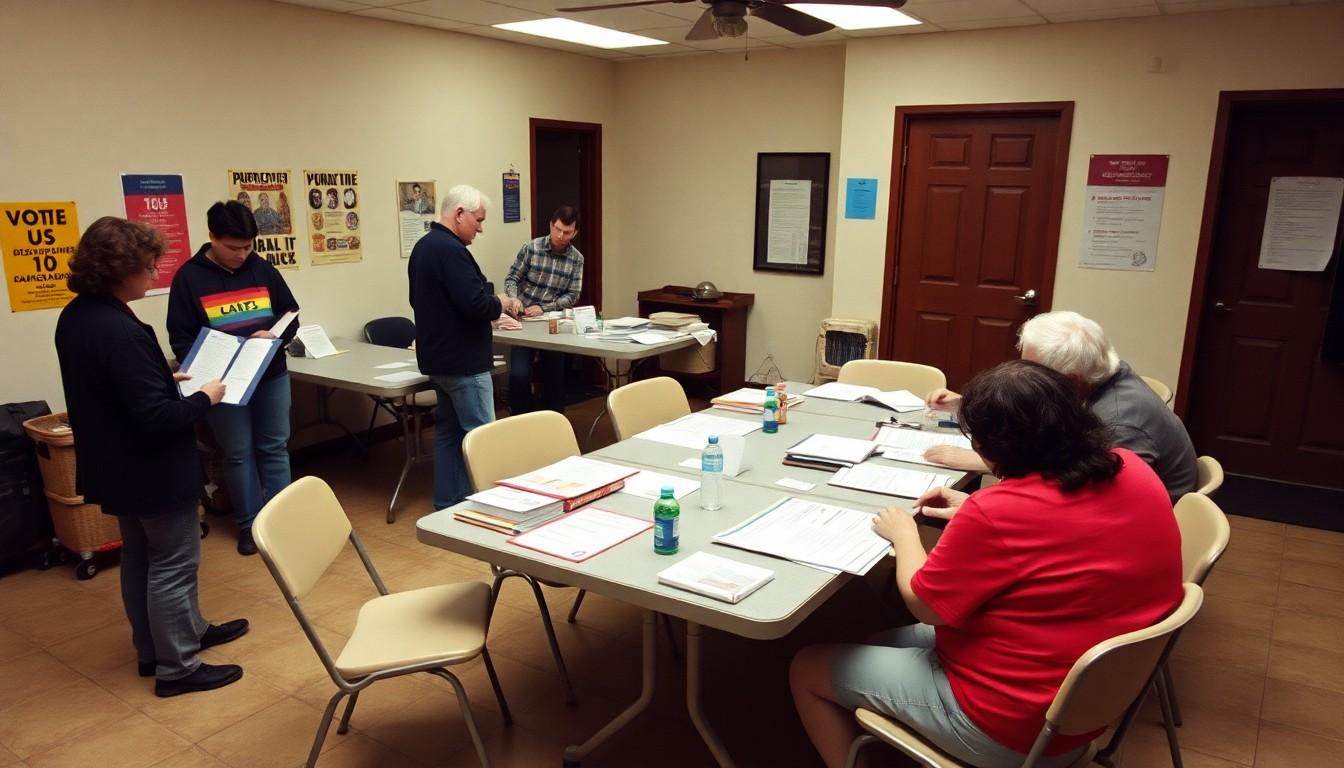
Dallas’s early LGBTQ political organising shows how lasting influence can begin in a neighbourhood precinct. In 1980, activists with the Dallas Gay Political Caucus launched Project ’80 to encourage gay North Texans to vote in Democratic primaries, attend local meetings and seek convention delegate roles. The campaign offered a practical route into party politics, and helped build a foundation for future participation.
The strategy began at street level
Project ’80 started with a deliberately local idea: take part in the places where party decisions and delegate selections begin. Rather than relying only on advocacy from outside the political system, Dallas activists encouraged LGBTQ people to register, vote and show up at precinct meetings.
D Magazine reported that the Dallas Gay Political Caucus helped elect eight gay precinct chairs and register about 1,500 new voters. Those figures give the campaign a tangible shape: the work meant knocking on political doors, not simply making a case from the sidelines.
A campaign designed to reach the convention floor
The project’s organisers wanted community members to move from local participation into party conventions, where they could seek influence over party priorities. The Dallas Way credits Don Baker with devising Project ’80, while the Texas State Historical Association describes a goal of electing delegates and pushing for a party-platform plank calling for repeal of the state law criminalising same-sex relations.
The results included a sizeable presence at Democratic conventions. D Magazine reported that 29 Dallas delegates attended the state convention, alongside delegates from other Texas cities, and that around 100 gay delegates took part overall. The Texas State Historical Association says the state party adopted the proposed plank in summer 1980.
Progress came with setbacks, too
The campaign’s achievements weren’t a straight line. D Magazine reported that a resolution seeking repeal of Texas laws criminalising homosexual conduct passed committee in 1980 but narrowly lost in a floor vote. The same account says activists returned to the convention in 1982 and the resolution then carried.
That distinction matters. Project ’80 helped create a route into party politics, but participation didn’t guarantee an immediate victory on every issue. A scholarly thesis in Texas A&M’s OakTrust repository likewise describes meaningful mobilisation while cautioning that the project didn’t transform the wider political climate.
The lasting value was political know-how
A 1986 speech by Dallas activist Mike Anglin, preserved by the University of North Texas Digital Library, looks back on Project ’80 as a training ground for later activists. That makes the campaign’s legacy bigger than a single convention or platform vote: it helped people learn how to organise, navigate party structures and build political relationships.
The Dallas Way also places the project within broader community organising, including efforts to work with neighbourhood and other community groups. For anyone trying to understand how political representation grows, the lesson is refreshingly practical: showing up consistently can matter as much as making a headline.
The groundwork outlasted the campaign
Dallas’s political story continued well beyond Project ’80. The Texas State Historical Association records Bill Nelson’s later campaigns for Dallas City Council and identifies Craig McDaniel as the first openly gay man elected to the council, in 1993. These later milestones don’t mean the early campaign alone caused every change, but they sit within a longer history of organised LGBTQ participation.
That history is a reminder that political influence is often built quietly, before the public notices it. A precinct meeting may not sound dramatic, but for a community seeking a voice, it can be where the next chapter begins.
Keep an eye on the local work behind the headline-making milestones.
Source Reference Map
Story idea inspired by: [1]
Sources by paragraph: