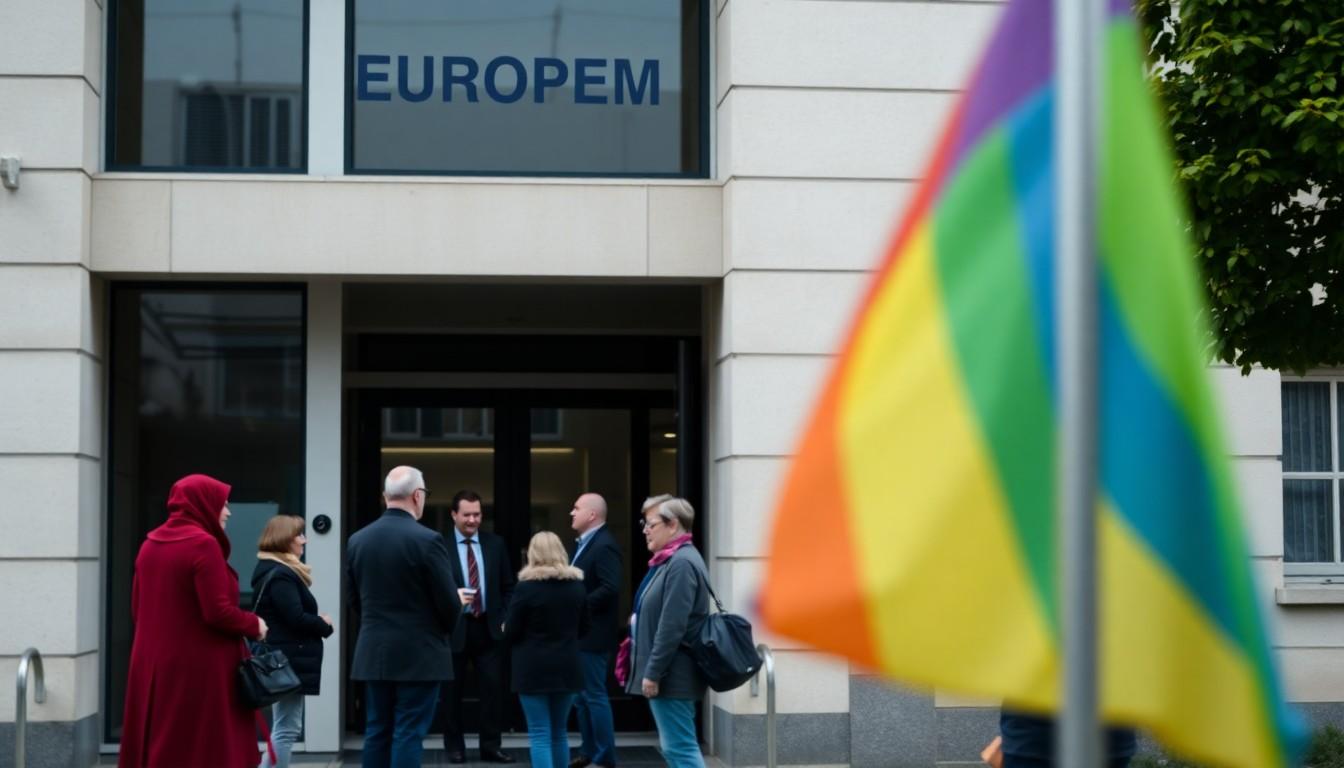
A new Council of Europe strategy aims to strengthen equal rights for LGBTI people across its 46 member states from 2027 to 2032. The European Evangelical Alliance supports protection from violence and discrimination, but says the non-binding framework could still influence national laws and policies, raising questions about religious freedom, schools and how rights can be protected together.
Essential Takeaways
- A five-year framework: The Council of Europe’s first LGBTI equality strategy covers 2027–2032 and is due to launch in Strasbourg on 26 January 2027.
- Four priorities: It focuses on equal rights and dignity, countering disinformation, preventing violence and hatred, and strengthening legal and institutional protections.
- Not a new treaty: The strategy is not legally binding, but the European Evangelical Alliance says it may influence national laws and policies.
- A question of balance: The Alliance supports protection from violence and unfair treatment, while raising concerns about religious freedom, pastoral care and parental convictions in education.
A strategy built on existing commitments
The Council of Europe’s strategy brings together existing human-rights commitments, court case law and monitoring work. It sets four priorities: promoting equal rights and dignity for LGBTI people, countering disinformation, preventing violence and hatred, and strengthening legal, institutional and regulatory protections.
The Council says progress across its member states remains uneven, with discrimination, hate speech, hate crimes and violence continuing. It also points to polarising narratives and disinformation as concerns. The framework covers areas including education, healthcare, employment, public services, family life and online technologies.
The Council of Europe says national governments will lead implementation, with support from the organisation through expertise, monitoring, technical assistance and cooperation between countries. The strategy is scheduled to launch in Strasbourg on 26 January 2027, at an event organised under Montenegro’s presidency of the Committee of Ministers. (Paragraphs 1–3: [2])
Why the Evangelical Alliance is watching closely
The European Evangelical Alliance’s concern is about how a non-binding strategy might shape policy in practice. Tatiana Kopaleishvili, the Alliance’s representative to the EU in Brussels, told Christian Daily International that it could influence national approaches to conversion practices, school programmes and hate speech. That is her assessment of the strategy’s potential effect, not a legal finding about what governments must do. (Paragraph 4: [3])
Kopaleishvili also made clear that the Alliance supports protecting LGBTI people from violence, harassment, hate crimes and unfair treatment. She welcomed the strategy’s recognition that faith-based organisations can contribute to respectful societies. Her concern, she said, is that the framework does not explain how equality measures should be balanced with the freedom of churches, parents and believers to live by their convictions. (Paragraph 5: [3])
The difficult question around conversion practices
One point of tension is the term “conversion practices”. Kopaleishvili argues that, without a clear definition, national rules could be interpreted too broadly. She worries that bans drafted in broad terms might affect pastoral care, prayer or counselling that people seek voluntarily.
That concern belongs to the Alliance’s representative; the supplied sources do not establish how future national laws will define or regulate these practices. For readers, the distinction matters: the strategy is a policy framework, while any legal restrictions would depend on how member states put measures into effect. (Paragraphs 6–7: [3], [4])
Schools, parents and the right to education
Kopaleishvili also questions the strategy’s call for LGBTI-inclusive school curricula, saying it does not mention parents’ convictions. The Council of Europe’s explanation of the right to education says states must respect parents’ right to ensure that their children’s education and teaching conform to their religious and philosophical convictions. That principle does not, by itself, give parents a veto over every part of a curriculum; how it applies depends on the legal context. (Paragraph 8: [4], [5])
The broader point, as Kopaleishvili puts it, is that the issue should not become a contest between groups’ rights. She points to the idea of maximising human rights for everyone, rather than protecting one group by diminishing another. It’s a useful test for debates that can quickly become polarised: are the proposed protections clear, and do they take competing rights seriously? (Paragraph 9: [3], [4])
A framework, not the final word
The Council of Europe presents the strategy as a way to apply existing commitments, not as a newly created treaty. But a non-binding plan can still matter politically: it sets priorities and offers member states a shared framework for future work. The key distinction is between the Council’s stated purpose and the Alliance’s concerns about how national policy might develop. (Paragraph 10: [2], [3])
The discussion is also part of a longer history of European court decisions and standards. The Council of Europe says the strategy draws on work developed since the European Court of Human Rights’ first judgment concerning LGBTI rights in 1981. That history gives the new framework context, but it does not settle today’s questions about schools, religious expression or the scope of national laws. (Paragraph 11: [2], [6])
The challenge ahead is to protect people from discrimination and violence while taking freedom of belief and parental rights seriously.
Source Reference Map
Story idea inspired by: [1]
Sources by paragraph: