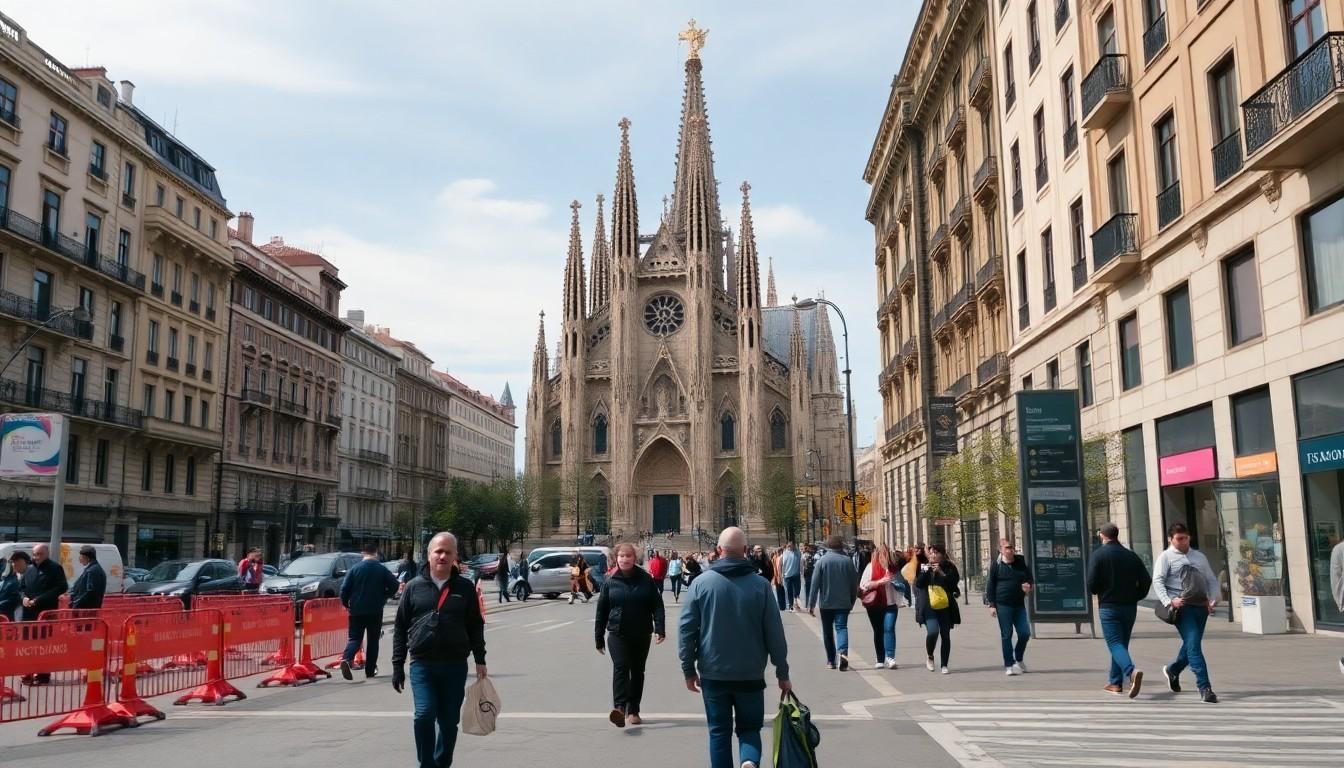
Barcelona has won the right to host WorldPride 2030, beating Bangkok in a vote by InterPride members. The month-long event will bring the international LGBTQ+ celebration to a city with a deep history of activism, under a theme that puts change and human rights alongside celebration. Here’s what’s planned, and why the choice matters.
Essential Takeaways
- Barcelona won the bid: It received 413 votes, while Bangkok received 78; eight members abstained.
- Mark your calendar: WorldPride Barcelona is scheduled for 28 June to 28 July 2030.
- A call to action: The theme is “LET’S THINK. LET’S ANSWER. LET’S CHANGE.”
- A broad-backed bid: More than 40 LGBTQ+ organisations and several public institutions supported the proposal.
- A historic setting: The event will come 25 years after Spain legalised same-sex marriage and 50 years after the founding of FAGC.
Barcelona takes the WorldPride 2030 crown
Barcelona secured 413 votes, or 84 per cent of the total, in the contest to host WorldPride 2030. Bangkok received 78 votes, with eight members abstaining. InterPride announced the result after its annual general meeting in Phuket, Thailand.
Pride Barcelona led the successful bid, which took more than two years to develop with LGBTQIA+ organisations and communities internationally. The city’s proposal was one of two presented to InterPride members, and the organisation describes WorldPride as a licensed event run in partnership with a member Pride group.
A theme that looks beyond the party
The celebrations are scheduled for 28 June to 28 July 2030, with the theme “LET’S THINK. LET’S ANSWER. LET’S CHANGE.” It’s an energetic slogan, but its focus is serious: the bid presents WorldPride as a platform for visibility, human rights and international solidarity, as well as a major celebration.
The official Barcelona WorldPride bid site says the proposal was developed collectively by more than 40 LGBTQIA+ organisations. It frames the event as a way to respond to threats to LGBTQIA+ rights and hateful rhetoric, and to support a safer, more accessible gathering.
A city with a long history of LGBTQ+ activism
Barcelona’s selection carries particular weight because the city has played a significant part in Spain’s LGBTQ+ rights movement. The Government of Catalonia says the first demonstration advocating gay pride in Spain took place in Barcelona on 26 June 1977, organised by the Gay Liberation Front of Catalonia, or FAGC. Almost 5,000 people attended, and police harshly repressed the march.
The 2030 event will also coincide with two major anniversaries: 25 years since Spain legalised same-sex marriage and 50 years since FAGC was founded. Spain’s government records that same-sex marriage was approved in June 2005, making Spain the third country in the world to legalise it.
What the bid says about WorldPride’s purpose
Barcelona’s proposal is backed by the city council, the Government of Catalonia, Spain’s Ministry of Equality and Turisme de Barcelona, alongside more than 40 LGBTQ+ organisations. That breadth of support gives the bid a civic dimension beyond the festival itself.
InterPride’s WorldPride overview describes the event as a way to bring the global Pride movement together. The Barcelona proposal links protest, visibility and celebration with human rights and a lasting international legacy, making its central message about collective action as much as a month of events.
Barcelona joins a growing international line-up
WorldPride has been held in Sydney in 2023, and Washington DC and Amsterdam are listed for 2025 and 2026. Cape Town is set to host in 2028, becoming the first African city to stage the event. Barcelona’s 2030 edition will bring WorldPride back to Spain after Madrid hosted in 2017.
For visitors, the dates and theme offer a useful first glimpse, but the bid’s emphasis on access, rights and solidarity is the bigger story. The programme can come later; the ambition is already clear.
Barcelona’s WorldPride plans pair a major celebration with a pointed call for change.
Source Reference Map
Story idea inspired by: [1]
Sources by paragraph: