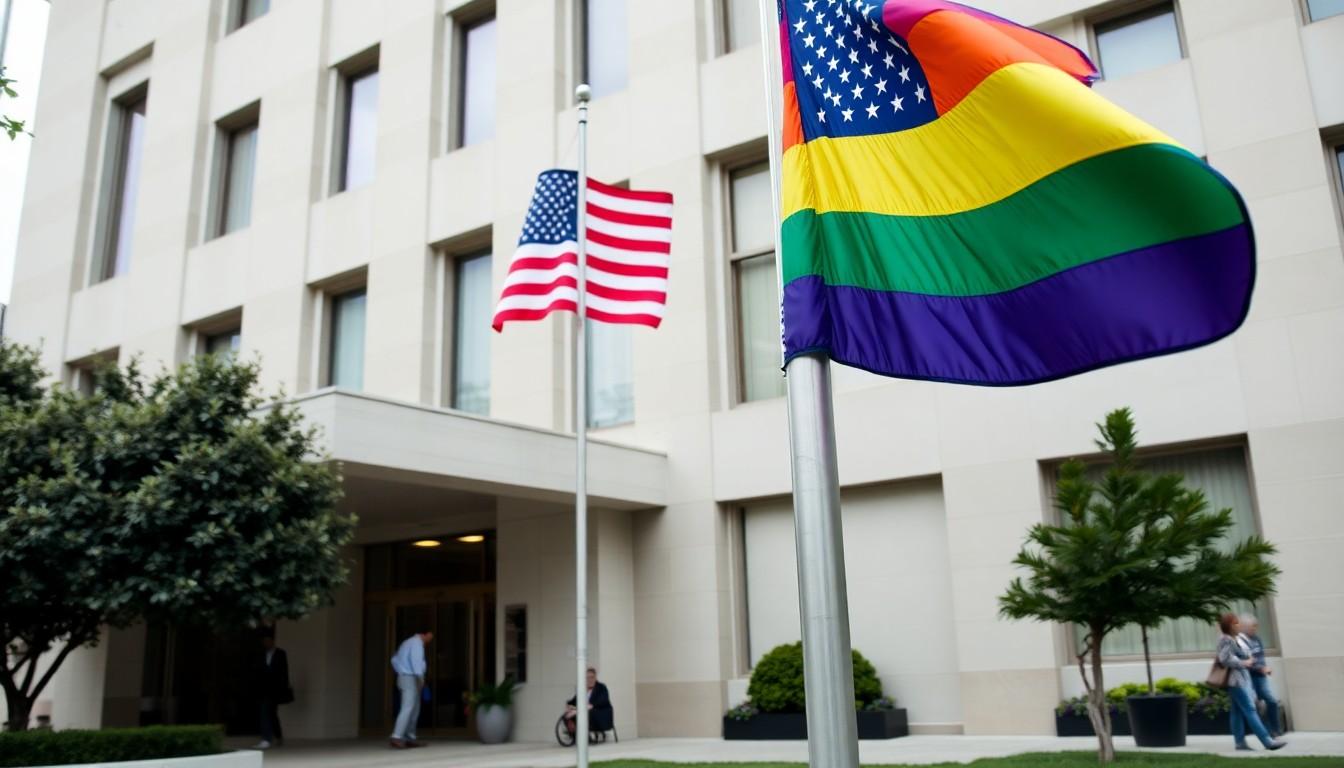
US embassies and consulates were given permission to fly the Pride flag during the 2021 Pride season, marking a shift in American foreign policy under President Joe Biden. The decision restored a visible symbol of LGBTQI inclusion to official flagpoles, but left each diplomatic post to weigh whether displaying it was appropriate in its local context.
Essential Takeaways
- Permission, not a requirement: US diplomatic posts could fly the Pride flag, but chiefs of mission made the final call.
- Seasonal timing: The guidance covered the period around 17 May and Pride Month in June 2021.
- A policy reversal: The authorisation reversed the Trump administration’s restriction on Pride flags flying from official flagpoles.
- Local judgement mattered: Posts were asked to consider conditions in the country where they operate.
Pride flags return to US embassy flagpoles
The rainbow flag was once again allowed on US diplomatic flagpoles during Pride season, after Secretary of State Antony Blinken authorised the displays in 2021. The guidance covered the period before 17 May, the International Day Against Homophobia, Transphobia and Biphobia, and through June.
Foreign Policy first reported the confidential State Department cable behind the change. But there was no blanket instruction to raise the flag: each chief of mission could decide whether a display suited local conditions.
That balance gave embassies room to make their own call. The flag’s return was symbolic, but the guidance stopped short of treating the display as a one-size-fits-all gesture. [2] [3]
What changed from the Trump-era policy?
The new permission reversed the approach taken under Donald Trump. In 2019, the State Department had refused requests from several diplomatic missions to fly Pride flags on official flagpoles, although displays elsewhere on embassy grounds remained possible.
ABC News reported that missions in Brazil, Germany, Israel and Latvia were among those whose requests were rejected. The distinction mattered: diplomats could mark Pride in other ways, but they could not add the rainbow flag to the official flagpole without approval.
Vice-President Mike Pence defended that restriction in a 2019 interview with NBC News, saying he supported having only the American flag on embassy flagpoles. The Guardian and Time also reported his defence of the policy. [3] [4] [5] [7]
Embassies found other ways to mark Pride
With flagpole requests blocked, some US missions made their support visible elsewhere. Axios reported that the embassies in Seoul and Chennai hung Pride flags on their buildings, while the New Delhi mission used rainbow-coloured lighting.
The Seoul embassy also displayed a Black Lives Matter banner, according to the lead report, but the Trump administration ordered it removed along with the Pride display. Elsewhere, diplomatic staff in Jerusalem joined marches promoting Pride and tolerance, the Guardian reported.
Those workarounds show how a rule about one official flagpole could shape the look of an entire diplomatic mission. The displays continued, but their form depended on what local posts could do. [1] [5] [6]
Why the local context still mattered
Blinken’s guidance put discretion at the centre of the decision. According to Foreign Policy and ABC News, diplomatic chiefs could consider local conditions when deciding whether to fly the flag, rather than treating permission as an obligation.
The cable also encouraged missions to plan outreach around LGBTQI rights. ABC News reported that it outlined wider administration commitments, including protecting people fleeing persecution and opposing the criminalisation of LGBTQI people. It also advised posts to consider local context when discussing same-sex marriage, while stating that the United States did not advocate for or against it abroad.
That qualification made the policy less like a uniform instruction and more like a framework for local judgement. For embassies, the question was not only whether the flag could fly, but whether and how to use that permission. [2] [3]
A visible shift in US foreign policy
The Biden administration presented the change as part of a broader effort to include LGBTQI rights in US foreign policy. The lead report also noted that Blinken had pledged during his confirmation hearing to defend LGBTQI people’s rights and allow embassies to fly the Pride flag.
The shift was clear: flagpole displays that had been blocked under the previous administration were now permitted. Yet the final decision stayed with the people closest to each diplomatic post, reflecting the guidance’s emphasis on local conditions.
A flag can be a small piece of fabric, but on an embassy pole it can carry a distinctly public message. [1] [2] [3]
A change in permission, with each embassy left to decide what felt right locally.
Source Reference Map
Story idea inspired by: [1]
Sources by paragraph: