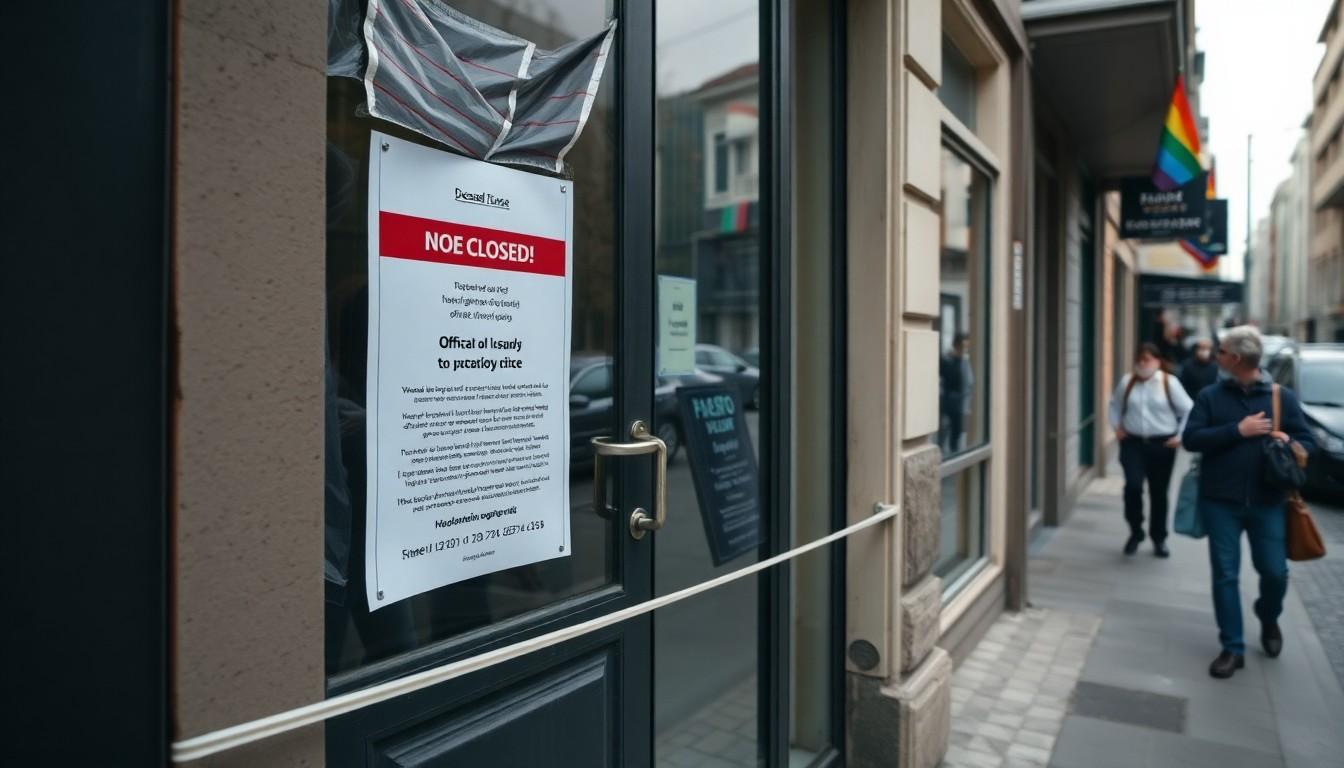
A locked door in Istanbul has become the latest flashpoint in Turkey’s pressure on LGBTQ+ groups. The authorities sealed the office of Lambda Istanbul, the country’s oldest LGBTQ+ organisation, calling it an “unauthorised social club”. The group rejects that label, while a separate prosecution targeting Hevi LGBTI+ points to a broader squeeze on organising and community spaces.
Essential Takeaways
- Lambda Istanbul’s office was sealed: The Istanbul Governor’s Office described the premises as an unauthorised social club; the association disputes that account.
- The group has a long history: It emerged in 1993, opened an office in 2002 and gained formal association status in 2006.
- Hevi LGBTI+ faces legal action: Prosecutors are seeking its dissolution and the prosecution of five founding members under Turkey’s law on associations.
- The pressure is broader: Reporting describes raids, arrests and online restrictions affecting LGBTQ+ groups and other civil-society organisations.
- Homosexuality is not illegal in Turkey: But LGBTQ+ people and organisations face increasing pressure, according to the reports.
A sealed office, and a disputed label
The closure of Lambda Istanbul’s office turns an administrative claim into a direct challenge to a community space. The Istanbul Governor’s Office sealed the premises, describing them as an “unauthorised social club”, while the association says its work has been conducted openly and in line with its official records.
Lambda Istanbul says the move is intended to isolate LGBTQ+ people and limit their ability to organise. The group’s objection is clear: it rejects the authorities’ characterisation of its activities and says the closure encroaches on the spaces where its community can meet.
Lambda Istanbul’s roots reach back to 1993
Lambda Istanbul emerged in 1993 from LGBTQ+ activists’ efforts to stage Istanbul’s first Pride parade. Its office opened in 2002, and it was formally registered as an association in 2006.
Bianet’s account adds detail to that history, describing meetings, discussions, workshops and solidarity activities held at the office. It also notes that a closure ruling issued in 2008 was overturned by Turkey’s Court of Cassation in 2009. That history gives the latest sealing more weight than a dispute over premises alone: for the association, the office has been part of a much longer effort to build community and advocate for rights.
Hevi LGBTI+ faces a separate legal challenge
Meanwhile, prosecutors are seeking the dissolution of Hevi LGBTI+ and the prosecution of five of its founding members under Turkey’s law on associations. The indictment concerns alleged departures from the aims set out in the group’s statutes, including its advocacy and support work.
Hevi disputes the case and says its human-rights work is being targeted. Bianet reports that the organisation has challenged the prosecution’s account of its activities and called for the dissolution request to be withdrawn. The allegations remain those set out by prosecutors, rather than findings established here.
The crackdown reaches beyond office doors
The reported action against Lambda Istanbul and the case involving Hevi sit within a wider campaign. The supplied reporting describes raids, arrests and restrictions on websites and social-media accounts, while the Human Rights Foundation of Turkey and Amnesty International have also documented or criticised operations under the “My Family Is Safe” label.
The Associated Press reports that police raids took place across several Turkish cities and that officials linked the investigation to protecting children, family and public order. Those explanations sit alongside concerns raised by rights groups about freedom of association and expression. Homosexuality is not illegal in Turkey, but that does not mean LGBTQ+ organisations can operate without pressure.
What the cases mean for LGBTQ+ organising
The practical effect of a sealed office is immediate: a group loses a place to gather, even as the legal dispute continues. For anyone following these cases, it’s worth separating the authorities’ allegations from the organisations’ responses, and noting which claims come from prosecutors, official statements or rights groups.
The Human Rights Foundation of Turkey’s figures are tied to a specific reporting date, rather than a permanent total. That distinction matters in a fast-moving crackdown, where numbers and legal proceedings can change. Still, the closure of a long-established organisation’s office and the case against Hevi make the wider question hard to ignore: how much room remains for LGBTQ+ groups to organise openly?
The office may be sealed, but the dispute over the right to organise is still unfolding.
Source Reference Map
Story idea inspired by: [1]
Sources by paragraph: