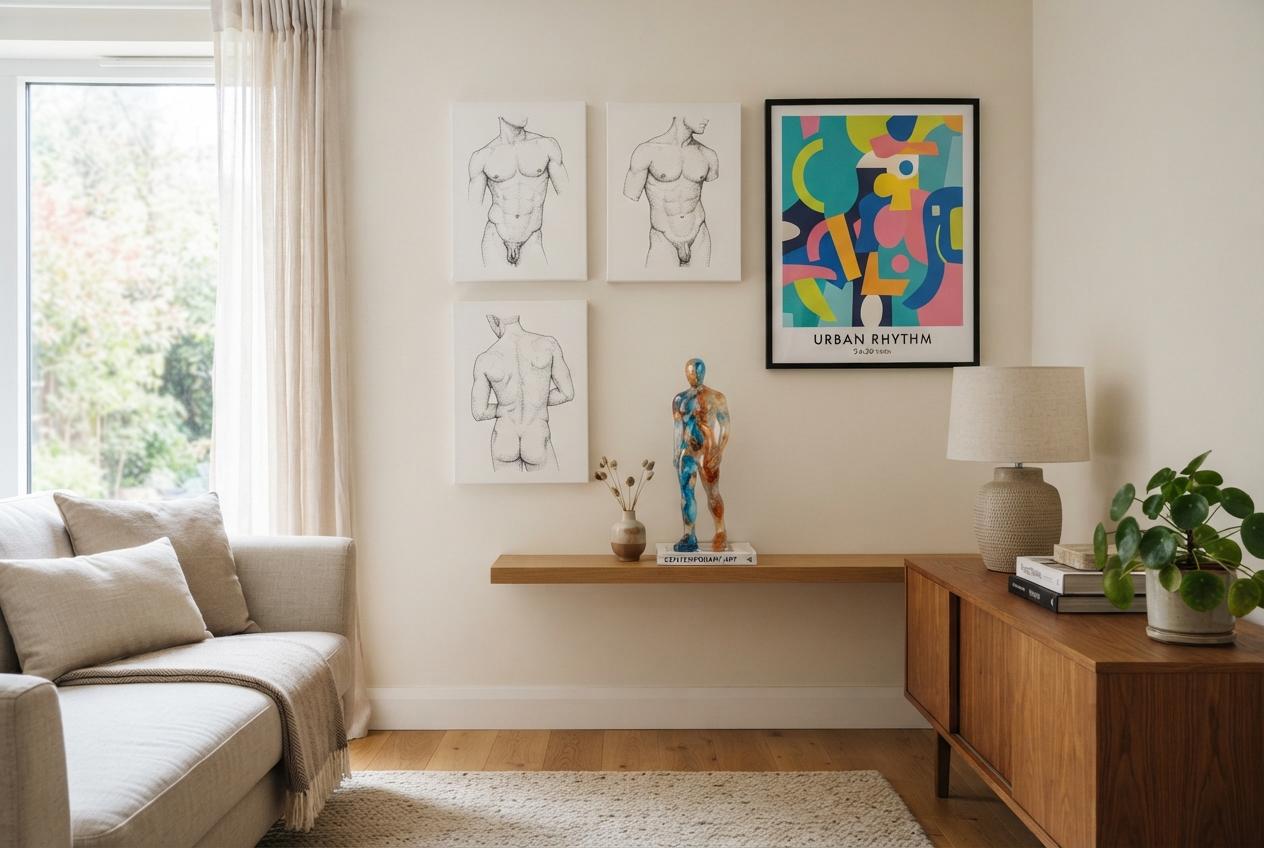
A more personal kind of wall art is easy to find online, where three artists turn queer experience into drawings, sculpture and bold pop prints. DNA Magazine highlights work by Cale LeRoy, Robb Drysdale and Miro on the Wall, with options ranging from affordable prints to one-off pieces. Here’s what makes each artist’s work distinctive, and what to check before buying.
Three different ways to make queer art feel at home
These artists take very different routes to the wall. Cale LeRoy builds images of the male form from painstaking dots and lines; Brisbane sculptor Robb Drysdale makes figurative pieces; and Miro on the Wall brings LGBTQ+ themes into graphic, pop-inspired prints.
That variety matters if you’re looking for queer art for your home but don’t have one particular style in mind. A finely worked drawing, a sculptural figure and a vivid print create quite different moods, even when all three make identity part of the picture.
Cale LeRoy’s drawings put personal experience on the page
LeRoy’s NOODDOODs works centre on the male form, using dotwork, stippling and continuous line. DNA Magazine describes the practice as detailed and patient, while LeRoy’s own shop gives the work a more personal context: he writes about moving beyond internalised homophobia and making art that feels true to him.
The shop offers original drawings and paintings as well as canvas and art prints, so there are several ways to collect the work. Its live listings show that availability can change, and some pieces may sell out. If you have a particular original in mind, check the current listing or contact LeRoy rather than assuming it’s still available.
Robb Drysdale’s sculpture brings queer physical culture into view
Drysdale’s figurative sculptures include Mary, a stylised figure of a muscular man. DNA Magazine presents the work as affectionate rather than ironic, and describes a wider body of work spanning subjects such as acrobats, ballet, cabaret and pole dancing.
The artist’s sales page identifies him as based in West End, Brisbane, and includes Mary among its listed sculptures. Since the page is a live catalogue, prices and availability may change; check the listing for current details before making plans to buy. For a piece that stands apart from prints and drawings, sculpture offers a more physical presence in a room.
Miro on the Wall turns graphic design into pop colour
Miro’s print-to-order shop draws on his background in graphic design, with collections including Chromatic, Candyland and Monochrome. The series offer different visual approaches, from saturated colour to single-palette compositions, while sharing an interest in pop art and LGBTQ+ culture.
There’s a personal story behind the bright surfaces, too. In his biography, Miro describes art as an outlet for self-expression during mental-health struggles and acknowledges his husband’s support. That context gives the prints an intimate dimension: they’re not simply decorative colour, but part of an artist’s own account of making and living.
How to choose a piece that fits your space
Start with the format as well as the image. Prints are an easy way to explore an artist’s work, while an original drawing, painting or sculpture offers a different kind of presence. Consider whether you want something finely detailed, sculptural or boldly graphic, then check each artist’s current shop for prices, stock and available formats.
And don’t treat the three artists as interchangeable. Their work shares a connection to queer experience, but each has a distinct visual language. The best choice is likely to be the piece that feels most like you, not just the one that matches the wall.
Bring home the work that speaks to you, and give it a wall of its own.
Source Reference Map
Story idea inspired by: [1]
Sources by paragraph: