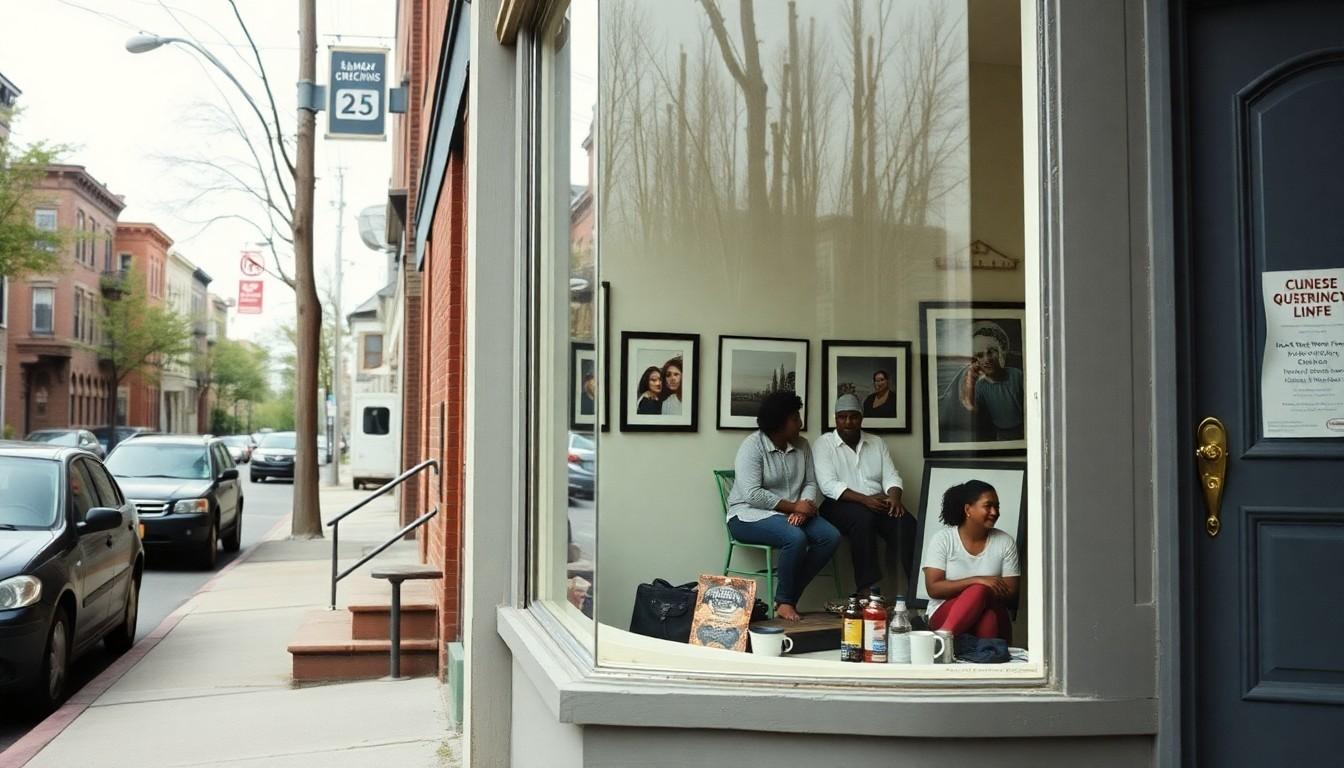
A Brooklyn photographer is making intimate portraits of Black queer life, using film and familiar surroundings to create a record of the present. Ryan C. Hamilton’s place in GLAAD’s 2026 Equity in Media and Entertainment cohort gives him space to develop that work, while raising a bigger question: who gets remembered in the archive, and whose everyday life is considered worth documenting?
Essential Takeaways
- A new body of work: Hamilton joined GLAAD’s 2026 EMEI cohort to develop a sustained photographic project.
- Film, by choice: He sees the physical negative as part of preserving an image, not just a way to achieve a particular look.
- Trust comes first: Hamilton spends time with subjects before photographing them, aiming for portraits that feel less posed.
- Support beyond funding: TheGrio says cohort members receive project funding, mentorship, professional development and access to industry leaders.
Making a record of the present
Hamilton’s portraits start with a simple but weighty idea: ordinary lives deserve to be part of the historical record. The Brooklyn-based photographer focuses on Black queer life, often photographing people in their own surroundings rather than separating them from the places where they live.
That attention to everyday experience is central to his work. In his GLAAD profile, Hamilton asks who is documenting his generation now, rather than leaving its story to be reconstructed later. It’s a question that gives his portraits a quiet urgency: the people in them aren’t waiting to become famous before they count.
Why film matters to Hamilton
Hamilton photographs on film, connecting the choice to both the image’s appearance and the value of keeping a physical record. He sees the negative as a way to preserve evidence of what was photographed, particularly at a time when images can be altered or generated digitally.
There’s a useful distinction here. A negative is a physical photographic object, but that doesn’t make it immune to intervention. National Gallery of Art research into James Van Der Zee’s negatives documents changes to those materials over time, offering a reminder that analogue photography has its own history of interpretation and alteration.
Trust before the camera comes out
Hamilton’s process begins before he raises the camera. He spends time with people first, hoping to make them comfortable and move beyond the polished self-presentation that can shape how people appear in smartphone images.
That approach makes the familiar setting matter, too. A lived-in space can show someone as they are in the middle of ordinary life, rather than as a carefully arranged version of themselves. It’s a patient way to work, and one that puts the relationship between photographer and subject at the centre of the portrait.
A cohort built to support Black queer artists
TheGrio describes EMEI’s 2026 group as the initiative’s third cohort, bringing together 20 Black queer visual artists working across forms including photography, painting, sculpture, mixed media and digital storytelling. The programme was launched by GLAAD’s Communities of Color and Media Department and is powered by Gilead Sciences.
For selected artists, the support goes beyond a place in the cohort: TheGrio reports that members receive funding for a new project, as well as mentorship, professional development and access to industry leaders. GLAAD says the initiative uses art and storytelling to support Black LGBTQ creators, address HIV stigma and encourage cultural change. The focus on visual artists also marks a shift from earlier cohorts centred on filmmakers and musicians.
Everyday subjects, lasting significance
Hamilton draws a line between the people he photographs and established artists such as Gordon Parks and Carrie Mae Weems. The comparison isn’t about claiming their careers are the same; it’s about recognising that people who seem ordinary in their own time may later be understood as part of a much larger story.
Parks’s career as a photographer documenting American life is described by the National Gallery of Art, while Weems’s official biography highlights work concerned with history, identity and representation. Hamilton’s hope is that viewers recognise themselves in his photographs and see that a life doesn’t need a list of accolades to deserve a place in the archive. That’s a generous idea, and a compelling reason to pay attention to who gets photographed now.
Explore Ryan C. Hamilton’s portfolio to see the work for yourself.
Source Reference Map
Story idea inspired by: [1]
Sources by paragraph: