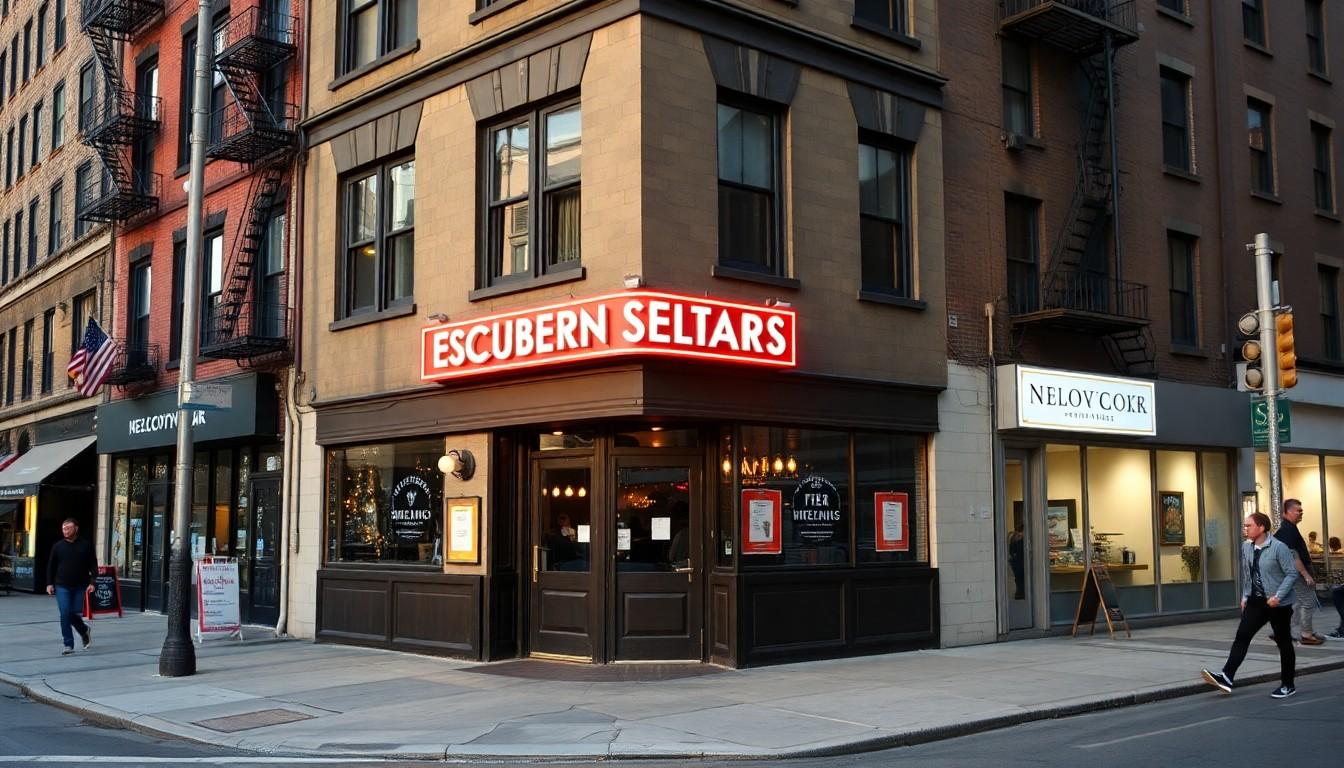
A new gay bar in Hell’s Kitchen has become a social-media target before opening, with critics calling its plain facade and rainbow lights too blunt, too garish or even artificial. But Pride Bar x Lounge’s reception raises a bigger question: who gets to decide what an LGBTQ+ venue should look like, and what makes it feel like it belongs?
Essential Takeaways
- The criticism arrived early: Pride Bar x Lounge drew online mockery before it had opened.
- The design is part of the debate: Commenters took aim at the facade, rainbow lighting, name and a spelling error on a poster.
- The owners are standing by the concept: Paul Fogarty and Andy Karlic say the venue is meant to be openly and proudly gay.
- Hell’s Kitchen has a varied nightlife scene: The neighbourhood is known for gay bars with different styles, from casual lounges to venues with performances and dance floors.
- Online attention isn’t the whole story: The bar’s reception will depend on the experience it offers once people can visit.
A bar is being judged before its first night
Pride Bar x Lounge has attracted a lot of attention for a place that hasn’t opened yet. Its three-level site in Hell’s Kitchen, Manhattan, has become a punchline online, with critics taking aim at its off-white exterior, bright rainbow lights and straightforward name.
One post by Sheeva Massoudi described it as a “looney tunes trap for gay people”. The joke helped bring the criticism into wider view, but it wasn’t the only complaint: commenters also pointed to a spelling error on a promotional poster.
And that’s what makes the reaction feel bigger than a row over colour choices. People are arguing over whether a gay bar should announce itself boldly, or whether that kind of branding now feels forced.
Hell’s Kitchen has plenty of bar styles
Pride is joining a neighbourhood already closely associated with LGBTQ+ nightlife. Out NYC describes bars clustered around Ninth Avenue and West 45th to 56th Streets, while Time Out’s guide shows a mix of settings, from laid-back neighbourhood spots to larger venues with DJs, stages and drag performances.
That variety is worth keeping in mind. There isn’t one standard look or mood that every gay bar has to follow, even in a district with a strong nightlife identity.
The project’s earlier plans, reported by Meridian Capital Group, named 742 Ninth Avenue as its proposed address and described a multi-level venue with a rooftop component. That helps explain why Pride has become a talking point: it’s planned as more than a small corner pub.
The owners want the message to be unmistakable
Owners Paul Fogarty and Andy Karlic have pushed back against the idea that Pride’s overt identity is something to hide. Fogarty is gay and Karlic is bisexual, and their stated intention is for the venue to be openly and proudly gay.
That approach has met a different sensibility among some younger social-media users, who have criticised the branding as blunt or dated. Queerty also frames the disagreement as generational, with the owners favouring unmistakable visibility and critics questioning whether a rainbow-forward look feels authentic.
There’s a real tension here: a clear signal of welcome to one person can look overly literal to another. Neither a rainbow exterior nor a restrained design can, by itself, settle what a venue means to the people who use it.
Design carries more than decoration
A bar’s look can shape how people imagine the space before they walk through the door. Architectural Digest’s reporting on Hell’s Kitchen explores how design and nightlife spaces can carry meaning for queer communities, while also describing the importance of the people and histories behind them.
So it’s understandable that Pride’s appearance has prompted strong reactions. But online images offer only a partial view of a place that visitors haven’t yet experienced as a bar, with its atmosphere and people.
The neighbourhood’s history also matters. Out NYC describes gay nightlife moving north from Chelsea as rents rose, while Architectural Digest reflects on the communities and venues that helped shape Hell’s Kitchen. A new bar is arriving in a scene with a past, not an empty backdrop.
The real test comes after the viral jokes
For now, the debate is happening at a distance. Queerty notes that curiosity could bring visitors through the door, but attention alone won’t determine whether the venue works for them.
That leaves a practical question for anyone deciding whether to visit: look beyond the facade and consider what kind of night you want. Hell’s Kitchen has a range of bar styles, and Pride will eventually have to find its place among them through the experience it offers.
There’s something telling about a bar being criticised for being too obviously gay before anyone has had the chance to spend an evening inside it. The argument may say as much about changing expectations as it does about one building.
A bar’s identity is ultimately made by the people who choose to walk in.
Source Reference Map
Story idea inspired by: [1]
Sources by paragraph: