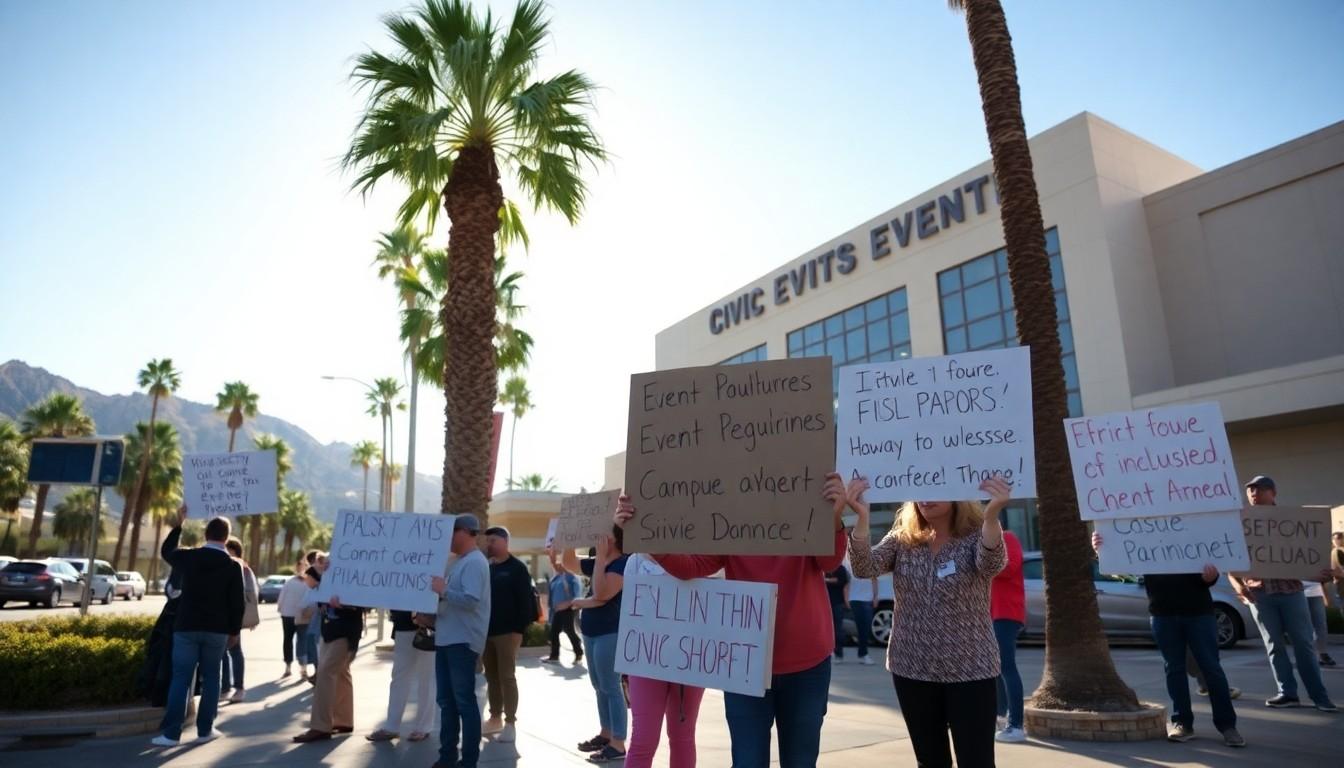
A protest by CODEPINK at Palm Springs Pride has put parade eligibility back in the spotlight. Denied an official place for the second year running, the group says its human-rights work belongs within Pride’s message of inclusion. Organisers say parade entries must directly support or celebrate LGBTQ+ people, while also pointing to safety concerns raised by community members.
Essential Takeaways
- A second rejection: CODEPINK was denied an official place in the 2026 parade for the second consecutive year.
- Different views of inclusion: The group says its human-rights advocacy fits Pride’s values; organisers say its proposed entry didn’t meet the parade’s LGBTQ+ messaging requirement.
- Safety concerns cited: Pride’s president and CEO said organisers had heard concerns from Jewish LGBTQ+ people and their supporters.
- The protest continued: CODEPINK demonstrated along the parade route, saying it was protesting its exclusion, not Pride itself.
- A wider question: The dispute has prompted debate about how event rules balance a clear purpose, safety and political expression.
A parade rejection becomes a public protest
Palm Springs Pride’s parade became the setting for a dispute over who gets to march and what an inclusive event should include. CODEPINK, an anti-war group that has demonstrated in support of Palestinians and victims of the war in Gaza, was turned down for the second year in a row, according to KESQ.
At the 2026 parade, protesters gathered near Alejo Road and South Palm Canyon Drive. NBC Palm Springs reported that members joined the route after the official procession had passed. The distinction mattered to the group: its members said they were challenging their exclusion, not protesting Pride itself.
Why organisers say CODEPINK didn’t qualify
Greater Palm Springs Pride president and CEO Ron deHarte told KESQ that the proposed entry didn’t meet the requirement for a clear message supporting or celebrating LGBTQ+ people. He also cited safety concerns raised by Jewish LGBTQ+ community members and their supporters.
An earlier KESQ report says deHarte described the rule as requiring a clear message supporting or celebrating LGBTQ+ rights, achievements and culture. CODEPINK volunteer Jane Dodd questioned how the criteria were applied and how the safety concerns related to the group’s advocacy. The reports present the competing positions without resolving that disagreement.
“Be Included” means different things to each side
The 2026 theme, “Be Included”, sits at the heart of the argument. CODEPINK says its work for human rights and marginalised communities is consistent with Pride’s message, while organisers say parade entries need to speak directly to the LGBTQ+ community.
That tension is especially visible at an event whose official description centres on celebrating diversity and supporting equal rights. Palm Springs Pride’s website presents the festival as a community celebration, and Visit Greater Palm Springs describes the parade as featuring LGBTQ+ organisations, allies, businesses and other supportive groups. The public-facing language is broad; the dispute is over how that purpose is translated into parade-entry decisions.
A disagreement that started before parade day
The rejection wasn’t a sudden issue. KESQ reported that CODEPINK had also been denied a place in 2025. Dodd said the group’s application was initially accepted that year before the decision was reversed; she disputed organisers’ reported explanations about the parade’s size and the timing of the application.
For 2026, Dodd said CODEPINK initially received no explanation for the decision. DeHarte later set out the entry requirement and cited safety concerns, while Dodd questioned whether the same standards were applied consistently to other organisations. Those competing accounts leave the central question open: how should a parade define a message that supports its community?
The debate reaches beyond one parade entry
Coverage from NBC Palm Springs frames the disagreement as part of a wider debate about political speech, safety and event rules. One view is that organisers can set standards tied to an event’s purpose; another asks whether those standards are applied consistently. CODEPINK’s members, meanwhile, say their protest reflects a tradition of political action within LGBTQ+ rights movements.
There’s no easy answer in the reporting, and the distinction between a festival’s broad values and the criteria for a specific parade entry is doing much of the work here. For visitors, the event itself remains a free public celebration, according to its official information. For organisers and groups seeking to march, the question is narrower: what message must an entry carry to qualify?
Palm Springs Pride’s public welcome is clear; the debate now is how its parade rules put that welcome into practice.
Source Reference Map
Story idea inspired by: [1]
Sources by paragraph: