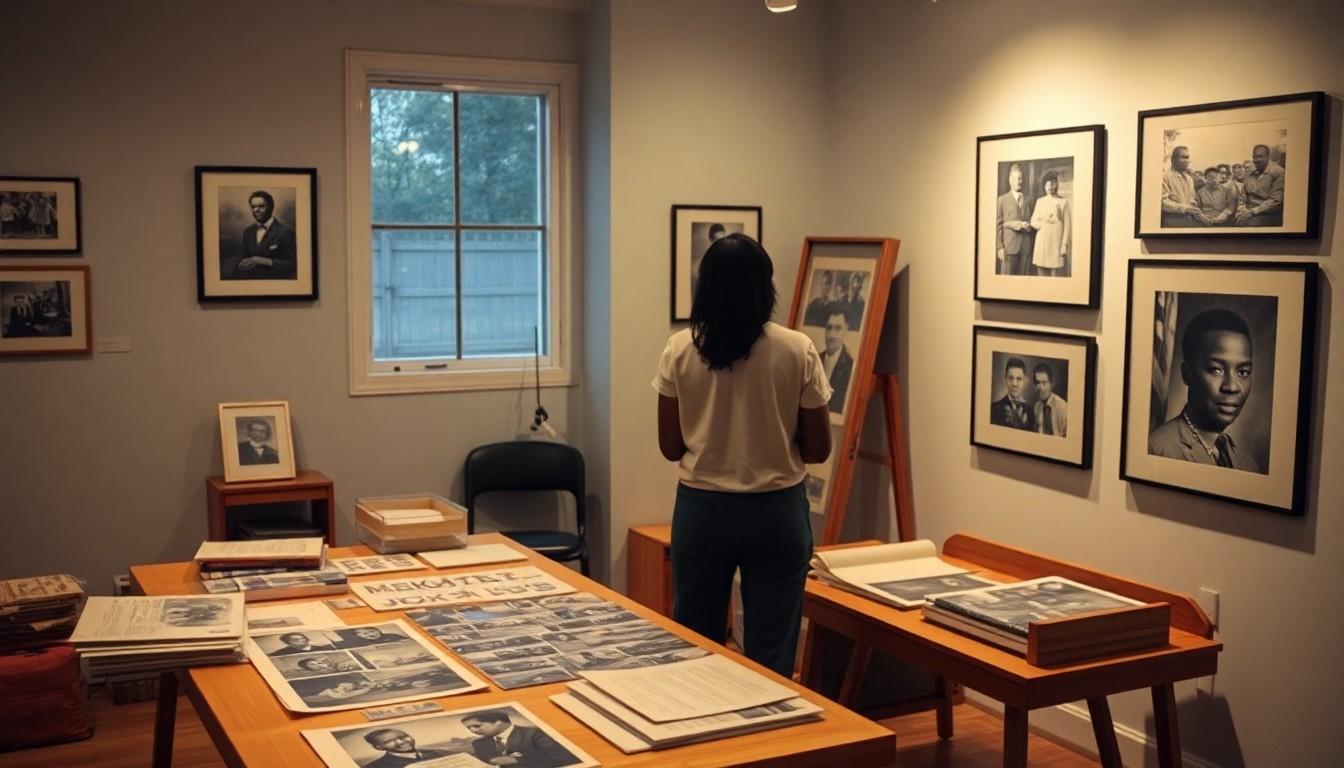
Look closely at Jas Turk’s collage work and the past comes into view: Black and Brown LGBTQ+ lives, memories and histories that have too often been left out of public narratives. The Louisville-based visual artist is part of GLAAD’s 2026 EMEI cohort, a programme supporting Black LGBTQ creators, and sees art as a way to affirm that these lives have always been here.
Essential Takeaways
- A place to connect: Turk says the EMEI cohort’s focus on Black and Brown LGBTQ+ creatives offers a distinctive space for community and artistic growth.
- History in the frame: Their work draws on archival imagery and ancestral references to challenge the idea that queer and trans people of colour are a recent presence.
- Visibility through art: Turk hopes audiences find affirmation in seeing the people and stories represented.
- Room to create: The artist prioritises what resonates personally over pressure to follow industry trends.
- Support beyond the studio: The 2026 cohort includes 20 visual artists, with project funding, mentorship and professional development.
Jas Turk brings overlooked histories into view
Archival photographs and familiar scenes can carry a quiet force: they make absence harder to ignore. In Jas Turk’s work, images and fragments of the past help bring Black and Brown LGBTQ+ histories into view, pushing back against the notion that queer and trans people of colour are a modern presence.
Turk, a visual artist and member of GLAAD’s 2026 Equity in Media and Entertainment Initiative cohort, says they hope people take validation from the work. As they put it in GLAAD’s profile, visibility is “literally being seen”, through the imagery and the existence it affirms.
Why the EMEI cohort matters to Turk
For Turk, the programme’s specific focus is part of its appeal. They told GLAAD that they don’t see many programmes centred on Black and Brown LGBTQ+ people, and described bringing that focus together with a space for artists as something unique.
That combination of community and creative development matters. According to GLAAD, EMEI supports Black LGBTQ creators through art and storytelling, with the stated aims of challenging HIV stigma and driving cultural change. It’s a reminder that the work of making art doesn’t happen in isolation; connection can be part of the practice, too.
Collage turns memory into a living conversation
Turk’s approach is grounded in images and materials that link past and present. Their artist website describes a practice built around mixed-media collage, archival photographs, paper and repurposed materials, assembled to honour Black culture and existence.
On the website, Turk describes collage as a form of memory-keeping. Layered imagery can renew fragments of the past and create a visual space for ancestral strength, rather than treating history as something distant or finished.
A growing platform for Black queer visual artists
TheGrio reports that GLAAD’s 2026 cohort comprises 20 artists, each receiving project funding alongside mentorship, professional development and access to leaders in art, media and entertainment. The programme’s earlier cohorts focused on filmmakers and musicians; this cycle centres visual artists.
There’s a useful shift in that focus. A painting, photograph or collage can carry a story without asking the viewer to read a long explanation first. GLAAD’s 2024-25 representation report also describes EMEI as a way to elevate Black LGBTQ artists and connect them with professionals in their fields.
Protecting creative independence
Turk says they try to make work based on what resonates with them, keeping personal creativity at the centre rather than chasing industry trends. That perspective fits the work they describe: art shaped by memory and history, not simply by what happens to be fashionable.
For audiences, the invitation is straightforward: look at who appears in the frame, and whose stories the image helps carry forward. Recognition can begin with seeing.
Jas Turk’s work makes a simple point with lasting force: visibility starts when people are allowed to be seen.
Source Reference Map
Story idea inspired by: [1]
Sources by paragraph: