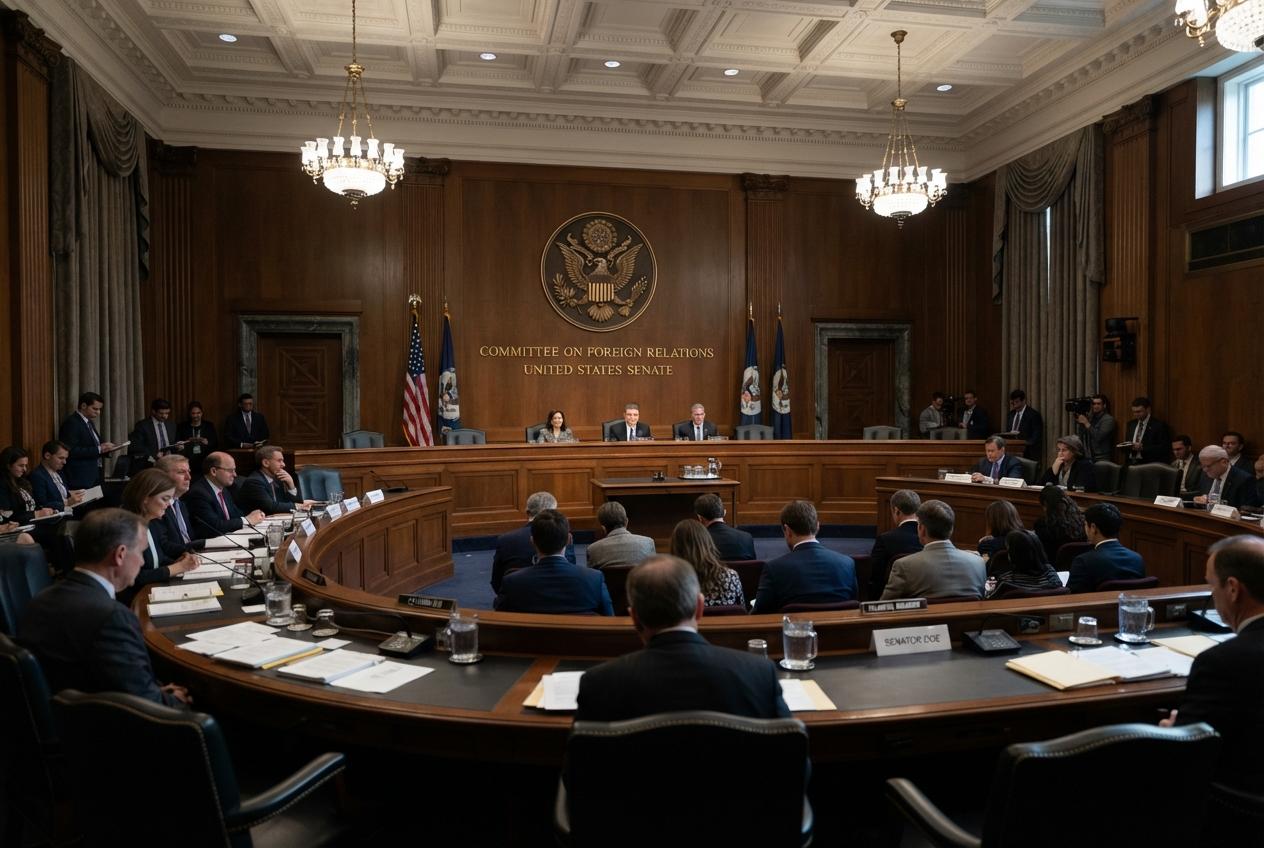
A sharp exchange over LGBTQ protections and religious freedom marked Cissie Graham Lynch’s Senate confirmation hearing in Washington. Nominated to be the US ambassador-at-large for international religious freedom, Lynch said she would protect people of all faiths if confirmed. Her answers matter because the post helps shape how the US responds to religious persecution overseas.
Essential Takeaways
- A key assurance: Lynch said protecting people of all faiths would be her responsibility if confirmed.
- The central tension: Senator Tim Kaine questioned whether her views on LGBTQ protections would affect her ability to represent LGBTQ people equally.
- A nomination, not an appointment: The Senate listed Lynch as a nominee for the State Department post, which requires confirmation.
- A role with a defined remit: The ambassador-at-large advises the president and secretary of state on religious freedom abroad.
One question, two competing concerns
The hearing’s most pointed exchange centred on whether Lynch could defend LGBTQ people facing persecution while holding concerns about some protections for sexual orientation and gender identity. Senator Tim Kaine raised the issue, asking how she would protect LGBTQ people and questioning whether they could see her as an equal advocate.
Lynch replied that she would protect people of all faiths and said no one should be criminalised or persecuted for personal beliefs. She also said she would not support a law that criminalised people for their sexual identity or preference. It was a direct assurance, though Kaine’s concern showed that the broader question of trust remained unresolved.
Why her views came under scrutiny
Kaine pointed to Lynch’s previous concerns about LGBTQ protection laws and Christian religious freedom. In response, she referred to US cases involving anti-discrimination laws, including the case of Christian baker Jack Phillips, who objected on religious grounds to making a cake for a same-sex wedding.
Lynch has discussed LGBT issues publicly before. In a 2023 article for the Billy Graham Evangelistic Association, she argued that Christians could treat LGBT people with love while maintaining traditional beliefs about marriage and sexuality. That earlier commentary helps explain the context of the questions, but it isn't the same as a complete account of her position on international policy.
A job shaped by persecution abroad
The hearing wasn't only about the domestic culture-war debate. Lynch described meeting people affected by religious persecution, including families displaced because of their beliefs and communities rebuilding after attacks. She said she would carry their stories into the role.
The post has a statutory basis: the International Religious Freedom Act of 1998 created the State Department's Office of International Religious Freedom, headed by an ambassador-at-large who advises the president and secretary of state. The job is therefore about informing US policy on religious freedom abroad, not simply making statements about it.
From nomination to Senate decision
The Senate lists Lynch, of North Carolina, as a nominee for the ambassador-at-large position. The hearing-tracking site Hearing Highlights records her appearance at a Senate Foreign Relations Committee nominations hearing on 10 November 2026, where multiple nominees were heard and no votes were taken.
Her nomination followed a long vacancy in the role during the second Trump administration, according to Religion News Service. The Billy Graham Evangelistic Association also reported the nomination and described the work as defending religious freedom in the US and internationally. Those accounts offer useful background, though neither covers the detailed exchange with Kaine.
The test is whether assurances carry weight
Lynch framed religious freedom as a possible point of common ground, even among people who don't share the same beliefs. That's an appealing principle, but the hearing made clear that senators will also judge how it applies when rights and convictions collide.
For readers, the distinction is worth keeping in view: Lynch has offered a broad assurance, while concerns about how her stated beliefs might affect her approach remain part of the confirmation debate. The Senate's next steps will determine whether she takes up the role.
The question now is whether the Senate finds her assurances persuasive enough to confirm her.
Source Reference Map
Story idea inspired by: [1]
Sources by paragraph: