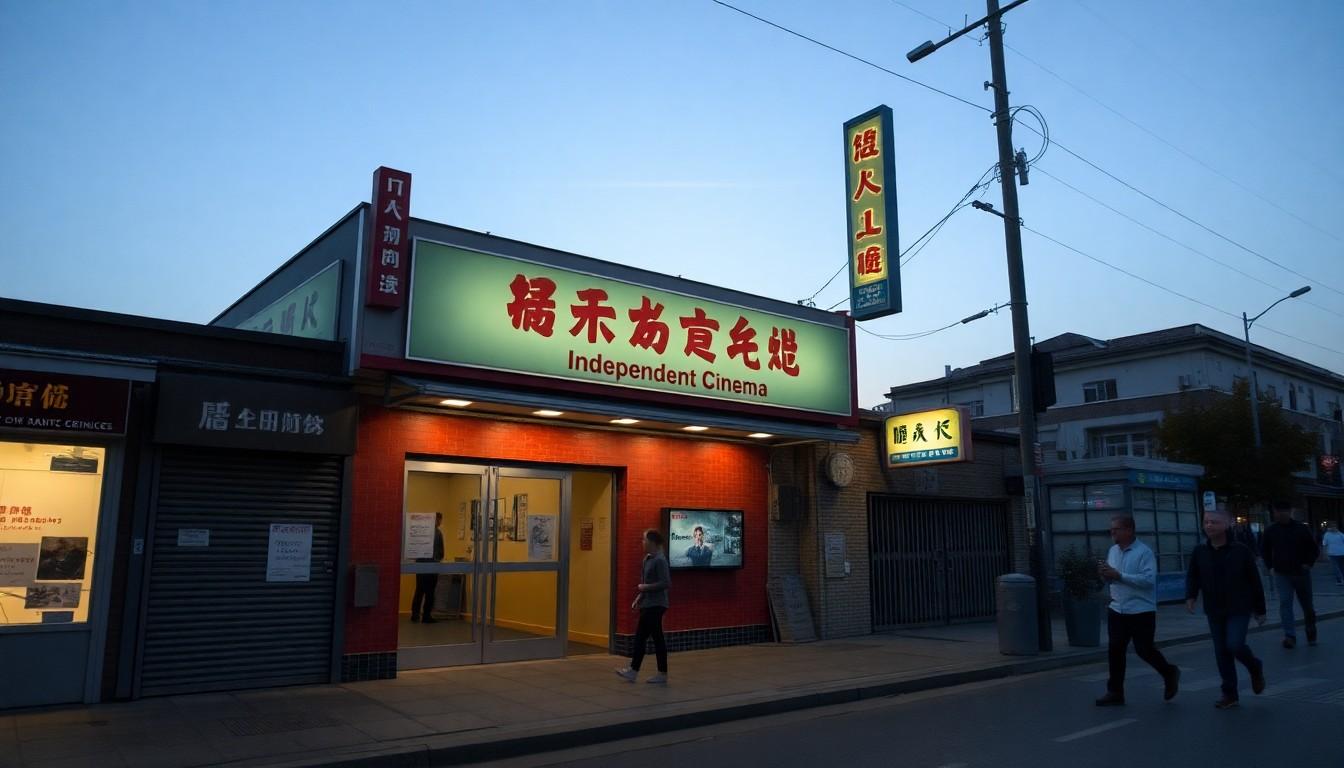
A last-minute festival cancellation has underlined how fragile public spaces for China’s queer communities have become. The Beijing Queer Film Festival was called off just before it was due to open, while earlier closures and online restrictions have also narrowed opportunities to connect. For organisers and audiences, the challenge is no longer just finding a place to meet, but keeping those spaces open.
A film festival cancelled at the last minute
The Beijing Queer Film Festival was cancelled a day before its scheduled opening, after organisers had reportedly received repeated calls from police. For audiences hoping to watch films and meet others, that sudden silence meant losing a rare public gathering place.
The festival is one of China’s oldest independent film events and has served as a forum for queer audiences and filmmakers. The Associated Press described it as a symbol of resilience for a community with few public spaces to gather; but resilience doesn’t make a last-minute closure any less disruptive.
A forum with a long, interrupted history
The festival began in December 2001, when students associated with Peking University’s film society organised its first edition. The organisers’ own history describes its development into a forum for films and discussion about sexuality and gender identity, despite repeated pressure and disruption.
The Chinese Independent Film Archive records the inaugural event at Peking University and lists films shown there, including East Palace, West Palace and Fish and Elephant. That documentary record gives the festival’s early history a tangible shape: it wasn’t just a programme, but a gathering built around films and conversation.
The pressure reaches beyond the cinema
The festival’s closure sits within a wider pattern of shrinking physical and digital spaces. In May 2023, the Beijing LGBT Center stopped operating after 15 years; PBS News described it as both a service provider and a place for LGBTQ people to connect.
Online networks have also been affected. The Congressional-Executive Commission on China recorded that WeChat permanently shut down multiple accounts associated with feminist and LGBTQ groups in August 2023, disrupting channels used by community organisations.
Then, in November 2025, Apple removed Blued and Finka, two major gay dating apps in China, from its China App Store after a request from Chinese authorities, the Associated Press reported. That action did not establish that every way of accessing the apps disappeared, but it showed how digital routes to connection can also be curtailed.
What a lost gathering place really means
A festival, a community centre and an online group aren’t interchangeable. Each gives people a different way to meet, find support or share experiences, so losing one can’t simply be fixed by moving everything elsewhere.
That distinction matters for anyone trying to understand the effect of restrictions on queer communities. A private gathering may allow an event to continue, but it can’t offer the same public audience as a festival; similarly, an online space can connect people, but it may be vulnerable to closure.
Adaptation keeps stories alive, but not without a cost
Some creators have tried to keep making work by moving production overseas. The lead account describes LeLaLes: Fluid Love, a lesbian dating show initially planned for Shanghai, being filmed in Chiang Mai and released on YouTube after the team faced pressure in China. The shift allowed the project to go ahead, but it didn’t erase concerns about the risks for participants still living in China.
There’s a quiet tension here: creative work can travel, but the freedom to gather and share it at home may still narrow. Adaptation is a form of persistence, not proof that the restrictions have no effect.
The festival’s long history shows why a cancelled programme carries weight beyond the films themselves. When spaces to meet become harder to sustain, keeping a community visible takes more than determination.
A public space can be temporary and still matter deeply.
Source Reference Map
Story idea inspired by: [1]
Sources by paragraph: