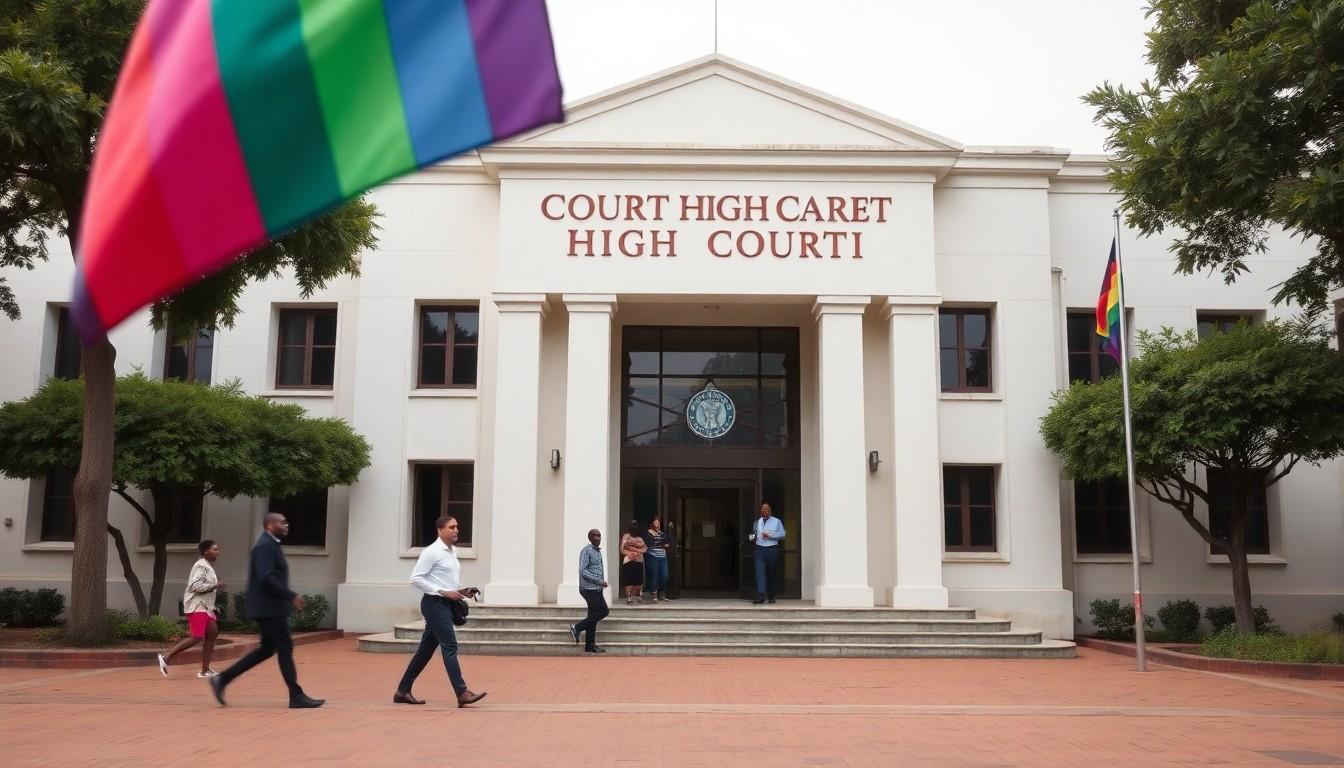
A marriage-equality challenge in Botswana is asking the High Court to look beyond the wording of the Marriage Act and consider what civil recognition means for two women seeking to marry. Bonolo Selelo and Tsholofelo Kumile’s case has brought questions of equality, faith and family into sharp focus, with practical legal protections also at stake.
Essential Takeaways
- The case: Bonolo Selelo and Tsholofelo Kumile are challenging the refusal to register their intended marriage.
- LEGABIBO’s role: The organisation supports the case and argues that the refusal breaches constitutional rights.
- The dispute: The state says the current law doesn’t provide for same-sex marriage; the applicants dispute that interpretation.
- Why recognition matters: Marriage can provide legal status and protections connected to property, inheritance and family life.
- The wider context: Botswana has not recognised same-sex marriage, despite other legal developments affecting LGBTIQ+ rights.
A marriage case becomes a test of civil equality
At the heart of the Botswana marriage-equality case is a simple question with far-reaching consequences: should two women be denied access to civil marriage because they’re the same sex? Bonolo Selelo and Tsholofelo Kumile brought the challenge after officials refused to register their intended marriage, and LEGABIBO is supporting them.
Botswana’s Daily News reported that the applicants say the contested provision of the Marriage Act violates constitutional rights, including dignity and freedom of association. The state, meanwhile, argued that removing the provision could leave a gap in the law and suggested Parliament could create a framework for same-sex unions. The difference between those positions is more than a technical disagreement over legal wording; it’s about whether the couple can access the same civil status as other couples.
What the Marriage Act dispute means in practice
The case turns partly on how section 10(2) of the Marriage Act should be read. Mmegi reported that the government interprets references to a bride and bridegroom as limiting civil marriage to different-sex couples, while LEGABIBO argues that those terms don’t automatically exclude same-sex couples.
That debate has a human edge. Marriage isn’t only a label: as Mmegi reported, the applicants say exclusion denies them legal recognition and protections connected to family life, property and inheritance. The Guardian also described the couple’s concerns about the security a recognised marriage could provide if one partner dies. Those stakes help explain why a dispute over statutory language matters beyond the courtroom.
Faith, family and the limits of public power
Religious and traditional organisations have opposed recognising same-sex marriages, while the Evangelical Fellowship of Botswana has argued in court that marriage is between a man and a woman and centred on children, according to Daily News. Religious groups are entitled to express their beliefs and take part in legal proceedings. But a civil court must still decide whether those beliefs amount to a constitutional reason to restrict another couple’s rights.
That distinction matters because civil marriage and religious solemnisation aren’t the same question. As Daily News reported, an amicus curiae argued that Botswana’s Constitution should protect people from being penalised for difference and that religious arguments shouldn’t control a decision under a secular Constitution. Recognising a civil marriage wouldn’t, by itself, require every religious institution to change its doctrine.
One family model doesn’t tell the whole story
The debate also draws on claims about procreation and the “traditional” family. In her 2017 article in Development Southern Africa, academic Haley McEwen examines how the heterosexual nuclear-family model has been shaped by history and power, rather than representing a neutral or universal form of kinship. The African Union Library catalogue summarises her argument that this family ideal has been tied to ideas of modernity and social progress.
That analysis doesn’t mean every religious objection belongs to a coordinated political movement. It does offer a useful lens for asking who gets to define family, and whose relationships are treated as worthy of legal recognition. Outright International’s Botswana overview notes that same-sex marriage remains unrecognised, even as the country has seen other legal developments affecting LGBTIQ+ people. Progress in one area, in other words, doesn’t automatically settle the next question.
The decision could shape what equality looks like
The hearing brought competing readings of the law and Constitution before the court, but it also raised a broader issue: how should a constitutional democracy weigh religious convictions against the civil rights of people who don’t share them? Daily News reported that the applicants argue the provision either allows their marriage or violates their rights if interpreted to prohibit it. The report said judgment was scheduled for 2 April 2027.
For Selelo and Kumile, the question is personal as well as legal. For everyone watching, it’s a reminder that recognition can affect the everyday security attached to a relationship, not just the words used to describe it.
Equality in civil law is ultimately about who gets the protection of the institution, not who has to approve of another couple’s choices.
Source Reference Map
Story idea inspired by: [1]
Sources by paragraph: