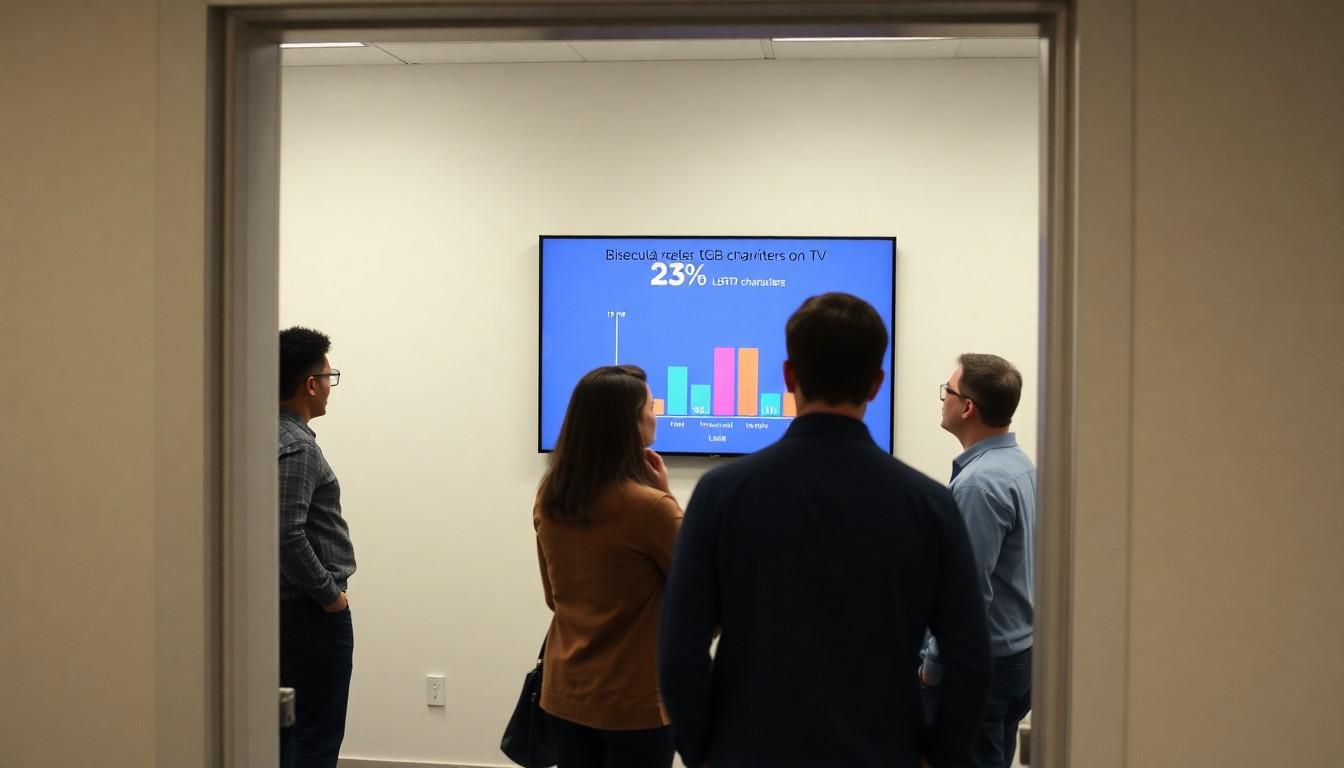
A welcome shift is emerging in GLAAD’s count of bisexual TV characters for the 2025–26 season. Across broadcast, cable and streaming, 93 of 369 LGBTQ characters were bisexual: a smaller total than in the previous period, but a larger share. The figures point to growing visibility, alongside gaps in who gets to lead these stories.
The share is up, even as the count falls
GLAAD counted 93 bisexual characters among 369 LGBTQ characters across broadcast, cable and streaming for the 2025–26 season. That’s 25% of the total, up from 20% in the previous research period, even though the number of bisexual characters fell by five.
It’s the first increase in the proportion after three years of decline, according to GLAAD. The organisation also notes that bisexual representation remains well below the population average, so the shift is encouraging rather than a sign that the gap has closed.
Streaming leads the platform count
Streaming accounts for 66 of the 93 bisexual characters. Broadcast has 17, while cable has 10, making the contrast between streaming and traditional television formats hard to miss.
The characters counted are spread unevenly across gender, too. GLAAD reports 56 women, 33 men and four nonbinary characters; one bisexual character is transgender. The figures offer a useful snapshot, but they also show why a single headline percentage can’t tell the whole story.
Familiar titles bring bisexual characters into focus
GLAAD highlights Ilya Rosanov in Heated Rivalry, Ava Daniels in Hacks, Margot and Sophie in The Hunting Wives, and Kitty Song Covey in XO, Kitty. These examples span several titles and platforms, giving viewers a more concrete sense of who sits behind the season’s overall count.
A separate American Philosophical Association essay about Heated Rivalry draws a useful distinction between a character’s sexual orientation and an actor’s. That’s a reminder to keep the conversation focused on the characters and stories themselves, rather than making assumptions about performers.
Who gets seen still matters
GLAAD’s racial and ethnic breakdown counts 49 white bisexual characters, eight Black characters, seven Latine characters, seven multiracial characters, five API characters and two MENA characters. Another 14 are nonhuman. Those categories make the report more detailed, but they also underline the importance of asking which experiences are represented, not just how many characters appear.
GLAAD welcomes bisexual characters with leading roles and distinct perspectives, while calling for more bisexual men and more characters with intersecting identities. It’s a distinction worth keeping in view: visibility matters, but so does who gets a layered story of their own.
Renewal status offers a mixed outlook
The future is uncertain for many of the characters in the count. GLAAD says 37 will not return, including 24 on shows that have been cancelled or ended. Meanwhile, 42 are on renewed shows, six are on programmes renewed for a final season, and eight have an unknown renewal status.
These figures are season-specific, not a count of every character on television. GLAAD’s annual report tracks scripted programming across platforms, and its earlier report covers a different season, so comparisons need to be read with that boundary in mind. For viewers, the practical takeaway is simple: celebrate the progress, but keep an eye on which characters get to return and whose stories continue.
A higher share is a step forward; lasting progress means more kinds of bisexual characters getting room to lead.
Source Reference Map
Story idea inspired by: [1]
Sources by paragraph: